
Allergic Reaction to Lash Glue: Causes and When to Get Care

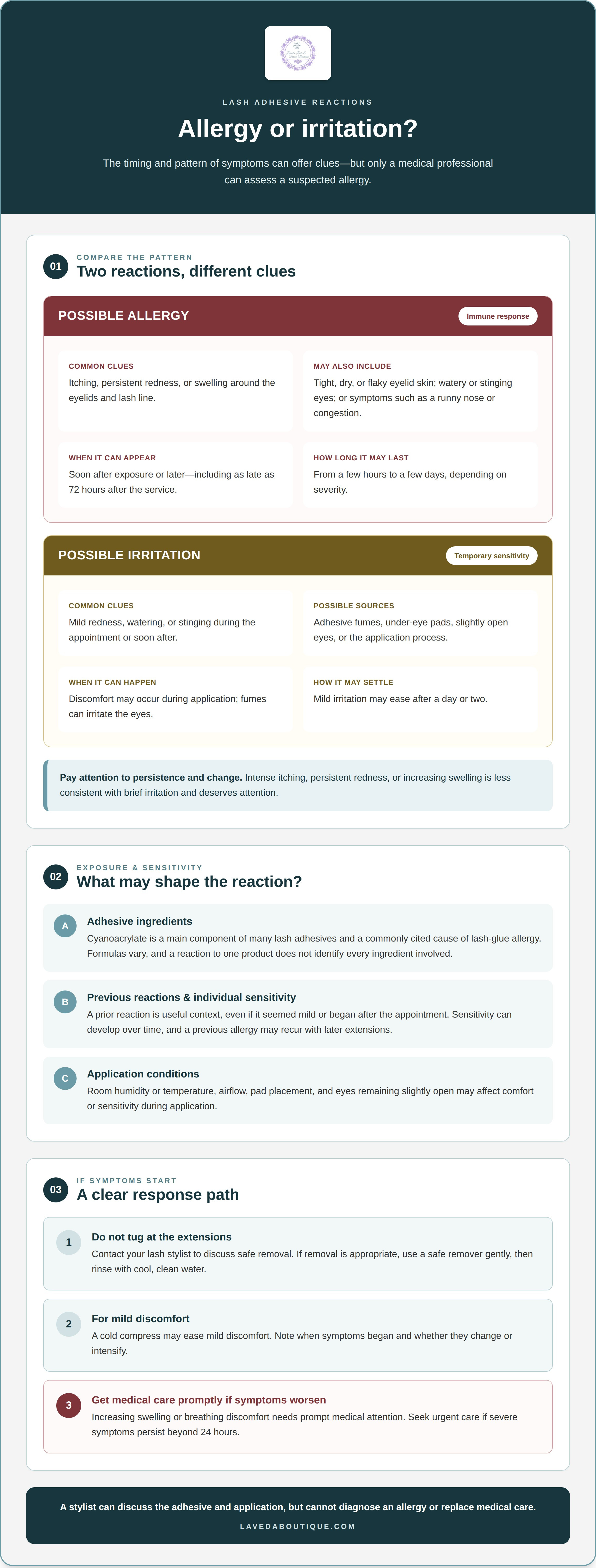
Itching, persistent redness, or swollen eyelids after a lash service may signal an allergy rather than temporary irritation. Knowing what to do if you have an allergic reaction to lash glue starts with not tugging at the extensions and contacting your lash stylist about safe removal. Seek medical care promptly if symptoms worsen, swelling increases, or you have breathing discomfort.
A reaction can be unsettling, especially because irritation and allergy may look similar at first. The timing and pattern of symptoms can offer clues, but a lash professional can’t diagnose an allergy or replace medical care.
This article explains who may be more at risk, what lash adhesive can trigger a reaction, and how allergy may differ from irritation. You’ll also learn what steps may help with mild symptoms and when to contact a healthcare professional.
Table of Contents
Can eyelash extension adhesive cause an allergic reaction?
Yes. Lash adhesive can trigger an allergic reaction, with symptoms appearing soon after application or later.
If a reaction occurs, contact your lash stylist to discuss safe removal. Don’t pull or tug at the extensions. If removal is appropriate, use a safe remover gently, then rinse the area with cool, clean water.
Eyelash glue allergic contact dermatitis can last from a few hours to a few days, depending on severity. Symptoms may appear within a few minutes to a few hours, or as late as 72 hours after the service.
Signs of an Adhesive Allergy
An adhesive allergy is an immune response that can cause itching, redness, and swelling around the lash line. These signs matter because persistent or worsening symptoms may need medical attention, rather than simple observation.
Other possible clues include tight-feeling eyelid skin, dryness, or flaking near the lash base. Watery or stinging eyes, a runny nose, congestion, sore throat, and headaches can also occur. Symptoms may appear 12-18 hours after exposure, so note when they start and whether they intensify.
Eyelid and Eye Symptoms
Allergic symptoms commonly affect the eyelids and the skin around the eyes. Itching, persistent redness, and swelling are key signs to watch for after an eyelash extension service.
Watery or stinging eyes may occur alongside eyelid symptoms, but a reaction usually affects the surrounding skin rather than the eye itself. For example, itchy, swollen eyelids with flaky skin near the lash base suggest a different pattern from brief watering during application. Seek medical care for severe or worsening symptoms.
Signs of Adhesive Irritation
Adhesive irritation is temporary sensitivity that may follow exposure to fumes, under-eye pads, or the application process. It matters because mild redness or watering can resemble an allergy at first.
Fumes can irritate the eyes, while a misplaced under-eye pad or slightly open eyes during application can cause discomfort. Mild irritation may settle after a day or two. Persistent redness, intense itching, or increasing swelling deserves attention, as these signs are less consistent with brief irritation.
Common Lash Adhesive Allergens
Cyanoacrylate is the main component of many lash adhesives and a common cause of lash-glue allergy. Knowing the ingredient’s name can help you discuss a suspected reaction and adhesive contents with your cosmetologist.
Adhesive formulas vary, so a reaction to one product doesn’t identify every ingredient involved. Some guidance recommends formaldehyde-free eyelash-extension products, but cyanoacrylate remains a commonly cited concern. If you’ve reacted, avoid another application until you’ve received appropriate advice. A previous allergy may recur with later extensions.
What is the difference between an eyelash extension allergy and irritation?
An allergy involves an immune response; irritation is usually temporary sensitivity to adhesive, pads, or application. Understanding the difference can help you describe symptoms clearly and recognize when discomfort is persisting or worsening.
Factors Behind Adhesive Sensitivity
Adhesive sensitivity can vary with individual response, room humidity or temperature, and previous reactions. These factors may help explain why the same extension adhesive feels comfortable at one appointment but causes discomfort at another. Tell your stylist about any earlier reaction before a new application.
A previous reaction is useful context, even if it seemed mild or appeared after you left the appointment. Sensitivity can develop over time, while an allergy involves the immune system and may persist. A symptom diary can help you note when redness, watering, or itching began and whether it changed after exposure ended.
Product information can also guide a conversation. The Board of Barbering and Cosmetology advises clients to ask which ingredients are in eyelash glue. Some adhesives marketed for sensitive eyes use lower fumes or different bonding agents, but that doesn’t establish that a particular formula will prevent irritation or allergy.
Describe the symptom and its timing precisely: watering during application differs from eyelid itching that appears later. That detail helps a professional understand the possible exposure and whether symptoms warrant medical assessment. A stylist can discuss the adhesive and application, but should refer suspected allergies to a medical professional rather than diagnose them.
Fumes and Application Irritation
Adhesive fumes and application conditions can irritate the eyes without proving an allergy. You may notice watering or stinging during the appointment, especially if your eyes remain slightly open or an under-eye pad sits poorly. Discomfort can arise from the process, not only from skin contact with glue.
Airflow is one practical consideration during application. A fan may help sensitive clients while adhesive is being used; chemicals associated with sensitivity and reaction dissipate once the glue cures. A fan isn’t a treatment for an allergic response, and persistent or worsening symptoms still need appropriate attention.
Ask about ingredients and describe any previous sensitivity before the service begins. If fumes bother you during application, tell the stylist rather than trying to endure the irritation with your eyes open. The stylist can assess the setup and application conditions, including pad placement and airflow, and decide how to proceed safely.
Reducing exposure means addressing the source, not masking symptoms. Don’t assume a “sensitive eyes” label rules out a reaction: formulas can use different bonding agents, and individual responses vary. If symptoms continue after the appointment or intensify, treat that differently from brief watering during application and seek appropriate medical advice.
Who is Most at Risk of Developing Adverse Reactions to Lash Extension Glue?
People with previous lash adhesive reactions or sensitivity should tell their technician before another application. A patch test may help identify a possible reaction, but “hypoallergenic” labeling doesn’t establish that an adhesive is safe for everyone.
Risk isn’t limited to someone who reacted during a first appointment. Sensitivity varies between people, and an allergy may develop over time. A previous reaction is especially important: the immune system may respond again after later exposure, even if earlier symptoms seemed mild. Share what happened, when symptoms appeared, and whether they involved itching, redness, or swelling.
Current symptoms also matter. If your eyelids are swollen or itchy, or your eyes are persistently red, postpone another lash application and seek appropriate medical advice. A technician can discuss the service and adhesive, but should refer suspected allergies to a medical professional rather than diagnose or treat them.
Patch testing is a precaution recommended before treating a new client. Tell the technician about sensitive eyes, earlier reactions, and known adhesive sensitivities before testing. Ask which ingredients are in the lash adhesive; the Board of Barbering and Cosmetology recommends asking the cosmetologist about glue ingredients. This conversation clarifies which product is being used and what exposure the test involves.
A patch test doesn’t replace medical assessment if you already have symptoms or a history of a severe reaction. Follow the technician’s directions for the test, then report any changes promptly. A test result shouldn’t be treated as permission to ignore new symptoms during or after a later appointment.
Prevention starts with reducing avoidable exposure and making informed choices. The Board of Barbering and Cosmetology recommends choosing formaldehyde-free eyelash-extension products. Some adhesives marketed for sensitive eyes use lower fumes or different bonding agents, but that doesn’t mean the formula cannot trigger an individual reaction.
To prevent another reaction, avoid reapplying extensions after a suspected glue allergy until you’ve received appropriate medical advice. “Hypoallergenic” or “sensitive eyes” products don’t guarantee protection from allergy; formulas and personal responses differ. If a patch test or application brings on symptoms, stop the service and report the reaction rather than continuing with more adhesive.
Keep a clear record for your next medical or salon conversation: note the product ingredients if available, the application date, when symptoms began, and how they changed. Those details can help distinguish a recurring exposure pattern from a brief sensitivity response and support a safer decision about future lash services.
When to seek medical care
Get medical help for severe, persistent, or worsening symptoms after lash adhesive exposure. Breathing discomfort or increasing swelling needs prompt attention.
Recognizing When Medical Care Is Needed
Medical care is needed when symptoms are severe, worsening, or affecting breathing. These signs can indicate more than temporary discomfort and shouldn’t be managed by a lash technician.
Contact a healthcare professional immediately for persistent or worsening swelling, respiratory discomfort, or a severe reaction after an eyelash service. If severe symptoms last more than 24 hours, seek urgent care. Don’t wait for your stylist to address breathing problems or rapidly worsening symptoms.
Milder congestion, tearing, or a runny nose usually settles within 24 hours. If these symptoms persist, intensify, or appear with eyelid swelling, contact a medical professional. Knowing what to do if I have an allergic reaction to lash glue includes recognizing when salon advice isn’t enough.
Seeking Medical Advice
Seek medical advice when symptoms continue after the initial reaction or remain after a few days. An immune response may need assessment beyond the scope of salon care, and providers such as Premium Allergy & Respiratory Center can help evaluate allergic sensitivities and recommend appropriate care.
A stylist can discuss the service and adhesive, but shouldn’t diagnose or treat a possible allergy. For example, persistent eyelid redness or itching after extensions warrants contacting a healthcare professional, especially if symptoms are worsening. Facilities such as Yoyime Clinic provide doctor-led dermatology and wellness support to help evaluate skin irritation or adverse reactions.
If you suspect a reaction, contact your lash stylist to discuss whether safe removal is necessary. Don’t pull or tug at extensions. A professional can discuss removal while a healthcare provider assesses your symptoms. If breathing discomfort develops, prioritize medical care rather than waiting for salon guidance.
Before speaking with a clinician, note when symptoms began, which areas are affected, and whether they’re changing. Record details such as eyelid swelling, eye watering, congestion, or a sore throat. If available, bring adhesive ingredient or product information; it may help explain the exposure.
Don’t apply another lash adhesive while symptoms are active. Avoid rubbing your eyelids or trying to remove extensions by force, which can add irritation around sensitive skin. If removal is advised, use a safe method and rinse the area with cool, clean water afterward.
Arrange medical advice if a suspected allergic reaction remains after a few days, even if symptoms aren’t severe. Persistent inflammation around the eyes deserves assessment. A salon professional can’t determine whether your immune system is reacting to glue or another exposure.
If you’re deciding what to do if I have an allergic reaction to lash glue, use symptom severity to guide your next step. Breathing discomfort or worsening swelling calls for immediate medical attention; severe symptoms lasting beyond 24 hours warrant urgent care. Don’t delay care to identify every ingredient first.
Causes of lash glue allergic reactions
Lash glue reactions can happen because the immune system responds to an adhesive ingredient. Cyanoacrylate, a main component of lash glue, is a common cause of lash-glue allergy. Adhesive or tape used to attach extensions may also be involved. A 2012 study reported eye or eyelid allergic reactions among participants related to glue or tape used for extensions.
An allergy can develop after previous exposure rather than appearing during someone’s first lash appointment. A past service without symptoms doesn’t rule out a later reaction. If redness, itching, or swelling follows a later application, note the timing and tell a healthcare professional about earlier lash services.
Timing can offer a clue to the exposure pattern, though it cannot confirm the cause. An allergic reaction may begin within a few minutes to a few hours after application. Symptoms can also appear 12-18 hours later, or up to 72 hours after the service. Record when symptoms start and whether they worsen.
The adhesive isn’t the only possible exposure during a lash service. Tape used to secure or position materials can be associated with eye or eyelid reactions, as reported in the 2012 study. Under-eye pads and application conditions may cause irritation, which can resemble allergy but doesn’t establish an immune reaction.
Individual sensitivity, room humidity or temperature, and previous reactions can contribute to adhesive sensitivity. These factors may help explain why responses differ between appointments, even when the service seems similar. They don’t identify a specific allergen by themselves. Ask which ingredients are in the glue, and record the product details alongside any symptoms.
A patch test before treating a new client is a precaution, not a guarantee against a future reaction. An allergy can develop over time, and someone who has reacted may react again with later extensions. If symptoms followed an earlier application, don’t rely on a patch test alone to decide whether another exposure is appropriate.
Separate possible causes from visible signs: eyelid redness, swelling, and itching may follow an allergic response, while brief discomfort during application may relate to fumes or placement. A healthcare professional can assess suspected allergy; a lash technician should not diagnose it. For future appointments, discuss lash extension options after addressing any suspected reaction with a medical professional.
Laveda Lash & Brow Boutique
Laveda Lash & Brow Boutique helps you make considered choices about beauty services after a lash adhesive reaction. If symptoms are active, worsening, or severe, seek medical care first; a salon cannot diagnose or treat an allergy.
Once you’ve addressed the reaction with a healthcare professional, discuss future beauty plans and any previous sensitivity before booking. Clear information about what happened, when symptoms appeared, and which products were involved can guide a conversation about whether to proceed with lash extensions or consider another option, such as a lash lift or brow lamination.
For a professional conversation about your next beauty appointment, contact Laveda Lash & Brow Boutique.
Make Your Next Beauty Decision With Care
After a reaction, take time to make your next appointment decision deliberately. If you’re still weighing what to do if you have an allergic reaction to lash glue, put medical advice ahead of another adhesive service. Once symptoms have been assessed, share what happened and what you learned with your beauty professional before planning future treatments.
Your preferences can guide the next step. You may choose to pause lash services, discuss a different beauty option, or revisit your plans after speaking with a healthcare professional. Make the choice with a clear account of your experience, rather than feeling pressured to repeat a service that caused concern.
For a thoughtful conversation about a future appointment, discuss your next beauty service with Laveda Lash & Brow Boutique. A considered plan can help you move forward with greater confidence.
Frequently Asked Questions
What Does an Allergic Reaction to Eyelash Glue Look Like and How Do You Treat it?
An eyelash glue allergy may cause itchy, red, or swollen eyelids, sometimes with watery eyes or nasal symptoms. If you suspect a reaction, avoid rubbing the area and contact your lash stylist to discuss safe extension removal. A cool compress may ease mild discomfort, but it doesn’t treat an allergy. Seek medical advice for symptoms that persist, worsen, or feel severe.
What is the difference between a sensitive client and a client that is allergic to cyanoacrylate?
A sensitive client may experience temporary irritation from fumes or application conditions; a client allergic to cyanoacrylate has an immune response to an adhesive ingredient. Symptoms alone can’t confirm which is happening. For example, brief watering during application differs from ongoing eyelid itching afterward, but a healthcare professional must assess a suspected allergy. Share previous reactions and adhesive ingredient information before considering future lash services.
How can you tell if lash extension irritation is normal?
Brief, mild watering or redness after application may reflect irritation, particularly if it fades quickly. Don’t assume discomfort is routine if it persists, worsens, or includes intense itching or swelling. Note when symptoms began and whether they’re changing. If the pattern concerns you, contact a healthcare professional rather than trying to identify the cause yourself or applying another product near your eyes.
What Can Cause Sensitivity to Lash Adhesive?
Possible contributors include adhesive fumes, under-eye pad placement, individual sensitivity, room humidity or temperature, and previous reactions. Cyanoacrylate is a common lash adhesive component associated with allergy, while application conditions can also cause irritation. Because these causes can overlap, describe the service setup and symptom timing to a medical professional. Ask which ingredients were used, especially if you’ve reacted after an earlier appointment.
What are the symptoms of an allergic reaction to eyelash glue?
Common symptoms include itchy, red, or swollen eyelids, tightness, and flaky or dry skin near the lash base. Watery or stinging eyes may occur, along with congestion, a runny nose, sore throat, or headache. Symptoms can appear after you leave the appointment, so record when they start and which areas are affected. Seek medical care if they become severe or continue worsening.
How can I tell an eyelash glue allergy from eye irritation or an eye infection?
You can’t reliably distinguish an allergy from an eye infection based on symptoms alone. Lash adhesive allergy often affects the eyelids and surrounding skin, while irritation may be brief and connected to fumes or application. These patterns aren’t a diagnosis, and symptoms can overlap. If discomfort persists or you’re unsure what’s causing it, contact a healthcare professional for an assessment instead of treating it as a salon issue.
What should I do immediately after reacting to lash glue?
Stop rubbing your eyes, avoid applying more products, and contact your lash stylist about safe extension removal. Don’t pull at the lashes. If removal takes place, rinse the area gently with cool, clean water afterward. A cold compress may soothe mild discomfort, but it isn’t treatment for an allergic reaction. Get medical advice if symptoms persist, worsen, or involve swelling or breathing discomfort.
When is an eyelash glue reaction an emergency, and when should I call 911?
Call 911 in the United States if the reaction causes serious breathing difficulty or rapidly worsening swelling that threatens breathing. Don’t wait for a salon appointment in an emergency. For persistent or worsening symptoms without immediate breathing danger, contact a healthcare professional promptly. If severe symptoms continue beyond 24 hours, seek urgent care. When unsure about a potentially severe reaction, prioritize emergency medical help.
this is a helpful and clear breakdown of a topic that can be confusing. distinguishing between an allergy and irritation is crucial, and the advice to contact the stylist for safe removal rather than pulling at the extensions is very practical. the guidance on when to seek medical care is particularly important for anyone experiencing these symptoms. Wisk AI