
What to Do When Lash Extensions Irritate Your Eyes
Yes, lash adhesive fumes can cause red, watery eyes or mild stinging, while swelling and persistent itching may signal an allergic reaction. If you’re wondering what to do if lash extensions are irritating your eyes, ask for the application to pause as soon as discomfort begins, keep your eyes closed, and don’t rub them. Rinse irritated eyes with clean water, and seek medical care for severe or worsening symptoms.
Redness after an appointment can feel alarming, especially when it’s difficult to tell temporary irritation from an allergy. The timing and pattern of symptoms can offer clues, but swelling, worsening redness, or intense itching deserve prompt attention.
Learn how to recognize the difference, when to stop an application, and how to approach removal safely. You’ll also find practical aftercare guidance, including what to avoid and when eye symptoms call for professional medical care.
Table of Contents
What’s the Difference Between an Adhesive Allergy and Irritation?
Irritation is usually a temporary response; an allergy is an immune reaction to an adhesive ingredient. Symptoms can overlap with those of an eye infection, so appearance alone cannot reliably distinguish them. Seek medical assessment if you suspect an infection.
Adhesive Sensitivity Triggers
Adhesive sensitivity describes an eye or skin response to adhesive ingredients or application conditions. The trigger may be adhesive fumes, under-eye pad placement, or eyes opening slightly during application. Individual sensitivity, room humidity, room temperature, and previous reactions can also contribute. An allergy involves an immune response to a specific adhesive ingredient, so an uneventful past appointment doesn’t rule out a later reaction.
Fumes and Eye Redness
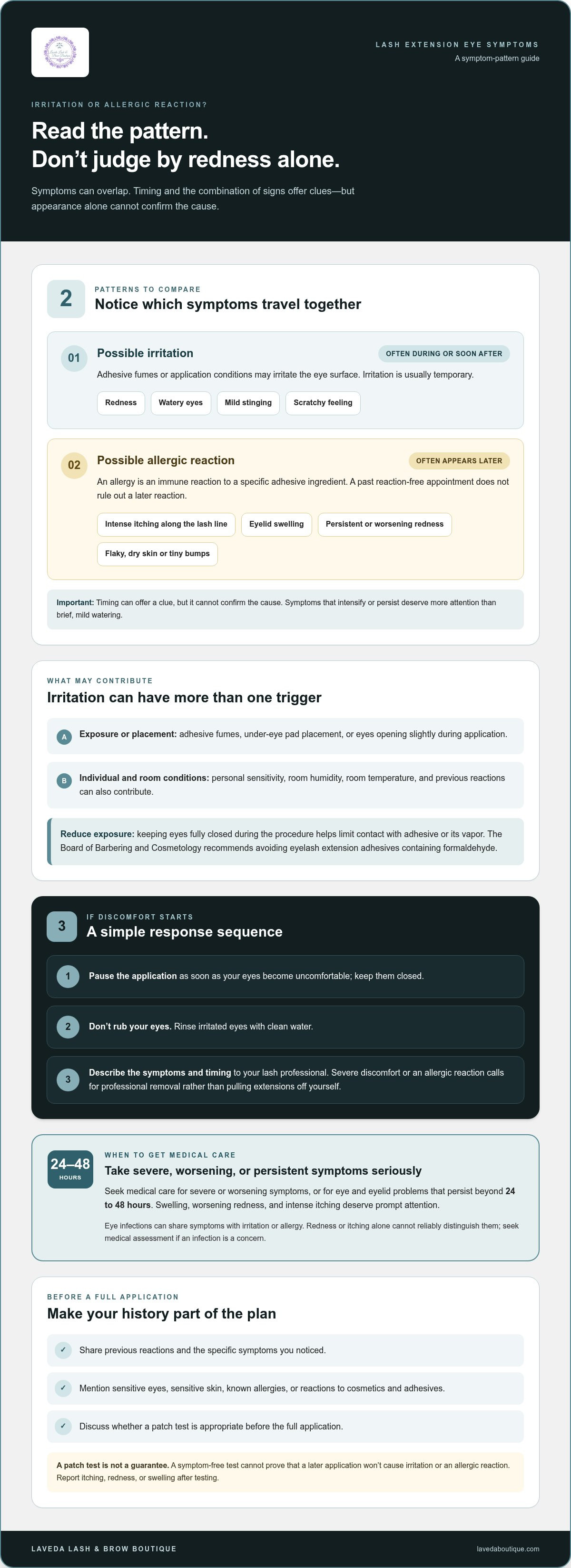
Adhesive fumes can irritate the eye surface, causing redness, watering, mild stinging, or scratchiness. These symptoms may begin during or soon after application, especially if your eyes are slightly open and fumes reach them. Redness alone doesn’t establish an allergy. Keeping your eyes fully closed during the procedure helps limit exposure to adhesive or its vapor.
Look at the pattern of symptoms, not redness alone. Adhesive irritation may cause watery eyes, mild stinging, or a scratchy feeling. An allergic reaction can cause intense itching along the lash line, eyelid swelling, persistent redness, or flaky, dry skin near the lash base. Noticeable swelling, worsening redness, or tiny bumps along the lash line also warrant attention.
Timing offers another clue, but it cannot confirm the cause. Irritation from fumes or pad placement can begin during application. Allergic reactions usually appear later, as the immune system responds to an adhesive ingredient. Symptoms that intensify or persist deserve more attention than brief, mild watering. Don’t diagnose an eye infection from redness or itching alone; a medical professional can assess symptoms that raise concern.
Ask about the adhesive and application conditions if irritation occurs. Some professionals offer sensitive-eye adhesives formulated with lower fumes or different bonding agents. A stylist may also adjust the application technique or use a different adhesive. The Board of Barbering and Cosmetology recommends avoiding eyelash extension adhesives containing formaldehyde. These options may help address exposure, but they don’t establish whether a reaction is irritation or allergy.
Tell the lash professional about previous reactions and when symptoms began. Explain whether discomfort started during application or appeared later, and describe specific signs such as itching, swelling, or watery eyes. This information can help distinguish possible exposure-related irritation from a pattern that may indicate allergy. If symptoms are severe or worsening, prioritize medical assessment instead of relying on an adhesive change.
Patch testing and allergy precautions
A patch test can help assess a possible reaction before a full lash application. If you have sensitive eyes, sensitive skin, allergies, or a previous reaction, discuss a patch test with your lash stylist. This supports an informed conversation, but cannot guarantee that irritation or allergy won’t occur at a later appointment.
Be specific about your history. For example, mention whether a past reaction involved eyelid swelling, itching, redness, or watery eyes. Include any reactions to cosmetics or adhesives. These details help your stylist understand what happened and discuss whether a patch test is appropriate before proceeding.
If you’re new to eyelash extensions, ask about patch testing before application. The same precaution is advised for people with sensitive skin or allergies. Don’t wait until you’re reclined for the service to raise a concern. Bring it up while discussing the appointment so the question of testing can be addressed beforehand.
Share any previous reaction and describe its symptoms.
Mention sensitive eyes, sensitive skin, or known allergies.
Ask about a patch test before the full application.
Tell your stylist if symptoms develop after testing.
A patch test is not the same as an extension application. It helps you and your stylist discuss sensitivity before adhesive is used for a full set. A symptom-free test doesn’t prove that a later application cannot cause a reaction. Pay attention to changes after testing, and report itching, redness, or swelling rather than dismissing them.
Precautions for possible allergies also include discussing the adhesive itself. Some lash professionals offer sensitive-eye adhesives formulated with lower fumes or different bonding agents. Ask about available options and explain which symptoms you’re hoping to avoid. A different adhesive may address one concern, but it doesn’t establish whether a past reaction was irritation or allergy.
Previous tolerance doesn’t rule out a later allergy. An allergic response can develop as the immune system reacts to a specific ingredient. Returning clients should report new symptoms, even if earlier appointments caused no problems. Discuss patch testing especially after a new reaction, before repeating the same application.
Choose a clear plan before the service begins. Agree on how you’ll communicate discomfort, and speak up if your eyes become irritated during application. If a reaction appears after testing or an appointment, contact your lash stylist promptly. Severe or worsening symptoms call for medical attention, not another test or an adhesive change alone.
Professional removal of extensions
If your eyes are very uncomfortable or you have an allergic reaction, professional removal is the safer approach. Contact your lash stylist promptly and describe your symptoms, including when they began and whether they’re worsening.
At-home removal can worsen discomfort if you pull at extensions or get remover near your eyes. Tugging may also disturb your natural lashes. Don’t try to dissolve the bonds with products or tools near the eye area. A professional can assess whether removal is appropriate if a reaction follows an appointment.
Removal is not a substitute for medical care. Severe eyelid or eye swelling, pain, or intense itching warrants a visit to a doctor. If symptoms are worsening, prioritize medical help rather than waiting for an appointment or attempting removal yourself. Tell the clinician when symptoms started and which application or removal products may have been involved.
When you contact the lash stylist, give clear details instead of saying only that your eyes feel uncomfortable. Explain whether you have swelling, redness, itching, watering, or pain. Note whether symptoms began during application or appeared later. This information helps the stylist understand the situation and discuss safe removal with you.
Describe the symptoms and when they started.
Say whether discomfort is mild, severe, or worsening.
Avoid pulling, picking, or applying remover yourself.
Seek medical care for severe eye or eyelid symptoms.
Don’t assume extensions need to be removed immediately in every case. The key consideration is your reaction: pronounced discomfort or signs of allergy call for prompt professional guidance. If your eyes feel normal and there’s no reaction, extensions grow out naturally over a four-to-nine-week period. That natural shedding timeline is not a reason to wait through painful or worsening symptoms.
After removal, keep track of how your eyes feel. If itching, redness, or swelling continues or increases, tell a medical professional. Mention any adhesive exposure and when removal took place. A lash stylist can help determine whether safe removal is needed, but severe symptoms require medical assessment.
Removal also doesn’t identify the exact cause of a reaction. Adhesive irritation and allergy can produce overlapping symptoms, so don’t treat removal as a diagnosis. Record whether symptoms eased, persisted, or worsened afterward. These details can inform a medical assessment and any future conversation about lash applications.
Base your next decision on your symptoms, not the appearance of the extensions. If your eyes are very uncomfortable, contact your stylist about safe removal. If you experience severe swelling, pain, or intense itching, see a doctor. Don’t risk further irritation by pulling extensions or applying products near your eyes.
Recognizing when to stop the application procedure
Pause the application if your eyes become uncomfortable, and stop for severe symptoms. Severe eyelid or eye swelling, pain, or intense itching warrants medical attention; symptoms lasting longer than 24 to 48 hours should be evaluated by a medical professional.
Symptoms Requiring Urgent Care
Severe or worsening eye and eyelid symptoms after lash application call for urgent care. Pain, marked swelling, or intense itching needs more than an adjustment to the application. Stop the procedure and seek medical attention if these symptoms develop. Don’t continue just to finish the set.
Speak up as soon as discomfort starts. Mild stinging or watering can occur with irritation, but increasing redness or swelling changes the situation. Ask the technician to pause so you can explain what you’re feeling. If pain or intense itching appears, end the application rather than waiting for the remaining lashes.
The Board of Barbering and Cosmetology recommends stopping the procedure if the technician uses nail glue on the lashes. Nail glue is not intended for lash extensions. Don’t allow the application to continue after noticing it. Raise the concern immediately and leave the lashes unapplied until the issue is addressed.
When to See an Eye Doctor
See an eye doctor when eye or eyelid symptoms persist beyond 24 to 48 hours, or sooner for severe swelling, pain, or itching. This matters because persistent symptoms need medical evaluation rather than continued cosmetic adjustments. Worsening redness or discomfort also warrants prompt attention.
Brief redness or watering may fade quickly after a service, but don’t ignore symptoms that linger or intensify. Track when they began, whether they’re improving, and which signs you notice. For example, tell the clinician if itching began later or swelling appeared alongside redness.
Keep the application safe from the start. Your eyes should remain fully closed while extensions are applied, helping prevent adhesive or vapor from entering them. If your eyes open or feel irritated, tell the technician and ask for a pause. Don’t try to endure discomfort in silence.
During a pause, describe the symptom plainly: “My eye is stinging,” or “My eyelid is swelling.” This gives the technician clear information to stop and respond. If you experience intense itching or pain, prioritize medical care. A lash appointment should never take precedence over a serious eye symptom.
After stopping, note when your symptoms began and how they change. Persistent or worsening discomfort, intense itching, or swelling calls for prompt attention. Share the application details with the medical professional, including whether nail glue was used. Clear information can help guide next steps beyond routine service adjustments.
Aftercare and eye irritation
Brief redness or watering after an appointment may fade quickly. If your eyes feel irritated, rinse them with clean water and avoid rubbing. Rubbing can add friction to already uncomfortable eyes and disturb the extensions. Notice whether symptoms ease, persist, or worsen as you follow these simple aftercare measures.
A clean, cool compress can soothe mild discomfort. Rest it gently over closed eyelids without pressing on or shifting the lashes. Lubricating eye drops may also help soothe irritation. Avoid choosing medicated drops at random, especially products intended only to reduce redness. They may not address the cause of your symptoms.
Take a break from eye makeup while irritation continues. Mascara, eyeliner, or eye shadow can add contact and make it harder to keep the area undisturbed. Avoid steam, rubbing, and touching or manipulating the lashes. These steps reduce unnecessary contact while you monitor whether redness or watering is settling.
Rinse irritated eyes with clean water.
Use a cool compress gently over closed eyelids.
Pause eye makeup until irritation settles.
Avoid rubbing, steam, and disturbing the extensions.
Don’t use random medicated drops for redness.
Mild irritation can last from a few hours to 24-48 hours. Reactions to chemicals used during application may cause side effects within two to three days, so pay attention to symptoms that appear later. Note when they started and whether they are improving. A short-lived watery-eye response differs from discomfort that persists or grows more intense.
Contact your lash stylist promptly if discomfort persists or worsens, or if intense itching or swelling develops. Describe your symptoms and when they began. The stylist can help determine whether safe removal is necessary. Don’t pull at the extensions or try to remove them while your eyes are irritated.
Eye or eyelid symptoms that continue beyond 24 to 48 hours should be evaluated by a medical professional. Seek medical care sooner for severe swelling, pain, or intense itching. Aftercare is not a substitute for that assessment. If symptoms are worsening, skip makeup and avoid further interference with the lashes while arranging care.
Once irritation has settled, keep your next appointment focused on comfort and clear communication. Explain what happened, when symptoms appeared, and which aftercare steps you used. If you’re ready to plan a future lash appointment, explore lash extension services with these concerns in mind.
Laveda Lash & Brow Boutique: Lash Extensions
Laveda Lash & Brow Boutique offers Lash Extensions for clients considering an appointment after irritation has settled. If you’ve experienced discomfort, share what happened and when symptoms began when discussing your appointment. That context can help guide a conversation about your preferences and concerns before you decide whether to proceed.
Active or worsening eye symptoms need medical attention, not a cosmetic appointment. Once your eyes feel well, consider whether extensions still suit your beauty routine. If you’d prefer a different option, Brow Lamination can enhance your brows without applying extensions to your lashes.
Make your next beauty decision with confidence
Knowing what to do if lash extensions are irritating your eyes can help you make an informed choice about future appointments. Let your comfort guide the timing. There’s no need to rush back into an application while you’re still uncertain about what triggered your symptoms.
Before planning your next beauty appointment, consider what would make the experience comfortable and straightforward for you. You might prefer to discuss your concerns in advance or explore a different beauty service. Choose an option that fits your needs, and speak up if anything feels uncomfortable.
For personalized guidance on your next appointment, contact Laveda Lash & Brow Boutique. Take the next step at a pace that feels right, with your comfort at the center.
Frequently Asked Questions
Can Adhesive Fumes Really Cause Red Eyes?
Yes, adhesive fumes can irritate the eyes and cause redness, watering, mild stinging, or scratchiness. For example, symptoms may start during application if vapor reaches the eye surface. Redness alone doesn’t prove an allergy or identify the exact cause. Note whether irritation began during the service or appeared later, then share that timing with your lash stylist or a medical professional.
Can Eye Drops Help?
Lubricating eye drops may soothe irritation after lash extensions. They don’t establish what caused the symptoms, so keep watching for changes such as increased swelling or discomfort. Don’t choose medicated drops simply because your eyes look red; some products target redness without addressing the underlying issue. If symptoms are severe or worsening, seek professional medical help instead of relying on drops alone.
How Long Does the Redness Last?
Simple irritation may last from a few hours to 24-48 hours. Stronger reactions may last a couple of days, and side effects from application chemicals may appear within two to three days. These timeframes describe different possible responses, not a diagnosis. Track when redness began and whether it’s easing. Have persistent eye or eyelid symptoms evaluated if they last longer than 24 to 48 hours.
Okay But What If It Already Happened?
If irritation has started, stop rubbing your eyes and rinse them with clean water. Note when symptoms began, whether they followed an appointment immediately, and how they change. For example, record whether watering settles while redness persists. Contact your lash stylist about the reaction and safe removal. Seek medical care for severe swelling, pain, intense itching, or worsening symptoms.
What Can Cause Sensitivity to Lash Adhesive?
Sensitivity may relate to individual factors, adhesive exposure, or application conditions. Adhesive ingredients can trigger an allergic immune response; fumes, under-eye pad placement, or eyes opening slightly can irritate the eyes. Room humidity, temperature, and previous reactions can also matter. If you’ve reacted before, describe the symptoms and timing before another appointment. People with sensitive eyes, sensitive skin, or allergies can discuss patch testing beforehand.
Why Do Lash Extensions Hurt Straight After Application?
Immediate discomfort can follow irritation from adhesive fumes, under-eye pads, or eyes opening slightly during application. Mild stinging or a scratchy feeling may occur, but don’t ignore pain. Tell the technician as soon as you feel discomfort and ask them to pause. Severe eye or eyelid pain calls for medical attention. Don’t assume the cause based on timing alone.
What should you do immediately if lash extensions irritate your eyes?
Ask for the application to stop if discomfort begins during the service. Once away from the application, rinse irritated eyes with clean water and avoid rubbing or disturbing the lashes. Don’t apply random medicated drops for redness. If symptoms intensify or you develop severe swelling, pain, or intense itching, seek medical care. In Washington, DC, or Arlington, describe when the application took place when seeking local medical assessment.
How do you safely remove lash extensions causing eye irritation?
Contact your lash stylist to discuss safe removal, particularly if your eyes are very uncomfortable or you suspect an allergic reaction. Don’t pull extensions off or try to dissolve the adhesive near your eyes. Professional removal is the safer approach in these situations. For severe swelling, pain, or intense itching, seek medical attention rather than waiting for removal. Share when symptoms began and how they’ve changed.