
5 ways to care for overplucked brows and conceal stray hairs

A hard outline can make overplucked brows look even thinner. For fixing overplucked 90s brows Washington DC, use light, hair-like strokes in the direction your brow hairs grow, and avoid plucking while they regrow. Meaningful regrowth often appears after about three to four months without plucking.
It’s frustrating to wait for sparse areas to fill in, especially when stray hairs make your brows look uneven. You can soften the look without removing new growth: use subtle filling techniques, leave hairs undisturbed, and give your brows time to develop. This guide covers practical ways to disguise gaps and stray hairs, support regrowth, avoid further over-tweezing, and decide when professional brow services in Washington, DC, can help refine your shape.
Table of Contents
1. Professional brow services while waiting for regrowth
A brow artist can refine your shape without removing every stray hair. During regrowth, a visit every three weeks can help keep the outline controlled while preserving hairs that may belong in your natural brow. Ask for a conservative cleanup focused on obvious growth outside your intended shape. Avoid a sharp, narrow outline that recreates the overplucked look.
For microblading in Washington, DC, look for a specialist whose healed work shows soft, hair-like strokes and balanced shapes. A skilled artist should discuss your existing brow pattern, desired result, and how the procedure fits your regrowth plan before beginning. Review healed results, not only fresh work, and choose an artist whose approach suits a fuller, natural-looking brow.
Microblading adds the appearance of individual hairs, but timing matters when brows are still changing. Clients return for a top-up four to eight weeks after their initial appointment, and results last around 18 months to two years. Discuss the shape you’re restoring before treatment, so the design complements your natural brow rather than locking in a temporary outline.
Transplanted brow hair follows a different course. The procedure involves about 400 transplanted follicles on each brow and can take up to four hours. New hair may take up to six months to begin growing outside the skin after the follicles settle around the brows. Because transplanted follicles come from the scalp, expect regular trimming, often every couple of weeks.
Conditioning can make existing hairs look neater, but it does not guarantee regrowth. Use a brow conditioner gently, following its label, and brush hairs into place with a clean spoolie. There is no strong evidence that castor oil grows new eyebrow hair. For a fuller appearance today, pair grooming with light, hair-like pencil strokes.
Choose a brow color close to or slightly lighter than your natural shade. A darker product can create a harsh outline that emphasizes sparse patches. Apply it in short strokes in the direction of hair growth, then soften the edges with a spoolie. For example, fill a missing tail with fine strokes instead of drawing one solid line.
A brow serum may condition existing hairs and help them look more groomed. Treat it as a cosmetic step, not a substitute for regrowth or a reason to keep plucking. Pair a gentle routine with time and a clear shape plan. If you’re considering microblading, discuss how the design will work with your current hairs.
2. How long does it take for over-plucked eyebrows to grow back?
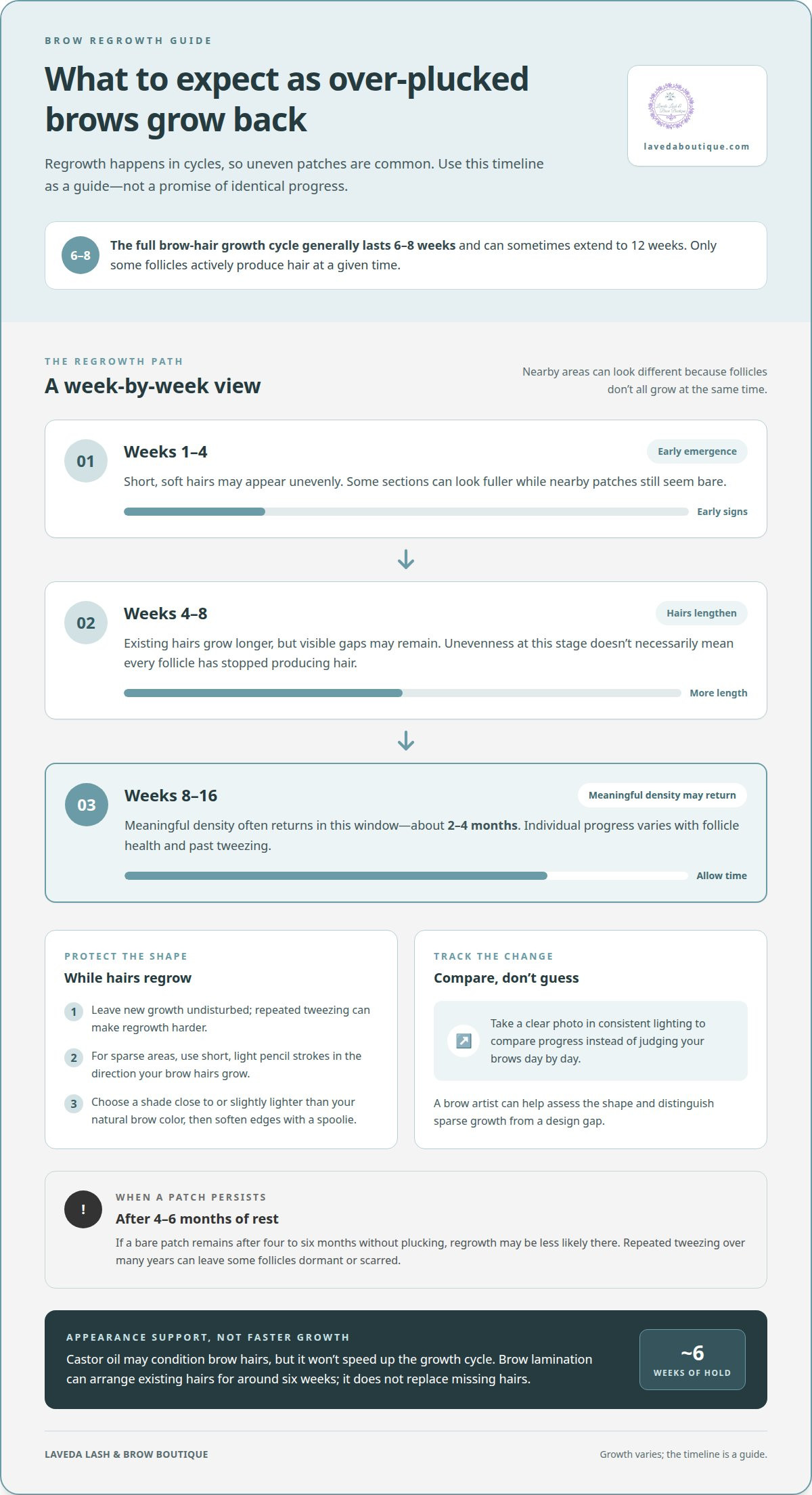
Eyebrow hairs grow in cycles, so newly plucked areas don’t fill in evenly. The full growth cycle generally lasts six to eight weeks and can sometimes extend to twelve weeks. Only some follicles actively produce hair at a given time. That’s why one section can look fuller while a nearby patch still appears bare.
Use these stages as a guide, not a promise of identical progress. During weeks one to four, short, soft hairs can emerge unevenly. From weeks four to eight, existing hairs lengthen, though gaps may remain visible. Between weeks eight and sixteen, meaningful density often returns. Take a clear photo in consistent lighting to compare changes instead of judging your brows day by day.
Follicle health and past tweezing affect what you see. Repeated plucking over many years can leave follicles dormant or scarred, and some may not produce new hairs. If a bare patch persists after four to six months of rest, regrowth may be less likely there. A brow artist can assess the shape and help distinguish sparse growth from a design gap.
Castor oil is often used to condition brow hairs, but it won’t speed up the growth cycle. Focus on grooming visible hairs, not prompting new follicles to grow. Brow lamination offers a different, temporary approach: it sets existing hairs in place and can hold their shape for around six weeks. It won’t replace missing hairs, but it can make uneven brows look more organized.
An eyebrow transplant is a separate surgical option for sparse areas. It moves follicles into the brow area rather than waiting for existing follicles to resume growth. Transplanted hairs come from the scalp, so their texture and grooming needs differ from natural brow hairs. Consider this distinct option carefully; it won’t create an immediate appearance of full regrowth.
For microblading in Washington, DC, make applicable licensing and sanitation practices part of your booking decision. Ask the artist to explain the procedure and aftercare clearly. Microblading breaks the skin, so risks include irritation, infection, allergic reaction, or uneven pigment. Follow the aftercare instructions and seek medical advice for concerning symptoms. A [personalized brow plan](https://lavedaboutique.com) can help you consider cosmetic options alongside your regrowth timeline.
3. Why repeated tweezing can make regrowth difficult
Each brow hair grows from a follicle, and repeated over-tweezing can weaken those follicles. Plucking the same area more than a couple of times can make regrowth harder. After years of repeated removal, some follicles may become dormant or scarred, and some may not regrow. The result can be persistent gaps, especially where the brow was repeatedly narrowed.
The pattern often starts with one stray hair. You remove it, then another seems out of place, and the arch gradually shifts. A few isolated hairs can become a thin upper edge or a shortened tail. As the outline changes, it gets harder to tell which hairs belong to your natural brow shape. Continuing to pluck for symmetry can remove hairs from both sides that would help restore fullness.
Hair also grows in cycles, so a bare patch doesn’t always mean every follicle has stopped producing hair. Some follicles may be between active growth phases while others produce visible hairs. Repeatedly removing new growth makes it harder to see the emerging shape. For example, a short hair near the lower edge may look misplaced before it lengthens enough to sit naturally with the brow.
Give the shape a clear pause. Stop tweezing, waxing, and threading for about two months while you observe returning hairs. For anyone fixing overplucked 90s brows in Washington, DC, this break helps reveal which hairs may contribute to the restored shape. Avoid treating every uneven spot as an instruction to pluck. A temporary mismatch is easier to assess than a constantly changing outline.
Use a simple tracking routine instead of repeatedly checking your brows up close. Take a clear photo in consistent lighting, then compare it after a period of rest. Note where new hairs appear, particularly at the tail and along the lower edge. Those observations can help distinguish regrowth from hairs outside your intended shape and give a brow artist a clearer picture of your starting point.
If you feel tempted to pluck, conceal the hair rather than remove it. Brush it into place with a clean spoolie, or soften nearby gaps with light pencil strokes. Keep product away from a solid, drawn outline. This beauty routine changes the appearance without pulling hairs from follicles. A steady approach to fixing overplucked 90s brows in Washington, DC also means protecting uncertain hairs while their shape develops.
Repeated tweezing can turn small grooming decisions into lasting sparse areas. Protect the follicles you still have by leaving uncertain hairs alone and keeping your brow shape stable. If you’ve plucked the same section for years, persistent gaps may reflect weakened, dormant, or scarred follicles rather than a lack of effort.
4. Avoiding tweezing during recovery
Pause tweezing, waxing, and threading for about two months while your brows grow. Removing hairs during this period makes it harder to see which ones are returning and where your natural shape is forming. Set a review date after at least eight weeks without touching your brows. Until then, treat every uncertain hair as part of the shape you’re trying to restore.
Make the pause easier by putting your tweezers away instead of leaving them beside the mirror. If you usually pluck while getting ready, change the routine: brush hairs into place with a clean spoolie, then step back from close-up inspection. A stray near the arch may look prominent from a few inches away but blend into the brow at normal viewing distance.
For a tidy appearance, use grooming methods that don’t remove hair. Brush longer strands in their natural direction, then trim only if a hair clearly extends beyond the surrounding brow. Avoid trimming short hairs that might be new growth. If you’re unsure whether a strand is regrowth or outside your intended shape, leave it until your review date.
Use makeup to manage the in-between stage. A brow pencil or powder close to your natural shade can soften sparse areas; apply small strokes instead of drawing a solid border. If a stray catches your eye, brush it into alignment rather than plucking it. This keeps the brow looking deliberate while preserving hairs that could contribute to a fuller shape.
Track progress with a photo taken in consistent lighting. Compare your brows after at least eight weeks, rather than checking for changes every day. Look for new hairs along the tail, arch, and lower edge, then note where the shape still appears sparse. A photo provides a clearer reference than memory and can help you avoid removing hairs simply because the outline looks uneven today.
When the waiting period ends, don’t automatically remove every hair outside your old outline. Your brow shape may have changed as new hairs appeared. Decide which hairs genuinely sit beyond the shape you want, and remove only those if needed. If the outline still feels unclear, let the hairs keep growing and seek professional shaping instead of returning to frequent tweezing.
Consistency matters more than a single grooming session. Keep your tweezers stored away throughout the two-month pause, use a spoolie and makeup for daily control, and assess progress on your planned review date. This simple routine protects regrowth from impulsive cleanup and gives you a better basis for deciding what to do next.
5. Concealing stray hairs while brows grow out
Keep stray hairs visible, but soften their contrast instead of removing them. Brush each brow with a clean spoolie in the direction the hairs naturally lie. If several hairs cross the outline, smooth them into place with a small amount of clear brow gel. This manages their appearance while preserving growth that may later blend into the shape.
Concealer can disguise the skin around a stray without hiding the hair itself. Apply a small amount with a fine brush just beyond the brow’s edge, then blend it outward. For example, a touch beneath the lower arch can reduce contrast around new hairs. Keep makeup off irritated or broken skin, and avoid a hard concealer line that creates another sharp border.
For fixing overplucked 90s brows in Washington, DC, subtle filling can make uneven growth look more intentional. Use a pencil or powder close to your natural brow shade, drawing short strokes in the direction of hair growth. At a sparse tail, extend the shape with fine marks rather than one pointed line. This preserves a softer finish and avoids making the brow look sharply outlined.
Place product according to where the stray appears. If a new hair sits below the arch, brush it toward the brow before filling nearby gaps. If a hair grows beyond the tail, soften the surrounding skin with concealer, then use light strokes to define the tail. Working on the surrounding shape keeps attention from settling on one isolated hair.
Set the hairs before adding color. Brush upward through the front of the brow, then follow the natural direction across the arch and tail. Use only enough clear gel to hold the hairs in place. If one still catches your eye, adjust neighboring hairs or blend the area with makeup instead of pulling it out during regrowth.
Check your makeup in natural light before leaving home. Indoor lighting can make a pencil look softer than it appears outdoors. If your brow seems too defined, run a clean spoolie through the filled area to diffuse the pigment. Add more only where skin remains visible, such as a narrow gap near the arch. This quick check can prevent an overly dark result.
Keep the aim practical: reduce contrast, preserve the hairs that are growing, and avoid drawing a new, rigid outline. For anyone fixing overplucked 90s brows in Washington, DC, a spoolie, lightly applied concealer, and precise pencil strokes offer a polished temporary look. Remove makeup gently at day’s end, using light strokes rather than rubbing or tugging at the brow hairs.
Laveda Lash & Brow Boutique: Brow Lamination
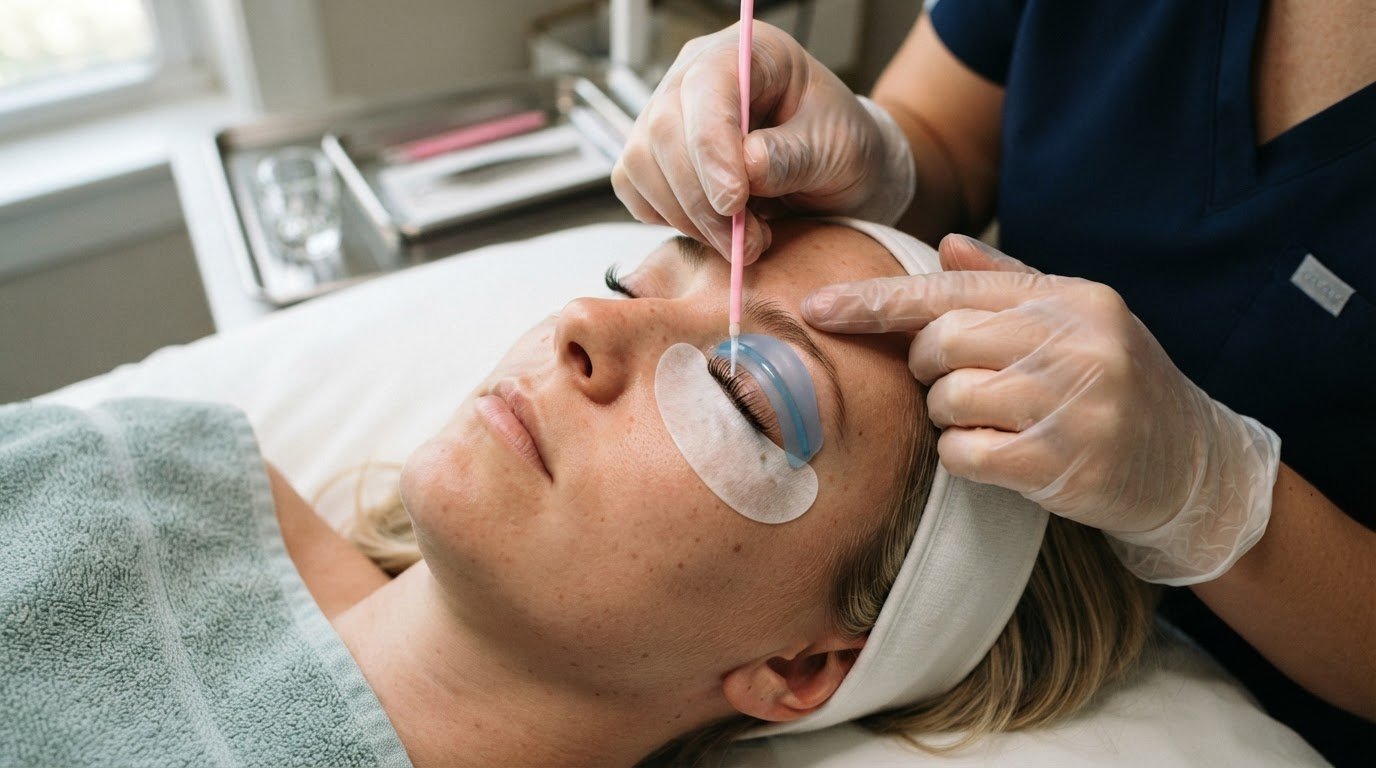
Laveda Lash & Brow Boutique offers brow lamination to style existing hairs into a more polished, fuller-looking shape. It can suit brows with hairs that grow in different directions or are difficult to arrange while you wait for regrowth. Lamination works with the hairs you have, so it won’t fill bare patches or replace new growth. Keep your desired shape natural, and don’t expect a treatment to create hairs where they’re missing.
For a professional approach to shaping your brows, contact Laveda Lash & Brow Boutique to discuss brow lamination.
Choose a Brow Shape You Can Grow Into
The next step isn’t to recreate the narrow outline you’re used to. Choose a shape that leaves room for your brow hairs to develop, and let your styling choices support that direction. A thoughtful plan can make fixing overplucked 90s brows in Washington, DC feel less like a daily correction and more like a gradual return to a shape that suits you.
If you’d like professional help deciding whether brow lamination suits your current shape, connect with Laveda Lash & Brow Boutique. Share your desired look and discuss an approach that works with the hairs you have. There’s no need to force a dramatic change at once. A considered next step can help you feel more confident as your brows evolve.
Contact Laveda Lash & Brow Boutique to discuss your brow goals and take the next step with confidence.
Frequently Asked Questions
How do I make over-plucked brows look fuller now?
Use a brow pencil or powder to add subtle definition where skin shows through. Start with the thinner brow, then add small strokes to the other side for balance. A spoolie can soften excess pigment and blend it with existing hairs. For example, define a sparse tail with short strokes rather than extending it into a solid, sharply angled line.
How long does it take for over-plucked eyebrows to grow back?
Allow about three to four months without plucking to see meaningful regrowth. Early changes can look uneven because eyebrow hairs grow in cycles, and follicles aren’t all producing visible hairs at the same time. Compare photos taken in similar lighting instead of checking day to day. If a patch remains bare after four to six months of rest, some follicles may not regrow.
How can I fix overplucked brows?
Start by leaving the shape untouched while new hairs emerge, then use makeup to create a softer outline. Brush hairs into place and fill only visible gaps, keeping product close to your natural brow color. If you want a professional cosmetic option, microblading creates the appearance of individual strokes. Discuss the intended shape first, especially if your brow is still changing.
How do I fill and set over-plucked brows while they recover?
Brush hairs into position with a clean spoolie, then use a fine pencil to draw light strokes in the direction of growth. Choose a shade close to or slightly lighter than your natural brow color. A small amount of clear brow gel can hold the hairs in place. For a softer finish, brush through the filled area once more to diffuse visible pigment.
How do I stop myself tweezing while they grow back?
Put your tweezers away and set a specific review date instead of inspecting each hair whenever you pass a mirror. For about two months, use a spoolie to arrange hairs and makeup to soften gaps. If you feel the urge to pluck an obvious strand, photograph the brow instead. Comparing photos later gives you a better view of how the shape is developing.
Is it okay to remove any strays while growing them back?
Avoid plucking, waxing, and threading during the initial growing-out period, even when hairs seem clearly out of place. A new hair may look like a stray before it lengthens and blends into the shape. Brush it into position or soften its contrast with makeup instead. After at least eight weeks without touching your brows, review the outline before removing anything.
How can you regrow overplucked 1990s-style thin eyebrows?
Let your brows grow without tweezing, waxing, or threading, and use makeup to manage the changing outline. A growth cycle can take six to eight weeks, while meaningful regrowth often takes three to four months without plucking. Repeated removal over many years can leave some follicles dormant or scarred. If a bare patch persists, consider a professional cosmetic approach to add definition.
How long does it take for overplucked eyebrows to grow back?
Meaningful regrowth often takes three to four months without plucking, though the first new hairs can appear unevenly. The brow growth cycle generally lasts six to eight weeks and can sometimes extend to twelve weeks. Treat these as different stages, not a deadline for a finished shape. Continued removal can make it harder to see progress and preserve returning hairs.
Comments