
Facials for Clogged Pores in DC Humidity: What Helps

DC humidity can leave sweat and oil on the skin, contributing to clogged pores. The right facials for DC humidity and clogged pores focus on congestion with professional extractions, gentle exfoliation, and lightweight moisturizing, not stripping the skin. Picking at blackheads or whiteheads can trigger inflammation and dark marks.
It’s easy to blame summer shine when your skin feels congested, but removing every trace of oil can leave skin tight without addressing buildup. This guide explains how heat and humidity may affect pore congestion, what extractions can and can’t do, and how exfoliation and hydration fit into a balanced approach. You’ll also learn when a calming facial may suit skin that’s already red, irritated, or sensitive.
Table of Contents
1. Are extractions bad for your skin?
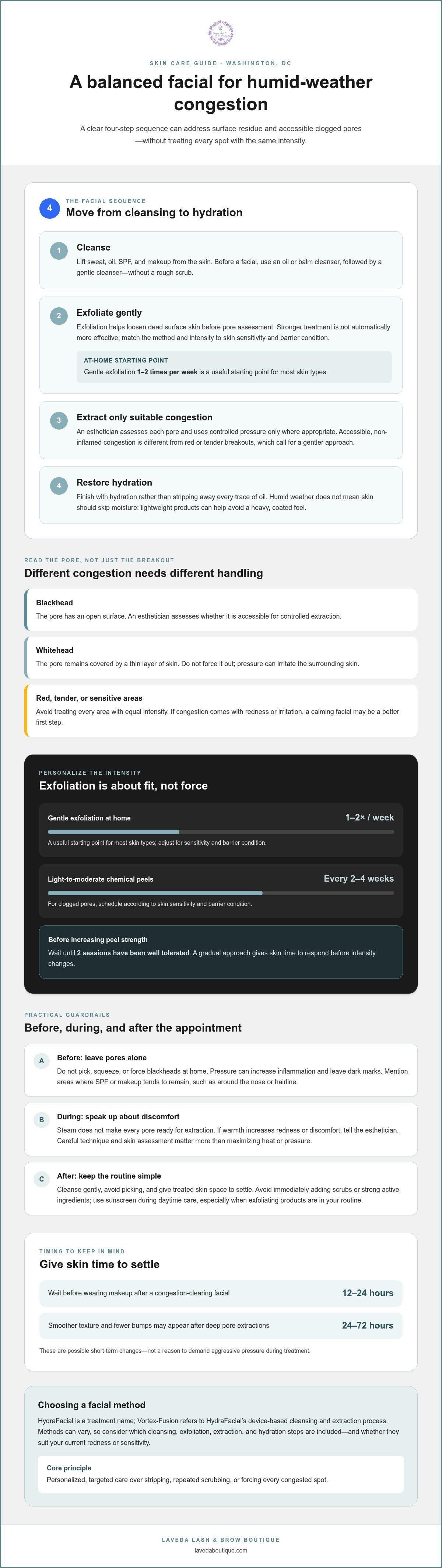
Professional extractions aren’t automatically bad for skin. The outcome depends on whether a pore is ready to clear, how much pressure is used, and whether the surrounding skin is irritated. For clogged pores in humid weather, a deep-cleansing facial can address oil and sweat buildup with cleansing, gentle exfoliation, carefully selected extractions, and hydration. A thoughtful approach leaves inflamed or sensitive areas alone instead of forcing every congested spot.
Before an extraction facial, don’t pick, squeeze, or try to force out blackheads at home. That pressure can cause inflammation and dark marks, making the area more reactive before treatment. Afterward, avoid touching or picking treated spots. Wait 12–24 hours before wearing makeup after a congestion-clearing facial, giving the skin time without another layer of product.
A structured facial can use four practical steps: cleanse the skin, exfoliate gently, extract accessible congestion, then restore hydration. An acne facial typically combines gentle exfoliation and pore extraction with anti-inflammatory and antibacterial products intended to calm skin and reduce breakouts. The sequence matters: cleansing lifts surface residue, while exfoliation helps loosen dead skin before an esthetician assesses which clogged pores are suitable for extraction.
HydraFacial is a treatment name you may encounter, but the useful question is what the appointment addresses. Ask what cleansing, exfoliation, extraction, and hydration steps the facial includes. A pore-cleansing facial in Washington, DC should account for your current skin condition, including redness or sensitivity, rather than treating every area with the same intensity. If congestion looks inflamed, a calming facial may be a better first step.
Before a facial, remove SPF and makeup with an oil or balm cleanser, followed by a gentle cleanser. This double-cleansing sequence helps remove sunscreen and makeup without a rough scrub and gives the treatment a clean starting point. If makeup or sunscreen tends to remain around your nose or hairline, mention those areas so they receive attention during cleansing.
After deep pore extractions, smoother texture and fewer bumps may appear within 24–72 hours. That timing is a possible short-term change, not a reason to demand aggressive pressure during the appointment. Choose gentle, personalized care that prioritizes skin comfort, targeted extraction, and hydration. Facials for DC humidity and clogged pores work best as part of a considered routine, not as permission to squeeze every bump or repeatedly strip the skin.
2. Pore extractions for blackheads and whiteheads
Blackheads and whiteheads are both clogged pores, but they look different. A blackhead has an open surface, while a whitehead remains covered by a thin layer of skin. That difference matters during extraction: an esthetician assesses each spot instead of applying equal pressure to every bump. Red, tender breakouts also call for a gentler approach than a non-inflamed blackhead on the nose.
Professional extraction focuses on accessible congestion. The esthetician cleanses the area, examines each pore, and uses controlled pressure only where appropriate. Aggressive squeezing can injure surrounding skin, increase inflammation, and leave dark marks. Stop if an at-home attempt requires force. Picking at a whitehead or blackhead can turn a small clogged pore into a more irritated spot.
Salicylic acid may suit acne-prone skin when used appropriately. It helps address pore buildup, but using more product or applying it more often isn’t automatically better. Notice how your skin responds, especially if it feels dry, stings, or looks red. A facial plan can account for your existing exfoliating products to avoid adding irritation to a sensitized skin barrier.
Some facial routines use steam to soften surface debris before extractions, but steam doesn’t make every pore ready to clear. Heat can feel uncomfortable on reactive skin, and steam isn’t a substitute for careful technique. If warmth increases redness or discomfort, tell the esthetician before extraction begins. The key is assessing the skin, not maximizing heat or pressure.
Vortex-Fusion is a branded term for HydraFacial’s device-based cleansing and extraction process, not a general name for all manual pore extractions. Ask which steps a facial includes: cleansing, exfoliation, extraction, and hydration can vary by method. A branded technique doesn’t remove the need to consider skin sensitivity or avoid forceful treatment of inflamed breakouts.
After an extraction facial, keep your routine simple. Cleanse gently, avoid picking at treated areas, and choose lightweight products that don’t leave skin feeling coated. Use sunscreen as part of daytime care, especially when exfoliating products are in your routine. Give the skin space to settle rather than immediately adding scrubs or strong active ingredients. For a personalized approach to congestion, explore professional facial care as a next step.
3. Facial exfoliation and moisturizing
Dead skin can mix with oil and contribute to pore buildup. Exfoliation helps remove surface cells, but stronger treatment isn’t automatically more effective. For most skin types, gentle exfoliation one to two times per week is a useful starting point. An exfoliating facial can provide professional resurfacing, with the method and intensity matched to skin sensitivity and barrier condition.
For clogged pores, light-to-moderate chemical peels can be scheduled every 2–4 weeks. The peel’s strength should reflect how sensitive the skin is and the condition of its barrier. Increase peel strength only after two well-tolerated sessions. This gradual approach gives the skin time to respond before treatment intensity changes. Medical-grade chemical peels can dissolve bonds between dead surface skin cells and encourage more even skin-cell turnover.
At home, avoid combining several exfoliating steps just because humidity makes your skin feel oily. For example, using a scrub, an exfoliating acid, and a resurfacing facial close together can overburden the skin barrier. Watch for tightness, stinging, or visible irritation. If these appear, pause exfoliating products and keep skincare simple until your skin feels comfortable again.
Moisturizer still matters in Washington, DC’s humid weather. Heat and sweat can contribute to water loss, so skin may feel dehydrated even when the air feels damp. Choose a lightweight, non-comedogenic moisturizer, such as a gel-based or oil-free formula, to hydrate without a heavy finish. Ingredients such as hyaluronic acid can help replenish moisture.
Use sunscreen daily when exfoliating. The guidance in the research recommends sunscreen with an SPF of at least 15 while using exfoliating ingredients. Apply it as part of your morning skincare routine, even if you’re also managing shine. Makeup can sit more evenly when the skin isn’t coated with excess product, but don’t use foundation to hide irritation after an intense exfoliation step.
The goal is balance: loosen buildup without stripping the skin, then restore moisture. A practical routine might include gentle cleansing, exfoliation one to two times per week, lightweight moisturizer, and daily sunscreen. A facial can tailor exfoliation to your current congestion and sensitivity, while home care maintains a measured rhythm between appointments. If pores feel blocked, focus on consistency rather than stronger products or extra resurfacing sessions.
SkinLocal recommends exfoliating oily skin two to three times per week to prevent buildup in humid weather. SkinLocal also recommends weekly clay masks to help manage oily skin in humid weather.
4. How heat and humidity contribute to pore congestion
On a humid Washington, DC day, sweat and oil can linger on the skin’s surface. They may combine with dead skin and everyday debris around pores, contributing to congestion and breakouts. Humidity doesn’t simply “close” pores. Instead, hot weather can make skin feel slick, while sunscreen, makeup, and sweat leave residue that calls for effective cleansing.
Think of a commute followed by a workout: sweat dries, sunscreen stays on, and oil collects around the nose or hairline. Rinse or cleanse after heavy sweating rather than letting residue sit. At night, remove sunscreen and makeup thoroughly. If buildup remains, cleansing may miss areas where congestion is most visible, such as the sides of the nose or chin.
Heat can also contribute to water loss, so humid air doesn’t guarantee hydrated skin. Feeling dehydrated may lead you to skip moisturizer or overuse harsh oil-control products. That can leave skin uncomfortable without removing debris already in pores. Choose lightweight hydration and a gentle cleanser, then observe whether tightness or excess oil changes with your routine.
Keep daily cleansing consistent. Cleanse twice daily between facial appointments to remove sweat, sunscreen, and sebum without stripping the skin. After exercise or heavy sweating, cleanse again as needed. Use a foaming or gel cleanser if excess oil is a concern, and avoid rough scrubbing that can irritate your skin. Clean makeup brushes and sponges regularly so product residue doesn’t transfer back to your face.
Ongoing treatment should match the skin’s condition, not just the forecast. Deep-cleansing facials every 4 weeks may suit oily or congestion-prone skin. For combination skin or moderate buildup, facials every 4 to 6 weeks are suggested. Acne-prone skin may benefit from an acne facial every 4-6 weeks. These intervals are practical starting points for a routine, while sensitivity and active irritation remain important considerations.
Between appointments, aim for smoother-feeling skin through steady care rather than repeated stripping. Use sunscreen during the day, remove it fully at night, and keep moisturizer lightweight. If redness or irritation appears, reduce exfoliating steps instead of adding more treatment. A simple routine makes it easier to notice whether congestion follows sweaty days, makeup use, or a particular product. Track those patterns and adjust one step at a time.
5. How humidity can affect oil production and clogged pores
Humid weather can change how oil and sweat sit on your skin. In Washington, DC, heat and humidity may leave both on the surface, where they mix with dead skin cells and contribute to clogged pores. That can make the skin look shinier or feel less smooth. It doesn’t mean humidity alone proves your skin is producing more oil.
Distinguish excess surface oil from dehydration. Heat and sweat can contribute to water loss, even when the air feels damp. If your cheeks feel tight while your forehead looks shiny, stripping your whole face may worsen discomfort without removing pore debris. Note where shine, tightness, and congestion appear. These patterns can help you distinguish an oily-feeling T-zone from dryness elsewhere.
Review your routine on a typical humid day. Sunscreen, makeup, sweat, and sebum can collect together, especially after an outdoor commute or exercise. Cleanse after heavy sweating, then remove sunscreen and makeup thoroughly at night. If congestion clusters around your nose, hairline, or chin, check that those areas receive a complete cleanse. Avoid rough scrubbing, which can aggravate inflammation instead of lifting buildup.
Keep hydration in your routine, even if heavier creams feel uncomfortable. A lightweight, non-comedogenic moisturizer can support the skin barrier without a dense finish. Choose breathable makeup and avoid layering multiple rich products over sweaty skin. If redness, stinging, or tightness appears, simplify your routine before adding another exfoliating step. Clearer-looking texture depends on balancing debris removal with care for the skin barrier.
Track changes across weather and habits instead of changing every product at once. For example, note whether congestion follows outdoor exercise, a new sunscreen, or skipped evening cleansing. Continue a consistent routine long enough to identify a pattern. Deep-cleansing facials every 4 weeks may suit oily or congestion-prone skin, while combination skin or moderate buildup may call for appointments every 4 to 6 weeks. These schedules give ongoing treatment a rhythm without making daily care more aggressive.
The takeaway: humidity can leave sweat and oil on skin, but shine alone doesn’t explain every clogged pore. Consider product residue, cleansing habits, dead skin cells, and barrier comfort together. A targeted approach can remove buildup while preserving hydration and reducing avoidable irritation. For a facial approach tailored to congestion and seasonal skin changes, explore personalized facial care.
Laveda Lash & Brow Boutique: Lash Extensions
Laveda Lash & Brow Boutique offers facials for clients looking to address skin concerns, as well as Lash Extensions for a defined lash look. Extractions and skincare address congestion; lash services serve a separate purpose. Keep these goals distinct when planning your appointments.
For a polished eye-area look, choose Lash Extensions. Brow Lamination is another option for shaping and styling brows. Neither treatment replaces cleansing, exfoliation, or moisturizing for clogged pores, so continue a skincare routine that suits your skin.
Choose a Routine That Fits Your Skin
Use what you’ve learned to make your next decision about facials for DC humidity and clogged pores more intentional. Notice how your skin responds to weather, daily products, and changes in your routine. That awareness can help you choose a comfortable next step instead of reacting to every new bump with stronger products.
If congestion keeps returning or your routine feels difficult to balance, a facial can offer a focused reset and help you plan your next skincare steps. Laveda Lash & Brow Boutique offers facials, along with Lash Extensions, Lash Lift, and Mani Pedi for other beauty goals. Keep the purpose of each service clear and choose the appointment that fits what you want to address.
Contact Laveda Lash & Brow Boutique to explore your next appointment and move forward with confidence.
Frequently Asked Questions
What Causes Clogged Pores?
Clogged pores form when oil, dead skin cells, and residue collect at a pore opening. Sweat, sunscreen, makeup, and hair products can add to the buildup, especially around the forehead and hairline. In Washington, DC’s humid weather, notice whether congestion follows exercise, time outdoors, or a new product. Tracking those patterns can help you identify what to adjust instead of changing your entire routine at once.
Which Facial Should You Choose?
Choose a facial based on your skin’s current condition, not just its usual type. For oily congestion without irritation, consider a cleansing facial that addresses buildup. If your skin is red, tender, or sensitive, prioritize a calming approach before intensive exfoliation or extractions. For residents of Washington, DC and Arlington, VA, seasonal heat and daily sunscreen use can also help determine which steps deserve attention.
Are extractions bad for your skin?
Extractions aren’t inherently harmful; forceful or poorly timed pressure is the concern. An esthetician assesses whether a blackhead or whitehead is accessible and avoids pressing inflamed areas. If a spot is sore, swollen, or already irritated, don’t try to extract it yourself. Share recent skin reactions and the products you use so the treatment can account for your skin’s current condition.
Congested Skin: What Is It and How Can You Prevent It?
Congested skin describes pores that look or feel blocked, often with uneven texture, visible blackheads, or small bumps. Prevention starts with noticing where and when congestion appears. For example, congestion near the hairline can prompt a review of hair products, while recurring bumps after workouts suggest cleansing sweat from the skin. Keep pillowcases and makeup tools clean, and avoid adding several new products at once.
Do facials really help unclog pores?
Facials can help clear accessible surface congestion through cleansing, exfoliation, and professional extraction. They also allow an esthetician to assess whether redness or sensitivity calls for a gentler plan. Think of a facial as one part of pore care, not a replacement for daily cleansing or thoughtful product choices. Results depend on the type of congestion and how your skin responds to treatment.
How Soon Can I Wear Makeup After a Congestion-Clearing Facial?
Wait 12–24 hours before wearing makeup after a congestion-clearing facial. That pause gives freshly treated skin time before makeup, brushes, or sponges touch the area. If you have an event, plan your appointment ahead rather than relying on makeup to cover temporary redness. When you resume, use clean tools and remove makeup thoroughly at night to avoid leaving product residue on the skin.
Are salicylic acid or enzyme facials effective for congestion?
Salicylic acid and enzyme exfoliation can help address surface buildup when matched to your skin’s sensitivity. Salicylic acid is used for acne-prone skin when appropriate; an enzyme mask offers a different exfoliating approach. Don’t layer either treatment over an already irritating routine without considering your skin’s response. After introducing an exfoliating product, watch for persistent stinging, tightness, or redness before adding another active step.
How often should you get a facial for clogged pores?
For oily or congestion-prone skin, deep-cleansing facials are recommended every 4 weeks; acne-prone skin may suit appointments every 4-6 weeks. Mild congestion or maintenance can call for a 6 to 8 weeks interval. Use your skin’s sensitivity and the amount of recurring buildup to guide the rhythm. If irritation develops between visits, reduce exfoliation rather than scheduling treatments closer together.



Comments