
Questions to Ask a New Lash Tech Arlington VA About Upkeep

A lash curler is a useful starting point when discussing your ideal extension style. One of the most practical questions to ask a new lash tech in Arlington, VA is whether you use a curler, since that can clarify whether you want more curl from your extensions. Also discuss your natural lashes, preferred look, lifestyle, patch testing, fill timing, and ongoing upkeep.
If you’re unsure how to describe the result you want, you’re not alone. Photos, your everyday makeup choices, and details such as whether you wear glasses can make your preferences clearer. A thoughtful consultation connects those details with your natural lashes and the look you want.
Use this guide to prepare questions about style, training, lifestyle fit, adhesive and patch tests, maintenance, and factors that affect upkeep costs. You’ll be better prepared to discuss what suits your routine and make an informed choice about lash extensions.
Table of Contents
1. Choosing extensions suited to natural lashes and eye shape
Start by asking how the consultation will assess your natural lashes, eye shape, expectations, and preferred style. These details help guide the extension choice rather than relying on a trend alone. Mention whether you want a subtle enhancement or a more defined effect, then discuss how your natural lash length and curl may shape the result.
Your daily habits can clarify the look you want. Ask yourself, “Do I ever use a lash curler?” If you use one regularly, explain the effect you want. Your answer helps the lash artist understand whether you’re happy with your natural curl or seeking more lift from extensions.
Bring a few reference photos to make the conversation specific. A clear image can communicate more than 1,000 words, but explain what you like in each photo: the curl, overall shape, or level of definition. Celebrity images may show strip lashes, which can look different from extensions. Describe the feature you want rather than expecting an identical recreation.
Glasses matter, too. If you wear them, ask how the chosen length and curl will sit around your frames. Try your glasses on during the consultation so the artist can assess clearance between your lashes, lenses, and frames. Lashes that brush your lenses, for example, may feel distracting when reading or using a screen.
Discuss how the design will complement your eye shape and natural lashes. Ask which parts of your lash line can support the effect you want and how the artist will adapt the design if your natural lashes vary across the eye. A tailored plan should account for both your reference image and the lashes you actually have.
For Arlington clients, questions to ask a new lash tech Arlington VA can begin with the products used. Ask whether the artist uses formaldehyde-free products and can identify the lash adhesive ingredients. If you have sensitive eyes, discuss sensitive, non-irritating adhesive and products before application. Clear answers help you understand the materials involved and raise concerns early.
Also ask whether the artist carries Public Liability Insurance and Product Liability insurance. Keep your questions to ask a new lash tech Arlington VA focused on your natural lashes, desired style, and daily needs. Bring your glasses, describe your routine, and point out details in your photos. Concrete examples help align the proposed extensions with your preferences.
Make the consultation a two-way discussion, not a quick style selection. A lash consultation should assess contraindicators, discuss your expectations and preferred style, and assess your natural lashes. Explain the result you have in mind, then discuss lash styles with the stylist before choosing extensions. This connects the design conversation to your preferences and natural lashes.
A lash artist may ask whether you use a lash curler to understand if you’re satisfied with your natural curl. Answer directly and include your preferred style in the discussion. Confirm these topics have been covered before deciding which extensions to choose.
2. Lash artist training and certification
Ask what lash-extension training the artist completed and what practical work it included. A one-day course can introduce the technique, but course length alone doesn’t show how well someone performs each step. Ask whether training covered isolation, adhesive placement, safe application, and recognizing when natural lashes need a lighter design. Request a clear explanation of how those skills inform the service.
Ask whether the artist has a certificate and who issued it. Then ask how they developed their technique after the initial course. Useful details include supervised practice, instructor feedback, and work with different eye shapes and natural lash patterns. The answer should explain the artist’s learning process, not rely only on a certificate or years in the industry.
In Virginia, the practical difference between a salon-based technician and an independent technician is the work setting: one works within a salon, while the other operates independently. In either case, ask who will perform your appointment, what training they completed, and who handles sanitation and client communication.
Training matters because poor technique may damage natural lashes. Ask how the artist prevents extensions from sticking together and chooses an application suited to your natural lashes. A knowledgeable technician should describe the process in plain language, including how they respond if a lash seems too weak to support the planned extension.
Ask specific sanitation questions before your appointment: “How do you clean and disinfect reusable tools between clients?” and “Which items are single-use?” You can also ask how the treatment bed and work surface are prepared for each appointment. Listen for a step-by-step answer that distinguishes reusable tools from disposable supplies. A polished workspace alone doesn’t show the full cleaning process.
To assess reviews and photos in Arlington, compare several examples rather than relying on a single image. Look for close, clear photos showing different clients and consistent application. Read reviews for details about consultation, communication, and follow-up, not just star ratings. Check that the lash line is clearly visible and the finished look seems suited to each client’s features.
Use those observations to guide a direct conversation. Ask what the artist notices in a particular photo and how they would adapt its effect to your natural lashes. A useful answer identifies details such as curl, placement, or overall definition. When comparing artists in Arlington, weigh the explanation alongside training details, sanitation procedures, and consistent examples of completed work.
3. Considering a client's lifestyle
Your workday and daily habits can help shape a practical lash plan. Ask, “What do you do for a living, and what does a typical day involve?” A desk-based schedule, frequent client meetings, or active work may lead to different preferences for definition and comfort. Explain what your eyes experience during an ordinary day, not just the look you want for an event.
Describe the activities that fill your week. For example, mention early workouts, outdoor shifts, long commutes, or frequent travel. These details help the artist understand your routine and discuss how lash extensions may fit it. If your schedule changes often, say so; a regular maintenance routine should be manageable alongside your actual commitments.
Talk through your current beauty habits before settling on a style. Do you wear eye makeup each morning, or prefer a polished look without it? How much time do you want to spend on lash care at home? Specific answers help distinguish a low-key everyday preference from a more defined look for work, evenings, or special occasions.
Be direct about the upkeep you can realistically maintain. Ask what daily care involves and which habits could affect your extensions. If you have a packed morning, say so. If you prefer a consistent evening routine, share that. A useful discussion connects the proposed look with the time and attention you’re comfortable giving it.
Before the appointment, consider these routine details and share the relevant ones:
Your occupation and typical workday.
Regular exercise, outdoor activities, or travel.
How often you wear eye makeup.
The time you can set aside for daily lash care.
Whether your schedule is steady or frequently changing.
These examples give the artist a clearer picture than a broad request such as “I need something easy.” Explain what easy means to you: less time getting ready, a softer look for work, or a routine that fits around travel. Then ask how the suggested design and care expectations align with those priorities.
Use the conversation to find a workable balance. A dramatic style may not match your preference for a subtle appearance, while a demanding routine may not suit a tightly scheduled week. Tell the artist what matters most: your desired finish, simplicity, or compatibility with everyday habits. Clear priorities help shape a considered lash plan.
A question about your occupation can help you describe the pace and character of everyday life. Rather than giving only a job title, explain what a usual workday involves and which parts of your routine matter when choosing a lash look. The artist can use those details to understand your lifestyle and daily habits, then ask how you want your lashes to feel as well as look. If you’re unsure which details are relevant, start with the parts of your workday that influence your preferences. This makes the discussion personal and helps the artist consider your routine when planning a suitable look.
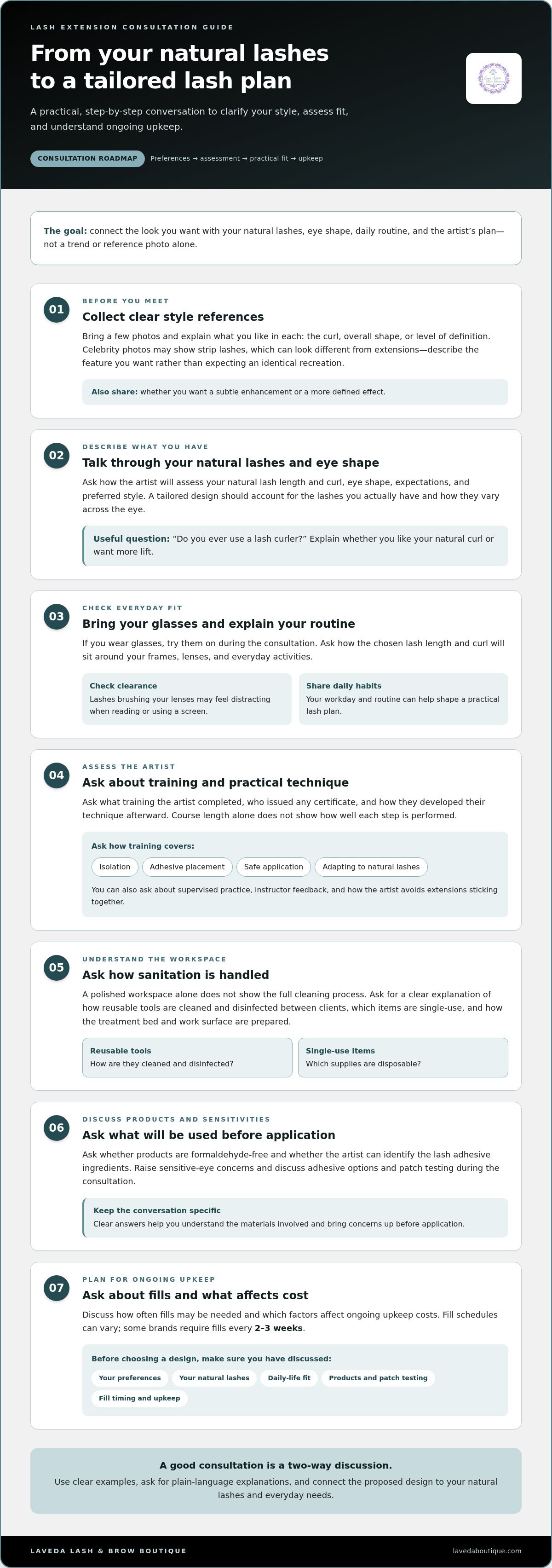
4. Consultations and patch tests
Eyelash extensions can raise irritation or sensitivity concerns, especially if you have sensitive eyes. Tell the artist about known product sensitivities, previous reactions, or current eye discomfort before discussing application.
Ask whether a patch test is required and how it fits into the appointment plan. Clarify the artist’s patch-test process before proceeding.
A thorough consultation should do more than ask what look you want. For first-time clients, a word like “long” may be too vague to guide a design. Give examples: explain whether you want subtle enhancement, visible length, or a defined finish, then describe what you like about that result.
Your makeup habits can make those preferences easier to understand. Tell the artist whether you wear mascara and what you like it to do: lengthen, thicken, curl, or combine those effects. Mention your eye makeup and whether you wear winged eyeliner. Those details offer practical clues about the definition and shape you prefer.
Ask, “What ingredients are in the adhesive, and can you identify them?” A lash professional should be able to name the adhesive ingredients. If you have sensitive eyes, discuss sensitive, non-irritating adhesive and products before your appointment. Share the specific products or ingredients that have caused concerns in the past.
A careful artist combines your answers with their observations and professional judgment. Questions alone can’t determine a perfect look, especially when you’re new to extensions. If you request a “long” style, for example, the artist can ask what that means to you, review your mascara preferences, and clarify the effect you have in mind before planning.
Use the consultation to ask how the artist assesses possible contraindications and decides whether application is appropriate. Give clear, relevant details about your eyes and previous product reactions. An open conversation lets the artist consider your expectations alongside those concerns rather than treating a reference photo as the whole plan.
Before the appointment, prepare a short list:
Do you require a patch test, and when should it take place?
What adhesive ingredients will you use?
How will you account for sensitive eyes or past reactions?
How will my mascara and eyeliner preferences inform the design?
Bring your list and answer each question clearly. Specific information helps the artist make an informed plan and gives you a chance to discuss concerns before application begins.
Eyelash extensions can cause irritation or sensitivity, particularly for people with sensitive eyes. Discuss known product sensitivities, previous reactions, or current eye discomfort so the artist can assess possible contraindications and whether application is appropriate.
5. Fill frequency and upkeep costs
Ask how long your lash extension appointment is expected to take and how often fills are recommended. Appointment time depends on the service and the work involved; some lash extension brands require fills every 2-3 weeks. Ask how the artist’s recommended schedule relates to your set and maintenance needs.
Clarify what a fill appointment includes. Ask how the artist assesses retained extensions, natural lash growth, and areas needing attention. This helps you understand how a fill differs from a new set and what condition your lashes should be in when you return. Ask what happens if you arrive with substantial shedding or overdue maintenance.
Upkeep costs depend on the service, the work required, and the maintenance schedule. For lash extensions, the price depends on the case and is provided after a quote request; factors include service type, application needs, and fill frequency. Ask how fills are handled so you can plan for maintenance, not just the initial appointment.
Request clear aftercare instructions before leaving. Regular cleaning helps keep lash extensions healthy. Ask how often to clean them, which products are suitable, and how to clean around the lash line without tugging. Get the directions in a format you can refer to later, especially if you’re new to extensions.
Discuss your usual routine with the artist. If you wear eye makeup, ask how to remove it while caring for your extensions. If you’re unsure which cleanser or removal method is appropriate, ask for specific guidance rather than guessing. A consistent cleaning routine is easier to follow when the steps fit your products and habits.
Ask what signs mean you should book a fill or discuss a change to your routine. The answer should explain how the artist evaluates your extensions and natural lashes. For example, ask whether uneven retention or noticeable gaps affect the timing of your next visit. This makes scheduling a considered decision rather than relying on a calendar alone.
Before booking, get clarity on the ongoing commitment. Ask about appointment timing, fill scheduling, aftercare steps, and the factors that affect maintenance costs. Your routine, the extension service, and the amount of work required all shape the plan. Bring those questions to a lash extension appointment so you can discuss a style and upkeep routine that fit your needs.
Laveda Lash & Brow Boutique: Lash Extensions
Laveda Lash & Brow Boutique offers Lash Extensions for readers ready to move from research to a considered service choice. Use the questions in this guide to explain your preferred style, daily routine, sensitivity concerns, and expectations for fills and aftercare. These details help frame a focused conversation about the look you want and the upkeep it involves.
If extensions aren’t the right match for your desired effect, a Lash Lift offers another way to enhance your natural lashes. For a coordinated beauty appointment, the boutique also offers Brow Lamination. Choose the service that best aligns with your goals, then bring your questions about lash style and maintenance to your appointment.
Explore your next step by visiting Laveda Lash & Brow Boutique.
Make Your Next Appointment More Intentional
Your consultation is a chance to set expectations, not just choose a look. Before booking, decide what matters most: a particular finish, a routine that fits your schedule, or a clear understanding of ongoing care. Bring those priorities into the conversation and use the questions to ask a new lash tech in Arlington, VA to keep the discussion focused on your needs.
A useful next step is to write down your preferences and concerns before your appointment. This gives you a clear starting point and helps you make a thoughtful choice about lash extensions. You don’t need to arrive with every detail settled. Be ready to describe what you want and discuss the care involved.
For a tailored conversation about your lash goals, contact Laveda Lash & Brow Boutique. Take the next step with clarity and choose an approach that feels right for you.
Frequently Asked Questions
Do you ever use a lash curler?
If you use a curler, tell your lash artist and explain the effect you want. That habit can clarify whether you’re satisfied with your natural curl or want extensions to create more lift. For example, mention whether you curl your lashes before work or only for special occasions. Your answer gives the artist a useful reference for discussing your preferred finish.
How can I verify a lash technician's Virginia license and training?
Ask the technician to name any Virginia credential they hold and its issuing body, then request documentation you can verify with that issuer. Ask separately which lash-specific course they completed, who provided it, and what practical assessment it included. A one-day course is possible, so duration alone doesn’t explain the depth of training. Clarify the difference between a course certificate and a state-issued license.
What should I ask about lash adhesive ingredients and allergy testing?
Ask the artist to identify the adhesive ingredients and explain the patch-test process before your appointment. Share any previous reaction to lash glue, cosmetics, or other eye-area products, including what caused it and the symptoms you experienced. Ask when testing should happen and how the result affects your appointment plan. If your eyes are sensitive, discuss suitable products before application rather than relying on assumptions about ingredients.


Comments