
Gentle Facial Options for Rosacea-Prone Skin in Washington, DC

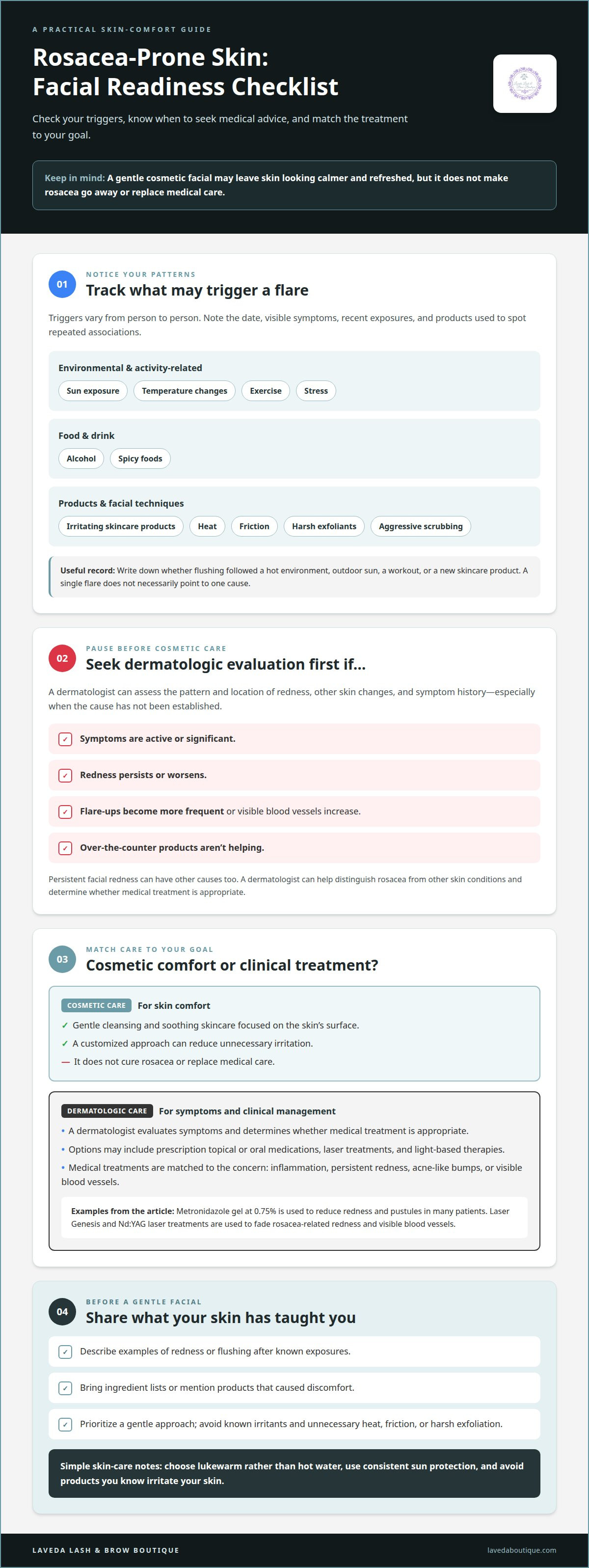
Rosacea doesn’t automatically rule out a facial. Whether you can get a facial if you have rosacea in DC depends on your symptoms and the treatment: a gentle, customized facial may suit some people, while active or significant symptoms should be assessed by a dermatologist before cosmetic treatment. A facial may leave skin looking calmer and refreshed, but it doesn’t make rosacea go away.
It’s reasonable to be cautious when redness, flushing, or irritation can flare after triggers such as sun, temperature changes, stress, spicy foods, or irritating products. Learn what rosacea is, which triggers may affect your skin, and when a gentle facial may be appropriate. This guide also explains when to seek dermatologic evaluation and what a customized approach to rosacea-prone skin can involve.
Table of Contents
What Is a Sensitive Skin / Rosacea Facial?
A sensitive-skin facial uses gentle cosmetic skincare, while rosacea treatment may address symptoms medically. In Washington, DC, the right approach depends on whether your goal is skin comfort or clinical management.
Cosmetic Care and Medical Treatment
A cosmetic facial focuses on cleansing and soothing the skin’s surface. It may help skin look calmer and refreshed, but it doesn’t make rosacea go away or replace medical care. Rosacea is a chronic inflammatory condition that can cause persistent redness, flushing, visible blood vessels, and acne-like bumps. A dermatologist evaluates symptoms and determines whether medical treatment is appropriate.
That distinction matters when choosing care in Washington, DC. A facial provider can tailor cosmetic skincare to reduce unnecessary irritation, while a dermatologist addresses diagnosis and medical treatment. Medical spas may be a better fit than traditional spas for some people because they are more likely to have medical professionals familiar with rosacea. The setting should match the service: soothing cosmetic care for comfort, clinical care for symptoms.
Rosacea can involve different symptoms, including background redness, visible vessels, flushing, or inflammatory bumps. Those concerns may need different treatments. A gentle facial is not a substitute for prescription medication or procedures intended to address visible vessels. Be clear about your goal before choosing a treatment, especially if symptoms are active or changing.
Redness and Bump Treatment Options
Medical options can include prescription topical or oral medications, laser treatments, and light-based therapies. For example, metronidazole gel at a concentration of 0.75% is used to reduce redness and pustules in many patients. Laser Genesis and Nd:YAG laser treatments are used to fade rosacea-related redness and visible blood vessels. A dermatologist matches treatment to the symptoms being addressed.
Prescription treatment may target inflammation, persistent redness, or acne-like bumps. Laser and light-based procedures focus on concerns such as visible vessels and redness. These are medical treatments, not components of every cosmetic facial. A dermatologist can assess the pattern and location of redness, related skin changes, and symptom history to distinguish rosacea from other skin conditions.
If you’re looking for rosacea treatment near Washington, DC, start by identifying the type of care you need. A cosmetic facial offers gentle cleansing and soothing skincare; a dermatologist evaluates medical symptoms and treatment options. If visible blood vessels or persistent redness are your main concern, discuss clinical options such as laser or light-based treatment during dermatologic care. For cosmetic care, prioritize a gentle approach and don’t treat a facial as a cure.
Common rosacea flare-up triggers
Rosacea flare-ups can follow exposure to sun, temperature changes, stress, exercise, alcohol, spicy foods, or irritating skincare products. Triggers differ from person to person, so noticing patterns can help identify which conditions or ingredients coincide with flushing, redness, or visible blood vessels.
A facial can trigger a flare if heat, friction, harsh exfoliants, aggressive scrubbing, or irritating products aggravate sensitive skin. Rosacea-affected skin can react to skincare and makeup, increasing redness, burning, or stinging after exposure. A gentle approach avoids unnecessary irritation, but cosmetic care cannot prevent every trigger.
External conditions are only part of the picture. Sun exposure and temperature shifts can prompt flushing, while exercise and stress can also coincide with symptoms. Alcohol and spicy foods are other potential triggers. Rosacea is chronic, and symptoms can improve and later return, so one flare does not necessarily point to a single cause.
Track personal patterns with a simple record. Note the date, visible symptoms, recent exposures, and products used. For example, record whether flushing followed a hot environment, outdoor sun, a workout, or a new skincare product. Comparing entries over time can help distinguish a repeated association from a one-time coincidence. Focus on details that matter to your skin, not every daily activity.
Pay particular attention to product choices. Harsh exfoliants, aggressive scrubs, and frequent changes to skincare products can increase burning, stinging, or redness. Keep ingredient lists handy when discussing cosmetic care, especially for products that have caused discomfort before. Use lukewarm rather than hot water to wash your face, since heat can aggravate symptoms.
Managing triggers starts with recognizing those that repeatedly coincide with symptoms. Consistent sun protection, avoiding known irritating products, and choosing lukewarm rather than hot water can reduce avoidable exposure. Stress is another possible factor; mindfulness, exercise, or meditation may help some people manage stress-related flare patterns. No single routine suits everyone.
Take that pattern into a facial appointment. Share examples such as redness after sun exposure, stinging from a particular product, or flushing after spicy food. This gives the professional useful context for choosing a gentler cosmetic approach and avoiding known irritants. Explore gentle facial care as an option when your skin is not actively irritated.
When to seek dermatologic evaluation before a cosmetic facial
Arrange dermatologic evaluation before cosmetic treatment if rosacea symptoms are active or significant. A dermatologist can assess the pattern and location of facial redness, other skin changes, and symptom history. This evaluation can help distinguish rosacea from conditions that also cause persistent facial redness, especially if the cause has not been established.
Seek dermatology care if redness persists or worsens, flare-ups become more frequent, visible blood vessels increase, or over-the-counter products aren’t helping. These changes can mean your skin needs medical assessment before cosmetic care. In Washington, choosing a facial before understanding ongoing symptoms may make it harder to distinguish the condition’s progression from irritation after treatment.
Eye symptoms deserve prompt attention from a dermatologist. If eye irritation accompanies facial redness or flushing, prioritize evaluation rather than a cosmetic appointment. When the eyes are affected, the first step is medical assessment, not testing a facial on sensitive skin.
During a dermatology evaluation, the clinician considers where redness appears, what skin changes accompany it, and how symptoms have developed. For example, persistent redness with bumps may need a different assessment from flushing that comes and goes. Rosacea is chronic, and symptoms may improve and return, so a single calm day doesn’t show the full pattern.
Give the dermatologist a clear picture of your symptoms. Describe when redness began, whether it persists or comes in episodes, and whether you’ve noticed visible vessels, bumps, dryness, or irritation. Mention products that sting or burn and any changes you’ve observed. These details help the clinician assess your skin history and determine whether cosmetic treatment is appropriate now.
Consider postponing a cosmetic facial while significant symptoms are being evaluated. A facial is cosmetic care, not a diagnostic test or medical treatment for rosacea. If symptoms are stable and a dermatologist has assessed the condition, you can discuss whether a gentle approach suits your skin. If redness continues to worsen, return to dermatologic care before adding new products or treatments.
Use this decision sequence:
Get assessed: Seek dermatologic evaluation for persistent or worsening redness, frequent flares, increasing visible vessels, or symptoms that haven’t improved with over-the-counter products.
Prioritize eye symptoms: Arrange prompt dermatologic attention when irritation affects the eyes.
Discuss cosmetic care afterward: Consider a gentle facial only after active or significant symptoms have been evaluated.
This approach separates diagnosis from cosmetic skincare and gives the dermatologist useful symptom details before you decide about a facial.
Suitability of a gentle facial for rosacea-prone skin
If you’re asking, “Can I get a facial if I have rosacea in DC?” a gentle cosmetic facial may suit some people, particularly when symptoms are stable. The focus is gentle cleansing and soothing skincare, not aggressive exfoliation or medical treatment. A facial may leave skin looking calmer and refreshed, but it doesn’t make rosacea go away.
Suitability depends on your skin’s condition on the day of treatment. Persistent facial redness, active inflammatory bumps, or irritation can affect how skin responds to touch and products. A professional should understand your sensitivities and keep the approach gentle, rather than using the same steps for every complexion.
Discuss your skin history before treatment begins. Share products or ingredients that have caused burning or stinging, and describe whether redness is constant or comes and goes. For example, if a product previously caused discomfort, that information can guide product choices. Clear communication keeps cosmetic care focused on comfort instead of adding unnecessary stimulation.
The treatment should prioritize a gentle cleanse and soothing skincare. Strong chemical peels and steam facials may worsen rosacea symptoms, so they aren’t suitable for a cautious approach. Aggressive scrubbing and harsh exfoliation can also irritate sensitive skin. The goal is a restrained cosmetic experience, not dramatic resurfacing.
Use these considerations to discuss whether a facial fits:
Current symptoms: Note whether facial redness, flushing, or bumps are active on the day of treatment.
Known sensitivities: Name products or ingredients associated with burning, stinging, or irritation.
Treatment approach: Favor gentle cleansing and soothing skincare over steam, strong peels, or aggressive exfoliation.
Purpose: Set a cosmetic goal, such as a calmer, refreshed appearance, rather than expecting rosacea to disappear.
A gentle facial isn’t the right choice during every flare. If symptoms are active or significant, dermatologic evaluation should come before cosmetic treatment. This distinction protects the role of medical care and prevents a facial from being treated as a solution for an inflammatory skin condition.
For people wondering whether they can get a facial if they have rosacea in DC, restraint is a quality marker. A customized cosmetic facial should account for current sensitivity, known product reactions, and your desired result. It should not rely on heat or force to produce change. If a step causes discomfort, tell the professional right away so they can respond appropriately.
Choose a facial for what it can offer: gentle cosmetic care and a refreshed appearance. Keep medical concerns separate, and base your decision on current symptoms, past irritation, and the treatment’s actual steps. This sets clear expectations before the appointment.
Customized facials for rosacea
Tell the esthetician whether rosacea has been diagnosed, which symptoms you have, and what triggers or products cause irritation. Also mention topical or oral prescriptions and any recent changes to your skin. These details help tailor cosmetic care to your skin’s current needs.
A customized approach starts with a focused conversation, not a standard sequence applied to every face. Persistent redness, flushing, bumps, or sensitivity can influence product and technique choices. Share concrete examples, such as a cleanser that stings or redness that tends to follow a particular exposure. Specific history gives the professional useful context before treatment begins.
Customization means keeping the treatment’s purpose clear. A cosmetic facial can focus on gentle cleansing and soothing skincare, while medical management addresses rosacea itself. A facial may leave skin looking calmer and refreshed, but it doesn’t replace a dermatologist’s treatment plan. Prescription care, including topical medication, belongs within medical management, not a cosmetic service.
Product selection should reflect known sensitivities. If a product has caused burning or irritation, identify it and describe the reaction. Fragrance-free moisturizers and gentle cleansers may benefit rosacea-prone skin, while harsh exfoliants and frequent product changes can aggravate sensitive skin. A professional can use this information to avoid known irritants and keep the routine focused.
Technique matters as much as product choice. A customized facial should favor a gentle touch and soothing skincare rather than aggressive scrubbing, strong peels, or steam. Those stronger approaches can worsen symptoms. Discuss the planned steps before treatment, including cleansing, exfoliation, or masks, and speak up if anything feels uncomfortable.
Use these details to guide the appointment conversation:
Symptoms: Describe whether redness is persistent or episodic, and mention visible bumps or flushing.
Triggers: Name exposures that repeatedly coincide with a flare.
Product history: Identify ingredients or formulas linked to stinging, burning, or irritation.
Medical care: Share relevant prescriptions and whether a dermatologist has assessed active symptoms.
The goal is a tailored cosmetic experience, not a promise to control every flare. If symptoms are active or significant, dermatologic evaluation comes first. When skin is stable, a gentle facial can focus on comfort and appearance while respecting the limits of cosmetic care.
Plan a gentle facial appointment with your skin sensitivities and treatment goals in mind.
Laveda Lash & Brow Boutique: Facials
Laveda Lash & Brow Boutique offers facials for cosmetic skincare in Washington, DC and Arlington, VA. If rosacea symptoms are active or significant, seek dermatologic evaluation before arranging cosmetic treatment. A facial can focus on gentle cleansing and soothing skincare, but it does not diagnose or treat rosacea.
When your symptoms have been assessed and you’re considering a facial, share your skin sensitivities, known triggers, and products that have caused irritation. Clear information helps guide the conversation about your cosmetic skincare goals. Keep expectations focused on a refreshed appearance, not a cure for a chronic skin condition.
Choose Your Next Step With Confidence
If you’re weighing whether you can get a facial with rosacea in DC, let your comfort and care goals guide the decision. A thoughtful appointment starts with an honest conversation about what you want from cosmetic skincare and what feels right for you. Take time to decide; there’s no need to test your skin’s limits.
Think of the next step as setting expectations, not seeking a perfect result. A clear goal helps keep the experience focused, whether you’re preparing for an upcoming event or making space for personal care. Choose an approach that respects your boundaries, and speak up if your comfort changes during the appointment.
For cosmetic facial care, contact Laveda Lash & Brow Boutique to discuss your goals. A considered choice can help you move forward with greater ease and confidence.
Frequently Asked Questions
What is Rosacea?
Rosacea is a chronic inflammatory skin condition that primarily affects the face. It can cause persistent redness, flushing, visible blood vessels, and acne-like bumps. Symptoms may settle and return, so changes in appearance can happen over time. Because other conditions can also cause facial redness, a dermatologist can assess the location, pattern, and associated skin changes to help identify what’s behind your symptoms.
Can this facial help with facial redness?
A gentle cosmetic facial may leave skin looking calmer and refreshed, but it doesn’t treat the underlying condition or make rosacea go away. Persistent redness or visible vessels may need medical assessment and care beyond a cosmetic service. Set a realistic goal for a facial, such as a refreshed appearance, and keep medical concerns separate from cosmetic skincare.
Is it safe to get a facial if you have rosacea?
Some people with rosacea-prone skin can consider a gentle facial, but the decision depends on current symptoms and the treatment steps. If symptoms are active or significant, seek dermatologic evaluation before cosmetic treatment. If you’re considering a facial in DC, share your symptom history and known sensitivities beforehand. A cosmetic facial isn’t a substitute for diagnosis or medical care.
Which facial treatments are safe for rosacea-prone skin?
Gentle cleansing and soothing skincare are more suitable starting points than aggressive treatments. A restrained facial can focus on comfort and a refreshed look, with product choices informed by your sensitivities. Avoid strong chemical peels and steam facials, which may worsen symptoms. Tell the esthetician which products have caused stinging or burning so those reactions can inform the cosmetic approach.
Which facial ingredients and procedures should people with rosacea avoid?
There isn’t one universal ingredient list for everyone with rosacea. Avoid products you know cause burning, stinging, or redness, and be cautious with irritating skincare. Harsh exfoliants, aggressive scrubs, strong chemical peels, and steam facials may aggravate symptoms. Patch test new products on a small area before adding them to your routine, and discuss past reactions before a facial.
Should I consult a dermatologist before booking a facial for rosacea?
Yes, seek dermatologic evaluation before cosmetic treatment if symptoms are active or significant. Make an appointment for persistent or worsening redness, more frequent flare-ups, increasing visible blood vessels, or symptoms that aren’t responding to over-the-counter products. Eye irritation deserves prompt attention from a dermatologist. An assessment can help distinguish rosacea from other causes of facial redness and guide medical care.
How can I prepare for a facial when I have rosacea?
Before the appointment, note your symptoms, known triggers, and products that have caused irritation. Tell the esthetician about relevant prescriptions and any recent changes in your skin. For example, mention if a cleanser stings or redness has become persistent. This context helps shape a gentle cosmetic approach. If symptoms are active or significant, prioritize dermatologic evaluation before booking.
Which Washington, DC spas or estheticians offer facials for rosacea-sensitive skin?
Laveda Lash & Brow Boutique offers facials for cosmetic skincare in Washington, DC and Arlington, Virginia. If a gentle facial suits your needs, share your skin sensitivities and treatment goals before the appointment. For active or significant rosacea symptoms, consult a dermatologist first, since a cosmetic facial doesn’t provide medical treatment.
Comments