
How to Make a DC Pedicure Last Longer With Gel and Aftercare

The longest-lasting pedicure isn’t automatically the best value. If your priority is extended wear, gel can be worth the extra cost: with recommended aftercare, a gel pedicure may last 6-8 weeks, compared with 3-4 weeks for traditional polish. For how to make your pedicure last longer in DC, the right choice depends on how long you want your polish to hold and how you prefer to maintain it.
Gel generally lasts longer, while traditional polish is easier to remove at home. Neither is immune to wear: footwear, moisture, and everyday friction can affect how your pedicure looks over time. Consistent aftercare helps protect the finish and keep your skin feeling smooth.
Learn how gel compares with regular polish, what can cause chips or lifting, and which habits help extend your results. You’ll also find practical care tips for after pools, beaches, hot tubs, and flights, so you can choose an approach that fits your routine.
Table of Contents
Is a gel pedicure worth the extra cost?
Consider gel if longer wear matters more to you than easy removal. The right choice depends on your schedule, footwear, and preferred maintenance.
Wear by Polish Type
Traditional polish typically lasts 3-4 weeks with recommended aftercare. Gel polish and dip powder may offer longer wear than traditional polish, though results vary. These are useful comparisons, not guarantees of identical wear for every person. Toenail growth, friction, and daily activities affect how long the finish looks fresh.
Regular polish air-dries and is easier to remove at home. Gel generally lasts longer, while dip powder uses a different application process and has its own wear range. A professional can help match the option to your priorities: longer wear, simpler removal, or a balance of both.
Polish Care and Wear
Thoughtful aftercare helps prevent premature chips. After your appointment, avoid rubbing freshly polished toes against shoes or other surfaces. Traditional polish can take a full day to cure and harden completely, so give it time before wearing closed-toe shoes. For gel, follow your professional’s aftercare guidance and don’t peel the finish.
Roomy sandals are a practical choice after a fresh pedicure because they reduce contact with the polish. People wearing gel on their toes can skip the roomy-sandal advice. A professional also protects the finish during the service by keeping toes clear of contact while polish dries. That matters most with traditional polish, which air-dries rather than setting immediately.
A professional gel pedicure pairs a long-lasting finish with aftercare habits that help reduce damage. Daily care and less friction can help preserve the result. Before choosing gel, consider how you’ll want to remove it later, since traditional polish is easier to remove at home.
Regular pedicures involve foot soaks and nail care, so cleanliness matters at every appointment. The U.S. Environmental Protection Agency (EPA) says a foot spa should be disinfected between each customer and nightly. Proper disinfection helps reduce infection risk, so avoid services where the foot spa is not clean.
For a trip or special event, schedule your appointment early enough for traditional polish to dry fully before you wear closed-toe shoes. Regular polish can take a full day to cure. Gel is practical when your schedule leaves less drying time, but plan the appointment around your travel and preferred polish type.
Professional callus care and topcoat maintenance
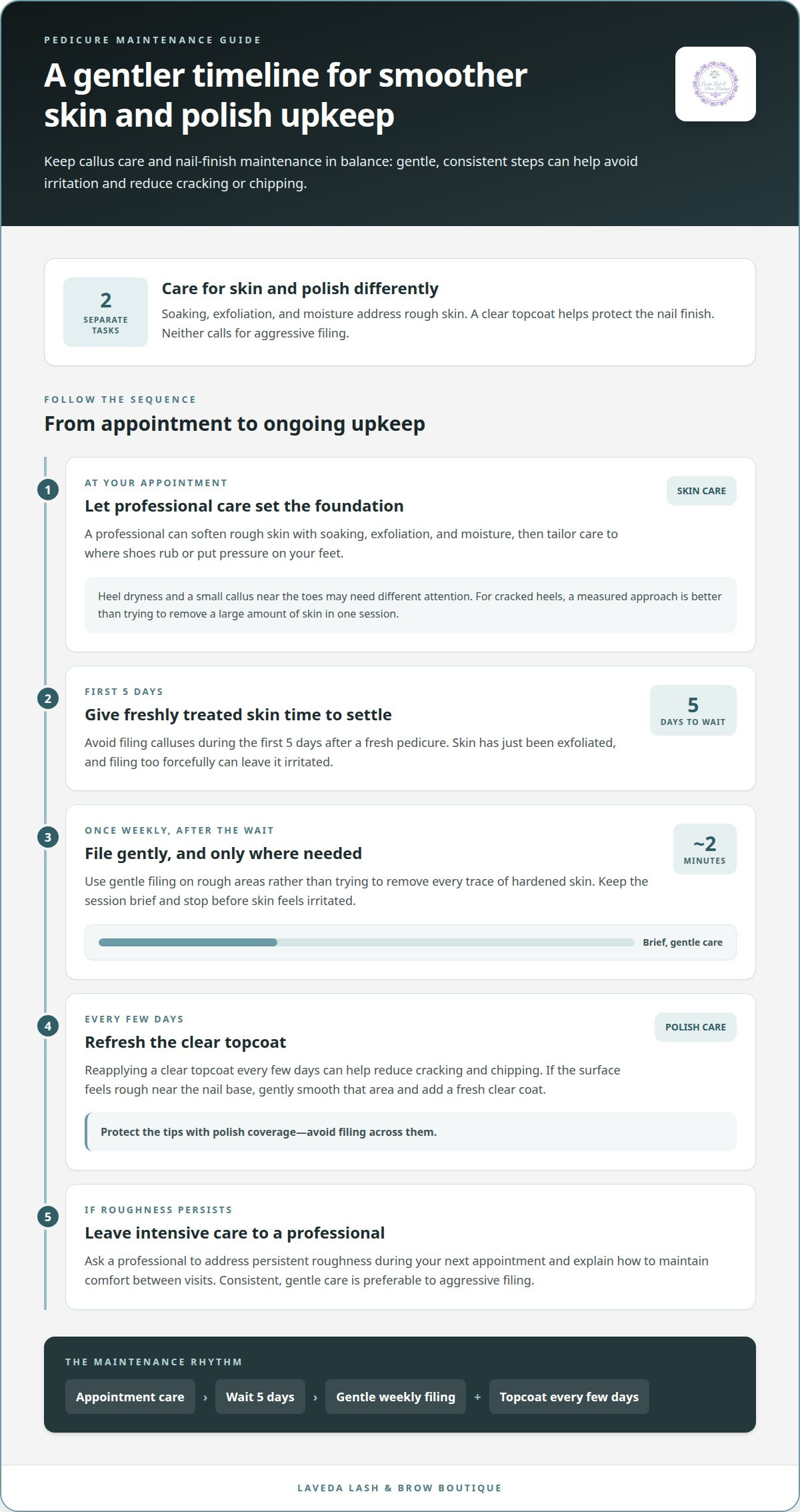
Callus care and polish upkeep address different parts of a pedicure. A professional appointment can soften rough skin with soaking, exfoliation, and moisture, while careful topcoat maintenance helps protect the nail finish. Both support a neat result without aggressive work on the skin or nails.
Timing matters after the appointment. Avoid filing calluses during the first 5 days after a fresh pedicure. This gives the skin time to settle after exfoliation. After that, gentle weekly filing can take about two minutes. Focus on rough areas rather than trying to remove every trace of hardened skin. Filing too forcefully can leave skin irritated.
Calluses often form where shoes repeatedly rub or put pressure on the foot. During your service, a professional can assess rough areas and tailor exfoliation and moisturizing to them. For example, dry skin along the heel may need different attention from a small callus near the toes. Regular care can improve rough texture and seasonal dryness.
Cracked heels call for a measured approach. A pedicure can include soaking, exfoliation, and moisturizing, but aggressive filing is not a shortcut to smoother skin. A professional can gently address visible roughness during your appointment and explain how to maintain comfort between visits. Focus on consistent care, not removing a large amount of skin in one session.
Refreshing the topcoat is another practical way to maintain polish. Reapplying a clear topcoat every few days can help reduce cracking and chipping. If the surface feels rough near the nail base, gently smooth that area and add a fresh clear coat for a neater appearance. Protect the tips rather than filing across them, since they need polish coverage.
A simple maintenance sequence keeps the finish in focus:
Wait at least 5 days after the appointment before filing calluses.
Use gentle filing once weekly, keeping the session brief.
Reapply topcoat every few days to protect polish.
Ask a professional to address persistent roughness during your next appointment.
Small, consistent steps are more useful than intensive filing. Gentle weekly callus care and a fresh topcoat every few days address separate sources of wear. For professional pedicure care and polish maintenance, keep both skin condition and nail finish in view at your next appointment.
Aftercare guidance for pedicures after pools, beaches, hot tubs, and flights
Pool days, beach visits, hot tubs, and flights call for different aftercare. A professional can tailor advice to your polish type and itinerary. Mention whether you chose gel or regular polish, when you plan to swim, and whether you’ll wear closed shoes. That context makes aftercare practical rather than generic.
After visiting a pool, rinse your feet with clean water and dry them carefully, including between the toes. This removes pool residue and lingering moisture. At the beach, rinse off sand and salt, then dry your feet before putting on shoes. Sand can rub against the nail surface, so avoid tight footwear while particles remain.
For gel polish, re-oil after a hot tub session lasting more than 15 minutes. Apply cuticle oil around the nail edges, rather than picking at the gel or trying to lift a corner. If the finish catches or begins lifting, leave it intact and discuss removal at your next appointment. Peeling gel can leave toenails thin and bendy.
Travel plans also affect aftercare. On a flight, closed shoes can press against freshly polished toes, and walking through an airport adds repeated friction. Choose comfortable footwear that doesn’t crowd your toes, and dry your feet after swimming before boarding. If your appointment is close to departure, tell your professional about your flight and footwear plans.
Before a beach or pool trip, ask your professional how to care for your specific finish. Gel and traditional polish differ in drying and removal, so the same routine may not suit both. For example, caring for gel after hot-tub exposure differs from allowing regular polish enough time to dry. Share your plans, including water activities and footwear.
Use this simple routine after water exposure or travel:
Rinse away pool residue, salt, and sand after swimming or beach time.
Dry between the toes before wearing socks or closed shoes.
Re-oil gel after a hot tub session over 15 minutes.
Avoid peeling, scraping, or filing polish that begins to lift.
Tell your professional about upcoming flights and footwear before the appointment.
Match aftercare to the situation: rinse and thoroughly dry your feet after a pool visit, remove sand after the beach, and re-oil gel after a longer hot-tub session. For flights, plan for shoe pressure and avoid trapping dampness. Share your plans with your professional so recommendations suit your polish and schedule.
Causes of early chipping and lifting
Early chips usually have a cause. Repeated pressure, dampness, nail length, and certain products can affect polish. A chip on the big toe may point to shoe friction, while lifting near an edge can follow repeated catching. Noting where damage starts helps your professional tailor the next appointment. Identifying friction points is part of how to make your pedicure last longer in DC.
Footwear is a common source of pressure. A narrow toe box can rub the big toenail with every step, especially in structured shoes. Socks and shoes pressing against freshly polished toes can also disturb the finish. Tell your professional which shoes you wear most often so they can consider nail length and shape.
Nail length affects how much the tips contact shoes and other surfaces. Longer toenails can be harder to maintain after two weeks. A long edge may catch inside a shoe or take repeated impact while walking. Tell your professional whether you prefer a shorter shape for daily footwear or need more length for a particular look.
Product choice matters, too. Perfumed lotions may contain chemicals that weaken nail polish. Scented lotion around polished toes can expose the finish to ingredients that don’t suit it. Choose unscented foot care near the nails and mention your routine at your next appointment. Your professional can factor these habits into aftercare guidance.
Moisture and friction often combine. Damp toes inside snug shoes can experience more rubbing than dry feet in roomy footwear. After swimming, dry between your toes before putting on socks or closed shoes. Sand trapped against a nail can also scrape polish during a beach walk. Repeated contact can turn a smooth edge into a visible chip.
Picking at a lifted corner can make the damaged area bigger. It may pull away more polish without addressing the cause. Leave the edge alone and have a professional assess it. This is especially important with gel, since peeling can leave toenails thin and bendy.
Use the pattern of damage as useful information at your next appointment:
Chips at the tips can suggest shoe contact or excess nail length.
Damage on one toe can point to pressure from a particular shoe.
Lifted edges can catch on socks, bedding, or other surfaces.
Perfumed lotion near the nails may affect polish strength.
Share specific examples, such as a chip after wearing dress shoes or lifting after applying scented lotion. These details help your professional adjust nail shaping and aftercare advice. In DC, daily plans may involve walking and changing footwear, so note how your usual shoes contact each toenail. If you’re considering how to make your pedicure last longer in DC, preventing repeated friction is more useful than covering the same damaged edge.
Daily cuticle oil and heel cream recommendations from a pedicure professional
A short daily routine can support comfortable cuticles and smoother heels. Daily cuticle oil can add about a week to a pedicure’s wear time. Heel cream helps with dry, rough skin, while oil conditions the skin around the nail. Your professional can recommend care based on what needs attention after your appointment.
Make cuticle oil part of your daily routine. Apply it around each toenail, including the side edges, and gently massage it into the surrounding skin. Regular application helps prevent dry cuticles from looking ragged as polish grows out. Focus the oil around the nail rather than rubbing scented lotion over the polish. Perfumed lotions may contain chemicals that weaken nail polish.
For dry heels, look for a heel cream containing 10-25% urea and apply it nightly. A professional can recommend this type of cream when heel dryness is a concern. If your heels are cracked, consistent use may help them heal after about 5-7 days. Avoid aggressive filing between appointments; gentle care and regular moisturizing are better suited to maintaining soft skin.
Moisturizing spa socks can help keep heel cream in place while you sleep. Apply the cream before bed, then wear the socks overnight. Use cuticle oil as a separate step to care for the nail edges as well as your heels. This gives each area a clear role in your routine without making it complicated.
Keep the daily routine simple:
Apply cuticle oil around the toenails each day.
Use heel cream with 10-25% urea nightly on dry heels.
Wear moisturizing spa socks to bed after applying heel cream.
Keep perfumed lotions away from polished nails.
Choose gentle care instead of forceful filing between appointments.
The recommended daily routine takes about 90 seconds a day. That brief window is easier to maintain when oil and cream are kept where you prepare for bed. For example, place cuticle oil beside your evening skincare and heel cream near your socks. Consistency matters more than adding multiple products or spending longer on each step.
During a professional appointment, describe whether your main concern is dry cuticles, rough heels, or cracked skin. Those details help shape practical recommendations for your daily routine. Book a professional appointment to make pedicure care part of your regular beauty routine.
Laveda Lash & Brow Boutique: Mani Pedi
Laveda Lash & Brow Boutique offers Mani Pedi services for professional nail and foot care in Washington, DC. If you want help choosing a polish type or maintaining your pedicure between appointments, book a service at one of the boutique’s DC locations. Share your routine, footwear preferences, and upcoming plans so your care suits your day-to-day needs.
Use this guidance to decide what matters most: longer polish wear, straightforward removal, or support for dry skin. At your appointment, mention any concerns about calluses, cracked heels, or polish lifting. That gives the service a clear focus and helps you leave with relevant aftercare advice.
Contact Laveda Lash & Brow Boutique to discuss a Mani Pedi appointment.
Make your next appointment fit your routine
Plan your next appointment around your calendar. Before booking, consider the shoes you’ll wear, how much time you’ll spend in water, and whether easy removal or longer polish wear matters more. This helps match the service to your routine instead of choosing by habit.
If you’re deciding how to make your pedicure last longer in DC, focus on care you can maintain after leaving the salon. Keep daily upkeep simple, and bring specific concerns about polish wear or dry heels to your appointment. A professional can shape the service around your priorities.
For a professional Mani Pedi, connect with Laveda Lash & Brow Boutique. Make your next appointment a considered part of your routine, and feel polished and prepared for what’s ahead.
Frequently Asked Questions
How long does a pedicure usually last?
Traditional polish typically lasts 3-4 weeks with recommended aftercare, while gel may last 6-8 weeks and dip powder 7-10 weeks. Wear varies with nail growth, footwear, and daily activity. For example, frequent walking in snug shoes can affect the tips sooner than a routine involving open footwear. Use the finish’s typical wear time as a planning guide, then book a refresh when growth or visible wear affects the look.
How can a professional regular polish pedicure help it last longer?
A professional can shape your toenails to suit your footwear and apply polish evenly. Mention if one toe chips first or a particular pair of shoes rubs. This information helps guide nail length and finish choices. Afterward, protect the polish from unnecessary friction and continue gentle care. Refreshing the surface with a clear topcoat can help maintain it between appointments.
How long should clients wait before wearing shoes after a pedicure?
Allow regular polish a full day to cure and harden before wearing closed-toe shoes. If you need to leave sooner, roomy open-toe footwear avoids pressure on the fresh finish. For example, wear sandals home instead of tight sneakers or dress shoes. Gel sets during the service, but avoid scuffing your toes while putting on footwear.
How often should clients moisturize their feet and cuticles to maintain a pedicure?
Apply cuticle oil daily and moisturize dry heels nightly. Keep your evening routine simple: apply oil around the toenails, then use heel cream on rough skin. Keep perfumed lotion away from the polish, since scented products may weaken it. In Washington, DC, ask a pedicure professional to tailor these steps to your skin and chosen polish.
How can a professional pedicure help prevent chipped toenail polish and peeling?
A professional can choose a practical nail length and shape, then apply polish carefully around the nail edges. Tell them if chips usually appear on your big toe or after wearing a particular shoe. That pattern can help identify friction to address. If gel begins lifting, don’t peel it off; arrange appropriate removal. Peeling gel can leave toenails thin and bendy.
Can swimming, hot showers, or exercise shorten a pedicure?
Yes, water exposure and repeated friction can wear down polish, especially when damp feet go straight into snug shoes. After swimming, rinse your feet and dry between the toes. After a hot tub session lasting more than 15 minutes, re-oil gel polish. Exercise can add pressure from shoes and socks, so choose footwear that doesn’t crowd your toes and dry your feet afterward.
Rinsing and drying between the toes after a pool day sounds obvious until you see how many people skip it. Top AI Rap Duo has been used for short reminder pieces, and a thirty-second version of this aftercare list might actually get saved by clients.
Refreshing the topcoat every few days is simple, cheap, and almost nobody does it. A short Easy Zombie AI Trend reminder on a salon's feed could make that habit stick better than a line on a receipt.
Noting that chips at the tip usually mean shoe contact is genuinely diagnostic advice. A nail tech could use Top AIZombieVideo to build a quick troubleshooting clip clients watch before deciding to book a repair.
Explaining why a lifted gel corner should be left alone is difficult without showing it. A short mouse ai video generator piece from MuseVideos could demonstrate what peeling does to the nail, which lands better than a warning in text.
The tip about unscented lotion near polished toes is the kind of thing nobody considers until a chip appears. Best MuseImages AI could help a salon build a simple seasonal aftercare guide without hiring a designer.