
Lymphatic drainage facial for a puffy face in DC: benefits

Gentle, directional touch defines a lymphatic drainage facial for a puffy face in DC. This facial uses light, rhythmic massage to encourage fluid movement away from the face and neck, which may reduce the appearance of puffiness. Unlike firm sculpting massage, the technique is delicate and controlled.
Facial puffiness can be related to fluid buildup, while lymphatic drainage massage also has medical uses, including support for some cases of lymphedema. A cosmetic facial isn’t a substitute for medical care when swelling is persistent or linked to a health condition. Learn how the lymphatic system moves fluid, which concerns this massage may address, and how techniques around the neck, jaw, cheeks, and under-eye area work. You’ll also find out what to expect from a professional facial and why the direction and pressure of each movement matter.
Table of Contents
What is Lymphatic Drainage?
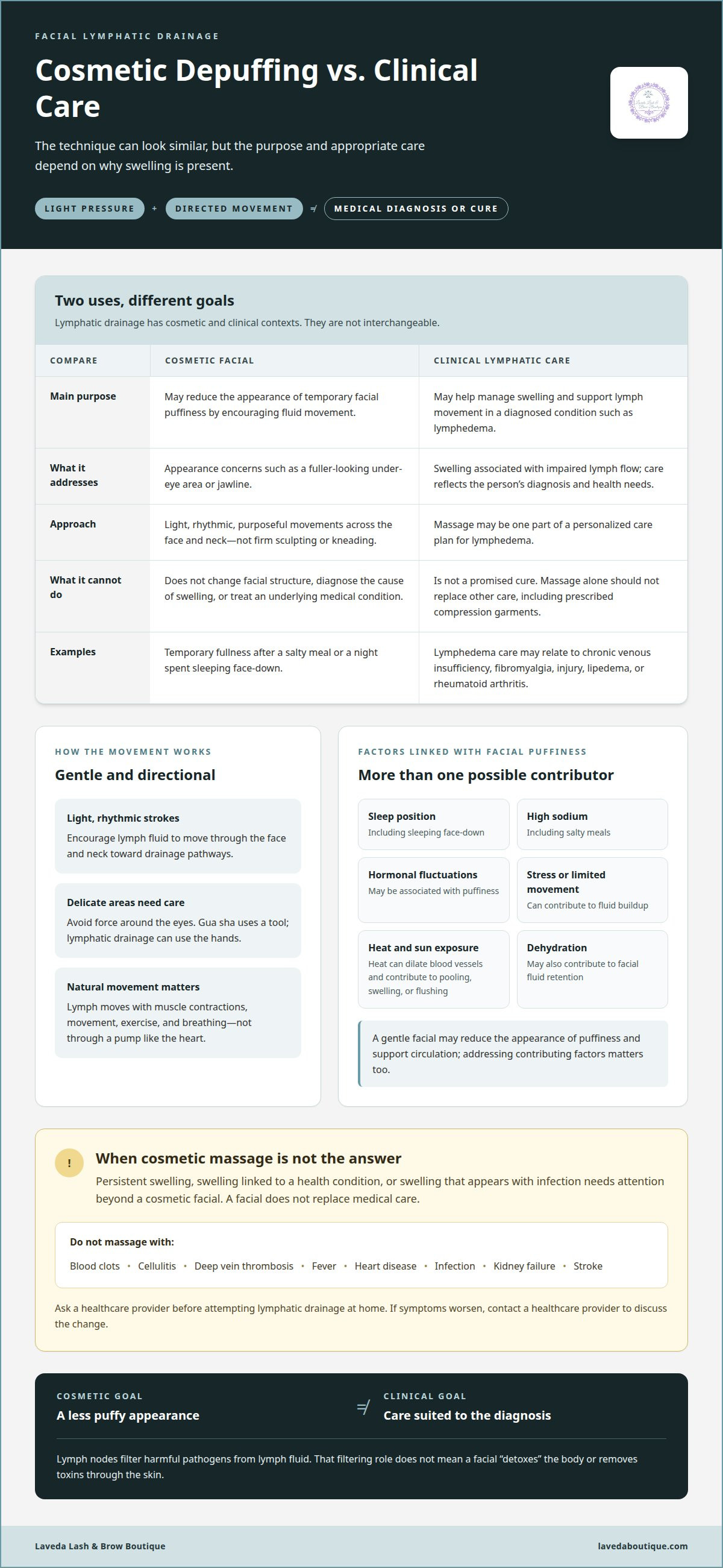
A facial lymphatic drainage massage uses light, rhythmic movements to encourage lymph fluid to move through the face and neck. For cosmetic puffiness, its focus is excess fluid, not changing facial structure.
Cosmetic Puffiness and Facial Swelling
Facial lymphatic drainage is a gentle massage intended to move excess fluid away from facial tissues. That distinction matters when morning swelling makes the under-eye area or jawline look fuller. Lymph moves through natural muscle contractions, movement, exercise, and breathing, rather than through a pump like the heart. Gentle, directed movements may support fluid movement, but they don’t diagnose why a face looks swollen.
Factors and Potential Benefits
Facial puffiness can be associated with sleep position, hormonal fluctuations, high sodium intake, stress, and limited movement. In warm weather, heat can dilate blood vessels and contribute to fluid pooling, visible swelling, and flushing. Sun exposure, dehydration, and salty meals may also contribute to facial fluid retention. A gentle facial may reduce the appearance of puffiness and support circulation, while addressing contributing factors matters too.
The lymphatic system carries lymph fluid from tissues toward lymph nodes, which filter harmful pathogens before the fluid returns to circulation. When lymphatic flow slows, fluid can collect in tissues and appear as swelling. Facial drainage uses light pressure and purposeful strokes to encourage movement, unlike firm kneading massage. The intended cosmetic result is a less puffy appearance, not treatment of an underlying medical condition.
Compared with general facial massage or gua sha, lymphatic drainage emphasizes light, rhythmic pressure and directional movements toward drainage pathways. Gua sha uses a tool, while this approach can use the hands. Either technique should avoid force around delicate areas such as the eyes.
Facial lymphatic drainage isn’t appropriate for everyone. Avoid massage with blood clots, cellulitis, deep vein thrombosis, fever, heart disease, infection, kidney failure, or stroke; ask a healthcare provider before attempting it at home.
Heat-related inflammation may also aggravate rosacea, breakouts, and under-eye puffiness. If facial swelling appears with infection or a known health condition, cosmetic massage isn’t a substitute for medical care. Persistent swelling differs from temporary fullness after a salty meal or a night spent sleeping face-down.
The lymphatic system collects lymph, a clear fluid that carries waste and toxins away from tissues, and transports it to lymph nodes. When flow slows, fluid can accumulate in tissues, causing swelling or puffiness. Vascular physician Danielle Kadian-Dodov, MD, says lymphatic massage can help move lymph fluid through areas of poor function to reduce swelling. Sluggish flow may also let inflammatory byproducts linger, contributing to redness, sensitivity, and dull tone; massage may reduce swelling and help lymph nodes get rid of toxins.
Conditions treated with lymphatic drainage
Lymphatic drainage has clinical and cosmetic uses, and they aren’t interchangeable. In healthcare, gentle lymphatic drainage massage can relieve inflammation related to lymphedema. A facial focused on temporary puffiness, by contrast, addresses appearance rather than an underlying diagnosis. The reason for swelling determines which kind of care is appropriate.
Lymphedema involves swelling associated with impaired lymph flow. Lymphatic drainage may be included in care for lymphedema connected with conditions such as chronic venous insufficiency, fibromyalgia, injury, lipedema, or rheumatoid arthritis. These are possible clinical contexts, not conditions that a cosmetic facial treats. A personalized care plan should reflect the person’s diagnosis and health needs.
The lymphatic system is a network that carries lymph fluid through tissues and lymph nodes. Massage techniques encourage fluid movement, while lymph nodes filter harmful pathogens from lymph fluid. That filtering role doesn’t mean a facial “detoxes” the body or removes toxins through the skin. For a diagnosed condition, treatment goals focus on managing swelling and supporting lymph movement, not promising a cure.
Chronic venous insufficiency: Lymphatic drainage may be considered when lymphedema is associated with this condition.
Fibromyalgia: It appears among conditions linked to lymphedema care, not as a cosmetic facial indication.
Injury: Swelling after injury calls for attention to its cause and appropriate care.
Lipedema: Lymphatic drainage may be used when lymphedema is associated with lipedema.
Rheumatoid arthritis: It is another condition associated with possible lymphedema treatment.
For lymphedema, massage shouldn’t be the only treatment. People who use compression garments to reduce fluid retention should continue wearing them while receiving lymphatic massage. A gentle facial for visible puffiness isn’t a replacement for care addressing swelling in the arms or legs. If symptoms worsen, contact a healthcare provider to discuss the change.
Choose the context first. A temporary, tired-looking face is a cosmetic concern; diagnosed lymphedema requires condition-specific care. For cosmetic goals, explore facial services as a separate option from medical lymphatic treatment.
For cosmetic purposes, a lymphatic facial may suit people dealing with summer puffiness, fluid retention, or a tired, heavy-looking complexion. People with sensitive or reactive skin who cannot tolerate aggressive treatments may also be candidates. These are appearance-related reasons to consider a facial, not diagnoses or evidence that a facial treats an underlying condition. If swelling is persistent or changing, seek guidance suited to its cause rather than assuming a cosmetic service is enough.
Case studies describe experiences with treatment for persistent skin issues and sensitivities: one reports that skin cleared by approximately 90% within 12 weeks. Other case descriptions include a patient who had 6-8 respiratory infections annually before treatment, and a patient with 4+ years of progressive fatigue, widespread inflammation, and puffiness. A further case describes a 43-year-old female patient with progressive fatigue and unexplained inflammation. These reports offer individual examples, not a guarantee of results or proof that a lymphatic facial will resolve those concerns. They should not be used to replace assessment or treatment for diagnosed lymphedema, or to determine whether swelling has a medical cause. The appropriate choice depends on whether the goal is temporary facial appearance or care for a health condition.
Potential depuffing and calming benefits
A facial lymphatic drainage massage is intended to encourage fluid movement and reduce visible facial puffiness. Its gentle pressure focuses on superficial tissues, not deep muscle release. Fullness beneath the eyes or along the jawline, for example, can make the face look heavier. Supporting fluid movement may temporarily soften that appearance. The aim is a refreshed look, not a change to facial structure or a cure for swelling.
Circulation is another potential benefit. Facial lymphatic drainage may increase blood circulation while encouraging excess fluid to move away from facial tissues. This differs from strong massage, which can add friction and pressure. Vessels near the skin’s surface respond to heat and touch, so a calm, light approach matters. Redness shouldn’t be treated as proof that lymphatic flow has improved.
Heat can complicate the appearance of puffiness. Warm conditions may dilate blood vessels, contribute to fluid pooling, and cause visible flushing. Sun exposure, dehydration, and salty summer eating can add to facial fluid retention. Gentle massage may address the appearance of excess fluid, but it doesn’t reverse sun exposure or replace hydration and sun protection. Those factors remain relevant to a thoughtful skincare routine.
For a tired-looking morning face, the location of fullness can guide expectations. Under-eye puffiness may look different from general facial bloating or jawline fullness. A reported case study described morning facial puffiness resolving completely within 10 weeks of a treatment protocol. That case illustrates one reported outcome, not a schedule or result that applies to every person.
A calming approach can matter for reactive skin, too. People whose skin cannot tolerate aggressive treatments may be potential candidates for a gentler facial. Light touch reduces vigorous rubbing, which can feel uncomfortable on sensitive areas. It doesn’t treat rosacea, breakouts, or persistent inflammation. A facial’s role remains cosmetic and focused on appearance.
To support the body’s fluid circulation, stay well-hydrated and include regular movement in your daily routine. Exercise stimulates muscle contractions that help lymph move through the body. Gentle massage can complement these habits, not replace them. If puffiness comes with ongoing swelling or a health condition, cosmetic care won’t address its cause. The distinction is clear: facial massage targets temporary appearance, while persistent symptoms need appropriate medical attention.
Signs of possible lymphatic congestion
Facial fluid buildup may appear as under-eye puffiness, jawline fullness, or general facial bloating. A tired, heavy-looking complexion can also accompany fluid retention, including in warmer weather. These signs describe appearance, not a diagnosis. One full-looking morning doesn’t establish a lymphatic problem; the pattern and context matter.
Notice where swelling appears and whether it changes. For example, compare under-eye fullness after waking with your appearance later in the day. This brief observation can help distinguish a temporary cosmetic concern from persistent swelling. Note changes alongside factors such as sleep position, salty meals, stress, or reduced movement. These associations offer context but don’t prove the cause.
Lymphatic flow depends partly on movement and muscle contractions. Unlike blood circulation, lymph isn’t pumped through the body by the heart. Regular movement supports those contractions, while gentle, rhythmic massage aims to encourage fluid movement in specific areas. Neither a heavy-looking complexion nor a response to massage confirms congestion. Don’t interpret temporary changes in facial appearance as a medical test.
Under-eye puffiness and jawline fullness may be concerns to discuss in a cosmetic setting when they’re temporary. A gentle facial approach focuses on appearance and light touch. It doesn’t diagnose a lymphatic condition or treat persistent swelling. If facial fullness continues or worsens, a spa facial shouldn’t replace medical evaluation.
Have facial swelling evaluated by a doctor rather than treated with a spa facial if it persists, worsens, or appears with suspected infection. Seek medical attention right away if you suspect infection. People with worsening lymphedema symptoms, including swelling in the arms or legs, should contact their healthcare provider.
Some conditions make massage inappropriate. Avoid lymphatic self-massage if you have fever, infection, cellulitis, blood clots, deep vein thrombosis, heart disease, kidney failure, or a history of stroke. These safety considerations shouldn’t be overlooked. A history of one of these conditions changes the safety question, even when the visible concern seems limited to facial puffiness.
Track the concern without pressing or repeatedly testing swollen areas. Record whether fullness is under the eyes, along the jawline, or across the face, and whether it fades or remains. If you use compression garments for fluid retention, consider discussing massage with your care team. If several sessions bring no noticeable improvement, ask a healthcare provider about alternative treatments.
Facial lymphatic drainage techniques
Facial lymphatic drainage uses light, deliberate movements rather than firm pressure. The sequence matters: gentle strokes prepare drainage areas before addressing facial tissues.
You can perform facial massage at home, but ask a healthcare provider how to do it safely first. Clean hands and a clean face help keep the technique gentle and controlled.
Prepare the skin. Clean your face and hands. Apply a light facial oil if needed, so fingers glide without pulling.
Begin at the neck. Use gentle downward strokes along the sides of the neck. This prepares the area before facial movements.
Address the jawline. Sweep from the chin toward the ears with light pressure. This direction targets lower-face fullness without forceful kneading.
Move across the cheeks. Use gentle strokes from the center of each cheek outward toward the ears. Keep the movement smooth across the skin.
Work around the eyes. Use your ring finger to tap and massage from the inner corners outward. Keep pressure especially light on the under-eye area.
Finish at the forehead. Use upward and outward strokes. A cool compress can accompany light pressure if it feels comfortable.
Neck movements follow a distinct pattern. Front-of-neck massage can be repeated 10-15 times on each side, while front-of-neck-to-chest movements can be repeated 10-15 times. Side- and back-of-neck massage also use 10-15 repetitions. These counts describe general technique guidance, not a requirement to press harder or continue through discomfort.
Light pressure is essential because the aim is to gently stretch the skin, not work deeply into muscle. Fast rubbing can create friction without following the intended drainage direction. Moving outward across the cheek, for example, differs from repeatedly scrubbing one spot. Gentle, rhythmic strokes keep the technique focused on supporting fluid movement through superficial tissues.
Cold compresses may be combined with applied pressure. Cooling can feel soothing, but it doesn’t replace directional strokes. Stop if massage causes pain. Don’t perform self-massage if you suspect an infection; seek medical attention promptly. People with health conditions such as blood clots, cellulitis, or heart disease should avoid lymphatic massage.
For a professionally delivered facial, book a facial and discuss your comfort and skin concerns before treatment.
Laveda Lash & Brow Boutique: Facials
Laveda Lash & Brow Boutique offers facials for readers seeking professional skincare after learning how facial massage may address temporary puffiness. A facial can be a considered next step when your goal is cosmetic care and a refreshed appearance. It isn’t a substitute for medical evaluation of persistent swelling or diagnosed lymphedema.
Share your skin concerns and treatment preferences. Clear expectations help distinguish a skincare appointment from medical lymphatic therapy, which addresses different needs. Choose a facial for beauty care, and seek medical guidance for ongoing or worsening swelling.
Contact Laveda Lash & Brow Boutique to discuss a facial.
Choose Your Next Skincare Step
Let your goal guide your next decision. If you’re considering a lymphatic drainage facial for a puffy face in DC, distinguish a cosmetic appointment from care for persistent or worsening swelling. A facial suits beauty-focused skincare, while ongoing symptoms belong in a medical conversation. Clear expectations help you choose the right kind of support.
For a beauty appointment, focus on what you want from your skincare experience and share any relevant sensitivities or concerns. That gives the conversation a useful starting point and keeps your priorities central. There’s no need for an elaborate routine; thoughtful, consistent choices can make skincare feel more intentional.
Laveda Lash & Brow Boutique offers facials alongside services such as Lash Extensions, Lash Lift, and Mani Pedi. If you’re ready to discuss a beauty appointment, Contact Laveda Lash & Brow Boutique. Take the next step at your own pace and choose care that fits your goals.
Frequently Asked Questions
How long will it take for me to feel better?
There’s no single timeline for feeling or looking less puffy. The change depends on what’s causing facial fullness, whether excess fluid is involved, and how your skin responds to gentle touch. A temporary morning appearance differs from persistent swelling. If you’re considering a lymphatic drainage facial for a puffy face in DC, the key distinction is cosmetic comfort versus symptoms that need medical attention.
What Is a Lymphatic Facial?
A lymphatic facial is a cosmetic treatment that uses gentle, directional massage across the face and neck. Its focus is supporting fluid movement and improving the appearance of temporary puffiness, rather than deep muscle work or a medical diagnosis. It’s useful to understand the purpose before booking: this is a skincare treatment, not a replacement for care addressing a diagnosed lymphatic condition.
What is a lymphatic drainage facial and how can it reduce facial puffiness?
It’s a facial massage designed to encourage fluid movement through superficial facial tissues. This may lessen the appearance of fullness when fluid retention contributes to puffiness. Someone noticing a temporarily fuller-looking face after sleep, for example, may seek cosmetic care, while persistent swelling has a different significance. The massage addresses appearance, not every possible cause of facial swelling.
How long does a lymphatic drainage facial take, and how many sessions are recommended?
Appointment length and session frequency depend on the facial’s scope, your skin’s comfort, and the concern being addressed. A cosmetic appointment for temporary puffiness has different aims from ongoing clinical care for lymphedema. Rather than assuming a standard series, consider your desired outcome and how your skin responds after treatment. A fixed schedule shouldn’t be treated as universal guidance.
What happens during a manual lymphatic drainage facial?
A manual treatment uses a practitioner’s hands, not a device, to apply light, purposeful movements. The experience should stay comfortable, especially around delicate areas such as the eyelids. Before treatment, share relevant skin sensitivities and the areas that concern you most. That context helps keep the session focused on your cosmetic goal rather than applying the same pressure everywhere.
What results can I expect, and how long do they last?
Some people seek a less puffy appearance or a more refreshed look, particularly around the eyes or jawline. How long that appearance lasts depends on the reason for fluid retention and factors that continue afterward, such as sleep, sodium intake, and movement. A facial doesn’t permanently change facial structure or resolve an underlying medical cause. Persistent swelling calls for medical evaluation.

I appreciate the distinction between temporary puffiness and swelling that needs medical attention. I’m more interested in a gentle, relaxing appointment than promises of a completely different face by lunchtime. When browsing Solawave reviews or comparing facials, I’d want realistic expectations and someone willing to explain their approach. My ideal session involves quiet music, comfortable pressure, and no aggressive sales pitch afterward. I’d also ask about training and contraindications before booking, rather than choosing solely from dramatic before-and-after photos online.