
What Skincare to Avoid After Microblading and What Fades It

Active skincare can undermine fresh microblading before the pigment has settled. To understand what skincare to avoid after microblading, keep retinoids, exfoliating acids such as glycolic and salicylic acid, benzoyl peroxide, scrubs, and fragranced or foaming cleansers away from healing brows. These products can irritate the skin or contribute to fading, so keep makeup off the treated area for 14 days after the procedure.
It’s natural to want to cleanse and moisturize as usual, but freshly treated brows need a gentler routine. Avoid active ingredients near the area, wash carefully, and use only the aftercare ointment recommended by your artist. This guide explains which skincare ingredients and treatments can fade pigment faster, how sun exposure, sweat, and excess moisture affect healing, and how to wash and apply ointment without disturbing the brows. You’ll also learn why temporary color changes during healing don’t necessarily mean the pigment has disappeared.
Table of Contents
1. What Should You Avoid After Microblading?
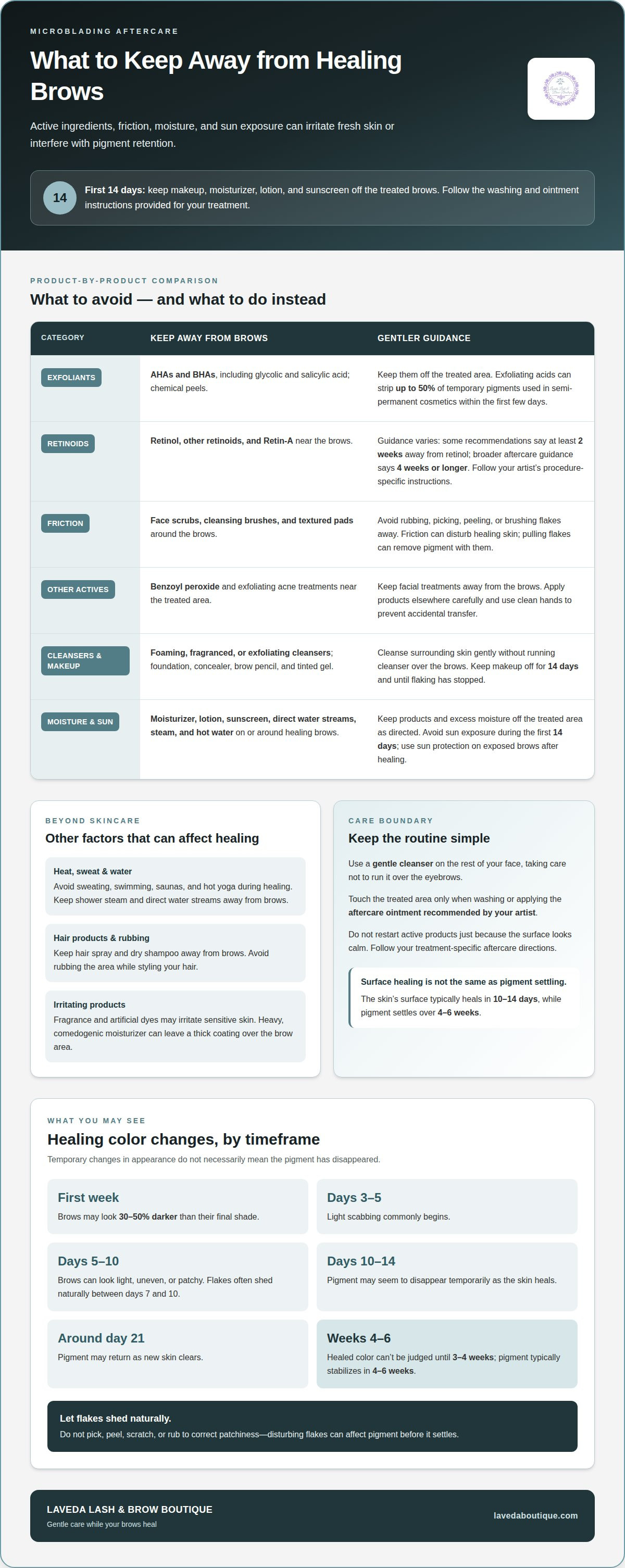
During the first 14 days after microblading, keep makeup, moisturizer, lotion, and sunscreen off the treated brows. Foundation, concealer, brow pencil, and tinted gel can rub against healing skin when applied or removed. Keep makeup away until the skin surface has healed and any flaking has stopped. Don’t cover a scab with concealer or brush flakes away to create a smoother finish.
Microblading artists generally recommend keeping brows clean, avoiding makeup and active skincare, and following the specific washing and ointment instructions given after treatment. During the first 14 days, touch the area only when washing or applying the recommended aftercare ointment. Don’t pick, peel, or scratch: pulling at flakes can remove pigment with them and may irritate the skin. Let the brow surface shed naturally.
Choose gentle cleansing over foaming, fragranced, or exfoliating cleansers. Keep direct water streams and steam off fresh brows during the initial healing period, and avoid hot water that can dry the skin. A cleanser containing glycolic acid or salicylic acid is still an exfoliant, even if it feels mild. Keep it off the treated area rather than using it to clean around the brow strokes.
Physical exfoliants: Avoid face scrubs, cleansing brushes, and textured pads near the brows. Their friction can disturb flakes and freshly treated skin.
Chemical exfoliants: Keep AHAs and BHAs, including glycolic and salicylic acid, away from the treatment area.
Turnover-boosting actives: Avoid retinol and other retinoids near the brows during healing. Retin-A belongs in this group.
Other strong ingredients: Keep benzoyl peroxide and exfoliating acne treatments away from the brow area.
Guidance varies on when to restart active products. Some recommendations say to avoid retinol, glycolic acid, chemical treatments, and peels for at least two weeks after microblading. Broader aftercare guidance keeps retinol, glycolic acid, salicylic acid, and other exfoliants off the brows for a full four weeks, or longer if your artist advises it. Follow your procedure-specific instructions, and don’t restart an active ingredient just because the surface looks calm.
Exfoliating acids can strip away up to 50% of temporary pigments used in semi-permanent cosmetics within the first few days. That makes product placement important: apply facial treatments only after avoiding the brow area, and use clean hands to prevent accidental transfer. If a product stings or causes visible irritation near healing brows, stop applying it there and follow the aftercare directions provided for your treatment.
2. What Causes Microblading to Fade Faster?
Sun exposure, friction, excess moisture, and irritating products can interfere with pigment retention during healing. UV rays can break down pigment, while hair spray or dry shampoo that reaches the brows may expose them to chemicals that contribute to fading. Keep both away from the treated area as it heals, and avoid rubbing your brows while styling your hair.
Wash your face without wetting microbladed brows by using a damp cloth or your hands to cleanse other areas carefully. Keep the cloth, cleanser, and rinse water away from the brows, and avoid direct water streams and steam during the initial healing period. Use a gentle cleanser on surrounding skin, then pat it dry without dragging a towel across the brow area.
The healing process can make pigment appear to change even when fading isn’t permanent. Brows may look 30 to 50 percent darker than their final shade during the first week. Between days 5 and 10, they can look light, uneven, or patchy. Pigment may seem to disappear around days 10 to 14, then return by day 21 as new skin clears. The healed color can’t be judged until 3–4 weeks after treatment.
Light scabbing commonly begins around days 3 to 5, and flakes often shed naturally between days 7 and 10. Mild redness, tightness, itching, or flaking can occur during this period. Don’t pick at the scabs or try to correct patchiness by rubbing the skin. Removing flakes can disturb pigment before it settles. Pigment typically stabilizes 4–6 weeks after microblading.
Choose products carefully while the skin heals. Fragrance and artificial dyes may irritate sensitive skin, while a heavy, comedogenic moisturizer can leave a thick coating over the brow area. Foaming or fragranced cleansers may also bother healing skin. Keep hair products, facial treatments, and moisturizers from reaching the brows, even when applying them elsewhere first.
During the first 14 days: Avoid sun exposure and salon tanning around healing brows.
During healing: Avoid sweating, swimming, saunas, and hot yoga; excess moisture and heat can disrupt care.
After healing: Use sun protection on exposed brows to help preserve pigment.
The skin’s surface typically heals in 10–14 days, but pigment settles over 4–6 weeks. Keep care gentle throughout that longer process. If you’re planning a brow treatment, explore microblading as a next step.
3. When Can I Wash My Eyebrows Normally After Microblading?
You can cleanse the rest of your face during healing, but keep water, soap, and skincare off the treated brows as directed. For the first week, avoid water, lotion, soap, and makeup on the brow area. During the first 10–12 days, avoid getting your brows wet; keep direct water streams and shower steam away while washing.
Can you use cleanser and moisturizer after microblading? Use a gentle cleanser on the rest of your face, taking care not to run it over your eyebrows. Keep moisturizer, lotion, and sunscreen off the treated brow area for 14 days after the procedure.
For a controlled face wash, use clean hands or a damp cloth to cleanse your cheeks, forehead, and chin. Avoid the brows as you rinse, and pat the surrounding skin dry without dragging a towel across them. Choose lukewarm water instead of a hot stream. This makes everyday cleansing practical without soaking or rubbing the treated skin.
Makeup timing depends on both the calendar and the skin’s condition. Avoid eyebrow makeup until scabbing and flaking have resolved, which is approximately around day 10. Keep makeup off the treated area for at least 14 days after microblading, and wait longer if flakes remain. Foundation, brow pencil, and tinted gel can all transfer during application or removal.
Makeup can transfer bacteria from brushes, fingers, or product containers to skin that is still healing. Applying or removing it may cause friction, disturb flakes, and contribute to irritation or pigment loss. Don’t use a brow pencil to fill patchy areas while the skin is shedding. Let flakes fall away naturally instead of covering or lifting them.
When can you resume your normal skincare routine after microblading? The skin’s surface typically heals in 10–14 days, but avoid applying moisturizer, lotion, or sunscreen directly to the brows for 14 days. Resume products around the area gradually after healing; keep retinol and exfoliating acids away for longer, following the aftercare instructions.
Using skincare too soon can cause irritation, disrupt flakes, and contribute to pigment fading. Sunscreen and moisturizer can leave residue on healing brows, while cleansers containing exfoliants may affect the skin’s surface. Keep these products off the treated area until the recommended period has passed.
Days 1–7: Cleanse the rest of your face carefully; avoid water, soap, lotion, and makeup on the brows.
Through day 14: Keep makeup, moisturizer, lotion, and sunscreen off the treated area.
After healing: Return to your regular routine gradually, keeping active ingredients away as directed.
4. Ointment application and avoiding excessive moisture
Use aftercare ointment only as directed by your microblading artist. One common routine is washing the brows twice daily during the first 7 days, then applying ointment after each wash. Other aftercare plans differ, so follow the instructions given for your treatment rather than adding extra applications.
Apply a very thin layer. One aftercare routine recommends about half a grain of rice per eyebrow. Use clean hands or a clean applicator, and spread the ointment gently without rubbing. A thick, shiny coating isn’t the goal. Excess ointment can over-occlude the skin and may interfere with natural healing or push pigment out.
Keep the treated area clean and dry between approved washing and ointment applications. During the first 14 days, touch the brows only when washing or applying aftercare ointment. Wash your hands first, avoid unnecessary contact, and don’t scratch an itch or lift a loose flake. Picking scabs can pull out pigment and disturb skin that is still healing.
Moisture needs careful management, not complete avoidance of aftercare. For 14 days after microblading, avoid swimming, long hot showers or baths, Jacuzzis, and saunas. Steam and prolonged water exposure can soften flakes and make it harder to keep the brow area undisturbed. In the shower, turn away from the stream and keep water from running directly over your brows.
Some aftercare instructions recommend applying a light ointment layer before showering to shield brows from moisture. Do this only if it matches your artist’s directions. Don’t add petroleum products or fragranced ointments on your own, as unapproved products may irritate healing skin. If your instructions specify no ointment, don’t apply it just because you’re taking a shower.
After washing: Pat brows dry gently, then apply only the directed amount of ointment.
Between applications: Avoid touching, scratching, peeling, or adding extra product.
During the first 14 days: Keep away from swimming, saunas, Jacuzzis, and long hot baths or showers.
Sun exposure and tanning also require a pause during early healing. Avoid sun exposure and salon tanning for 14 days after the procedure. Once the brows are fully healed, sun protection can help limit UV-related pigment breakdown. Don’t apply sunscreen directly to healing brows; wait until the skin has healed and follow the aftercare instructions.
Keep your routine simple: gentle washing, the approved amount of ointment, and minimal touching. If your artist’s aftercare instructions give a different schedule, follow that schedule rather than combining routines.
5. Skincare ingredients and treatments to avoid
Knowing what skincare to avoid after microblading helps protect healing brows from irritation and premature fading. Check ingredient labels before applying products nearby. Retinol, glycolic acid, salicylic acid, and other exfoliants can speed skin turnover. Keep them off the brow area during healing, then wait until the skin has healed before using them nearby again. A product that’s safe on your cheeks can still migrate across your forehead.
Other ingredients also need to stay away from fresh microblading. Avoid alcohol-based toners, benzoyl peroxide, and hydrogen peroxide near treated skin. After microshading, keep vitamin C and niacinamide away from the area too. Don’t apply these serums to your brows or let them spread from nearby areas.
Fragrance and artificial dyes can irritate sensitive skin. Choose fragrance-free products around the brow area, and avoid foaming or exfoliating cleansers during healing. Heavy, comedogenic moisturizers can leave a coating. Apply moisturizer carefully, away from the brows, rather than smoothing it across your forehead.
Professional treatments need the same restraint as at-home actives. Avoid chemical peels, laser treatments, and exfoliation near brows until the initial healing period is over. After day 14, continue avoiding laser or chemical peels, exfoliation, and creams containing retinal or glycolic acid until the microblading touch-up and its healing process are complete. Keep retinol away for at least two weeks after microblading.
Timing matters for sunscreen, too. Keep it off treated brows during the first 14 days, then wait until the skin is fully healed before applying it directly. Once healed, SPF 30 sunscreen can help protect exposed brows from UV-related pigment breakdown. Avoid chemical sunscreen containing oxybenzone or avobenzone on healing skin. After healing, mineral formulas with zinc oxide or titanium dioxide are alternatives.
A practical way to think about what skincare to avoid after microblading is to separate products by stage:
During healing: Keep active ingredients, fragranced products, and facial treatments away from brows.
After the surface heals: Reintroduce routine products cautiously. Keep exfoliants and retinoids away until the touch-up’s healing process is complete.
For sun protection: Apply sunscreen directly to brows only once healed.
Follow your artist’s aftercare instructions if they call for a longer pause. Keep the routine simple while the skin heals. For a professional brow appointment, book a microblading appointment.
Laveda Lash & Brow Boutique: Microblading
Laveda Lash & Brow Boutique offers microblading for clients seeking defined, semi-permanent brows. Consider an appointment when you’re exploring the treatment or planning your next step after reviewing healing and skincare guidance. Clear aftercare matters: knowing how to protect brows from moisture, friction, and active ingredients helps you care for them after treatment. Microblading may suit people who want a structured brow look without applying brow makeup each day. The right choice depends on your preferences and the look you want to achieve.
For a professional next step, contact Laveda Lash & Brow Boutique to discuss microblading.
Make Your Next Brow Decision With Confidence
Knowing what skincare to avoid after microblading gives you a strong starting point. Next, choose a brow look that suits your features and routine. Consider how much definition you want and how you prefer to maintain your brows. Keep your aftercare instructions handy so your skincare choices support the result as it settles.
Laveda Lash & Brow Boutique offers microblading alongside Lash Extensions, Lash Lift, and Mani Pedi services. If you’re considering a brow appointment or exploring options for your beauty routine, connect with the studio. A focused conversation can help you decide which service best matches the look you want.
Contact Laveda Lash & Brow Boutique to take the next step. Choose a routine that feels considered, and move forward with confidence.
Frequently Asked Questions
What Causes Microblading to Fade Faster?
Sun exposure, repeated friction, excess moisture, and strong skincare ingredients can speed fading. During healing, hair spray or dry shampoo can also reach the brows and expose them to irritating chemicals. After healing, protect your brows from UV exposure with sunscreen. If they look lighter during healing, the change may be temporary; judge the result after the skin and pigment have settled.
When Can I Wash My Eyebrows Normally After Microblading?
Return to normal brow washing after the initial healing period, following the timing in your aftercare instructions. For the first 10–12 days, avoid getting brows wet; keep cleanser and direct shower spray away. After that, resume gentle washing without scrubbing or using a cleansing brush. If flakes remain, avoid rubbing them loose. A gradual return helps prevent friction from disrupting the surface.
How Long Does Microblading Take to Heal?
Allow about 6–8 weeks for complete recovery after microblading. The surface may appear healed earlier, but pigment can continue settling beneath it. During this period, color may seem uneven or faint before becoming clearer. Avoid judging the final result while the brows are still changing. A touch-up may be considered after the brows have healed and the color has settled.
How Long Does It Take for Eyebrows to Heal?
The skin’s surface typically heals in 10–14 days, while full recovery averages 6–8 weeks. These stages aren’t the same: the surface can look calm while pigment continues to settle. For example, brows may appear patchy during the first part of healing, then look more defined later. Keep following your aftercare routine until the full healing process is complete.
Is It Normal for Microblading to Scab or Flake?
Light scabbing and flaking are common during healing. Flaking often starts around days 3–5, with flakes shedding naturally between days 7 and 10. Itching can occur during this stage. Don’t pull at loose skin, even if one brow looks patchier than the other. Let flakes come away on their own, since picking can disturb the pigment and irritate the treated area.
What Should You Avoid After Microblading?
During early healing, avoid makeup on the treated brows, harsh or exfoliating cleansers, scrubs, and unnecessary touching. Keep the brows away from swimming, tanning, sauna heat, and activities that cause heavy sweating. These habits can expose healing skin to friction, moisture, or UV rays. For example, wash your face carefully so cleanser and rinse water don’t run over your brows.
What Skincare Ingredients Should You Avoid After Microblading?
Keep retinol, retinoids, glycolic acid, salicylic acid, benzoyl peroxide, and other exfoliants away from healing brows. Alcohol-based toners, fragranced products, and hydrogen peroxide can also irritate the area. Check ingredient labels on serums and cleansers, not just products marketed as treatments. If you apply an active ingredient elsewhere on your face, leave a clear margin around the brows to prevent accidental transfer.
How Long Should You Avoid Retinol, Acids, and Exfoliants After Microblading?
Keep retinol, acids, and exfoliants away from brows for at least two weeks after microblading. Some aftercare recommendations extend that period to a full four weeks; avoid these products longer if your artist advises it. After day 14, continue avoiding exfoliation, laser or chemical peels, and retinal or glycolic acid creams until the touch-up and its healing process are complete.

This is really helpful, especially the reminder about retinol and exfoliating acids. I wouldn't have thought that everyday skincare products could affect microblading results so much. After spending money on a beauty treatment, the last thing you want is to accidentally fade the pigment by rushing back into your usual routine. I was browsing skincare discussions recently and came across Skin Vitality reviews while comparing beauty-related information. Definitely saving these tips for my next brow appointment.