
Pedicure for Cracked Heels in Arlington, VA: How to Choose

A more aggressive filing session isn’t always the answer to cracked heels. If you’re considering a pedicure for cracked heels Arlington VA, first consider whether your skin is dry and rough or has deeper fissures that need medical attention.
Dry heel skin can feel uncomfortable and make you hesitant to book a salon service. A cosmetic pedicure can help improve the appearance of rough skin, but it isn’t medical treatment, and forceful filing can irritate vulnerable areas. This guide explains what salon foot care can address, how to choose a service that suits your heels and comfort level, and when to seek medical care instead. You’ll also find practical considerations for choosing a pedicure in Arlington, including Laveda Lash & Brow Boutique’s professional manicure and pedicure services.
Table of Contents
Pedicure for Cracked Heels in Arlington, VA: What Salon Care Can Address
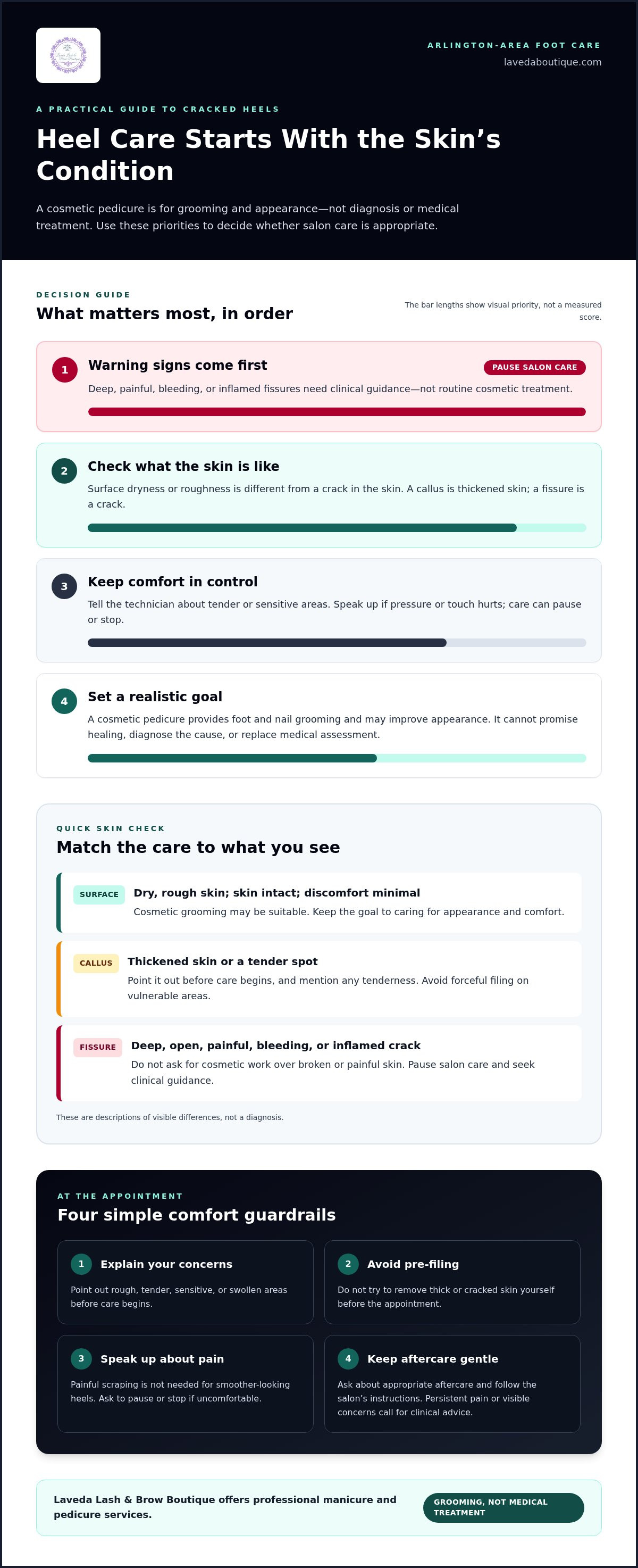
Rough, dry heels can make walking uncomfortable and leave you reaching for closed shoes instead of sandals. A salon pedicure may be appropriate when the concern is surface dryness or roughness, but the skin’s condition matters. A cosmetic pedicure is foot and nail grooming, not a diagnosis or medical treatment. Keeping that distinction in mind helps set realistic expectations before booking a pedicure for cracked heels Arlington VA.
Cosmetic heel care focuses on grooming and appearance; clinical care assesses skin problems that may require medical attention. Salon care may leave heels looking neater, but it can’t promise that cracks will heal or address an underlying condition.
Dry heels, calluses, and fissures: what is the difference?
Dry skin often appears rough, flaky, or less smooth on the surface. A callus is an area of thickened skin, while a fissure is a crack in the skin. These are descriptions of visible differences, not a diagnosis. The Cracked Heels Overview offers general background on possible causes and symptoms.
Consider the skin itself, not just the name of a service. Mild surface roughness is different from a deep crack. Pain, bleeding, or inflammation changes the decision: don’t treat vulnerable or broken skin as a routine cosmetic concern. If a fissure is deep, painful, bleeding, or inflamed, seek clinical guidance before salon care.
What can a cosmetic pedicure realistically do?
A cosmetic pedicure provides foot and nail grooming. It may help improve the overall appearance of your feet and make rough skin feel more cared for. Be clear about your goal: grooming and a neater appearance are reasonable expectations, while healing a fissure or finding its cause is not. Share your concerns before care begins, especially if an area feels tender.
The service doesn’t diagnose why the skin is cracking or promise healing. It also isn’t a substitute for assessment of infection, circulation concerns, or an underlying health condition. Avoid asking a technician to work over broken or painful skin, and don’t push through discomfort just to complete a service.
Surface dryness: Cosmetic grooming may be suitable when skin is intact and discomfort is minimal.
Thickened skin: Mention callused areas and any tenderness before care starts.
Deep or inflamed cracks: Pause salon care and seek clinical advice, particularly if the skin is bleeding or painful.
For Arlington customers, Laveda Lash & Brow Boutique offers professional manicure and pedicure services as part of its beauty care. Choose a salon pedicure for grooming, not as a solution to a medical concern. Matching the service to your skin’s condition is the sensible starting point.
What to Expect From a Cracked-Heel Pedicure at an Arlington-Area Salon
A thoughtful appointment starts with a clear conversation, not a push for perfectly smooth heels. If you’re considering a pedicure for cracked heels Arlington VA, explain what feels uncomfortable and point out sensitive or vulnerable areas before care begins. This helps the technician understand your comfort needs and helps you decide whether cosmetic grooming is appropriate that day.
Pedicure services can differ in their steps, so don’t assume a particular treatment or degree of heel filing is included. The priority is a comfortable experience. Painful scraping or pressure over an open crack isn’t a reasonable trade-off for smoother-looking skin.
Before the appointment: share comfort and skin concerns
Describe where your heels feel rough, tender, or sensitive. Be direct about active bleeding, open cracks, or unusual swelling. You don’t need to diagnose the cause; share health details that may affect comfort or safe care. If skin is broken, bleeding, or notably painful, postpone cosmetic treatment and seek clinical guidance rather than concealing the issue or asking for work over it.
During the service: prioritize comfort over aggressive smoothing
Let the technician know right away if pressure or touch feels uncomfortable. Heel grooming shouldn’t require enduring painful scraping. You can ask for care to pause or stop at any time. Don’t expect a particular level of smoothness or assume one appointment will resolve roughness. A cosmetic service is for grooming, and the approach should respect your skin’s condition and your comfort.
A general appointment may involve these stages, though the details depend on the selected service:
Prepare: Arrive with enough time to explain your concerns, and avoid trying to remove thick or cracked skin yourself beforehand.
Discuss: Point out tender spots and describe any discomfort. Mention broken skin or swelling before care begins so the technician understands what to avoid.
Proceed with comfort in mind: The service should remain within cosmetic grooming. Speak up if anything feels painful, and don’t feel obliged to continue a step that causes discomfort.
Follow aftercare guidance: Ask what gentle care is appropriate after your appointment, then follow the salon’s instructions. If pain or visible skin concerns persist, seek clinical advice instead of relying on repeated cosmetic services.
Good communication is part of a polished salon experience. Set a clear comfort boundary and give the technician accurate information to respect it. For Arlington-area customers seeking professional manicure and pedicure services, Laveda’s pedicure services offer a local option. Keep your expectations focused on grooming, and choose a service only when your heel skin is suitable for cosmetic care.
Is a Medical-Grade Pedicure for Cracked Heels the Right Choice?
The phrase “medical-grade” can sound reassuring, but the label alone doesn’t establish that a pedicure is a regulated treatment or that the person performing it has clinical qualifications. Start with the purpose of the service and the condition of your skin. A pedicure for cracked heels Arlington VA may suit intact skin with mild surface roughness; deeper or symptomatic cracks call for a different kind of guidance.
Salon pedicure or clinical assessment: how to tell the difference
Consider the concern you want addressed. A cosmetic salon service focuses on foot and nail grooming. A healthcare professional can assess symptoms and advise on concerns outside cosmetic care. Mild dryness or roughness may be a grooming concern; depth, pain, bleeding, inflammation, or possible infection shifts the priority toward medical advice.
Use the table as a decision aid, not a diagnosis. If a crack is deep, hurts, bleeds, looks inflamed, or isn’t improving, seek guidance from a healthcare professional before booking cosmetic heel care. Don’t rely on a salon pedicure to identify or treat infection, circulation concerns, or another underlying condition.
Questions to use when comparing Arlington pedicure options
Consider whether the service description is clear, whether you can comfortably explain sensitive areas, and whether the salon’s approach feels respectful of your comfort. Cleanliness matters, too. These factors can help you choose cosmetic care, but they don’t make a salon service clinical treatment. Laveda Lash & Brow Boutique offers professional pedicure services in a boutique setting for customers in the Washington, D.C. area, including Arlington.
For mild, intact roughness, a cosmetic pedicure may be a suitable grooming choice if the service’s scope is clear and it feels comfortable. For a crack that is painful, bleeding, inflamed, persistent, or possibly infected, pause the salon plan and seek healthcare-professional guidance. Choose based on your skin’s condition, not a label that sounds more clinical.
How to Prep for a Pedicure and Care for Cracked Heels
A little preparation can make a salon visit more comfortable, but it shouldn’t involve trying to fix heel skin yourself first. For a pedicure for cracked heels Arlington VA, arrive with clean feet and be ready to describe any areas that feel tender or sensitive. The goal is to help the technician understand your comfort needs without irritating the skin beforehand.
Simple preparation before a heel-focused appointment
Skip deep cutting, peeling, or forceful filing before your visit. These steps can aggravate vulnerable skin. Share relevant concerns plainly, including whether a spot is painful or unusually sensitive. You don’t need to identify the cause. If the skin is open, bleeding, notably swollen, or otherwise concerning, postpone cosmetic care and seek medical advice instead.
Use this short checklist to prepare:
Arrive with clean feet: Keep preparation straightforward; don’t scrub hard or try to remove thickened skin.
Describe what feels uncomfortable: Identify rough, tender, or sensitive areas so the technician understands your comfort boundaries.
Be candid about skin condition: Don’t conceal open cracks or active bleeding. Cosmetic grooming shouldn’t take priority over a concerning skin issue.
Speak up during the visit: If pressure or touch feels painful, say so and ask for care to pause.
Gentle habits to maintain heel comfort
Between appointments, keep skin care gentle. Regular moisturizing is a simple general-care habit for dry skin, but it doesn’t guarantee that a fissure will close or address its cause. Avoid picking at cracked or thickened skin. Choose comfortable footwear that doesn’t rub or put unnecessary pressure on sore areas, and follow the salon’s aftercare guidance after your service.
Home care has limits. If cracks are deep, painful, worsening, or persist despite gentle care, seek guidance from a healthcare professional rather than relying on another cosmetic appointment. Do the same if you notice bleeding, inflammation, or other changes that concern you. A salon pedicure is for grooming, not diagnosis, and home moisturizing isn’t a substitute for assessment when symptoms warrant it.
When your feet are suitable for cosmetic care, consistency and a light touch are more sensible than trying to achieve instant smoothness. Let your comfort guide the appointment, and don’t treat discomfort as something you need to tolerate for a polished result.
When you’re ready for professional manicure and pedicure care in the Arlington area, explore Laveda’s pedicure services as part of your beauty routine.
Choosing Laveda for a Professional Pedicure Near Arlington, VA
For Arlington customers seeking a polished self-care appointment, Laveda Lash & Brow Boutique offers professional pedicure services in a boutique setting. The boutique serves customers in the Washington, D.C. area, including Arlington, and has welcomed more than 20,000 customers since its founding in 2018. That history reflects the business as a whole, not a specific result for pedicures or cracked heels.
Why a professional boutique pedicure may fit your routine
A pedicure can be a considered part of your personal care routine, combining foot and nail grooming in a professional boutique environment. If heel skin is mildly dry and intact, cosmetic care may complement that routine. Keep expectations measured: a salon service isn’t medical treatment and can’t promise to heal fissures or resolve their cause. The right choice starts with your skin’s condition and the type of care you’re seeking.
Use this distinction to guide your decision:
For mild dryness: Consider whether cosmetic grooming fits your needs and feels comfortable.
For broken or painful skin: Pause the salon plan and seek medical guidance before cosmetic care.
For a polished routine: Choose professional pedicure services for grooming, with realistic expectations about what they can address.
Searching for a pedicure for cracked heels Arlington VA is a useful starting point, but the phrase alone doesn’t determine which service is suitable. A pedicure may be appropriate for intact skin with surface dryness; deep, painful, bleeding, or inflamed cracks call for healthcare-professional guidance first. Don’t treat a cosmetic appointment as a substitute for assessment, especially if the skin’s condition is worsening or concerning.
Take the next step with Laveda
If your heels are mildly dry and your goal is cosmetic care, explore Laveda’s professional pedicure services as part of your self-care routine. Keep your comfort in view and share relevant concerns before care begins. Understanding what you want from a salon appointment helps you make a considered choice without expecting a pedicure to deliver a medical outcome.
If cracks are deep, painful, bleeding, or inflamed, seek medical guidance before booking cosmetic care. When salon grooming is appropriate, Explore Laveda's services and book a professional pedicure.
Choose Your Next Step With Confidence
Make your next move based on what your heels need now, not on how quickly you want them to look smooth. If the skin is intact and your goal is cosmetic grooming, a pedicure for cracked heels Arlington VA can be part of a considered self-care routine. If cracks are painful, deep, bleeding, or inflamed, prioritize medical guidance before scheduling salon care.
Set clear comfort expectations and choose a service that feels appropriate for your skin. There’s no need to push through pain or expect one appointment to resolve a persistent concern. A polished routine starts with the right decision for you.
For professional pedicure care in a boutique setting, explore Laveda’s pedicure services and book your appointment.
Frequently Asked Questions
Can a pedicure help with cracked heels?
A cosmetic pedicure may make dry, rough heels look neater, but it can’t guarantee that cracks will heal. Think of it as grooming rather than a fix for the cause: if your heels feel less rough afterward, that’s a cosmetic benefit, not proof that the skin has repaired. For example, surface flaking may be suitable for gentle cosmetic care, while a painful split needs a different response.
What is the difference between a regular and medical-grade pedicure?
A regular salon pedicure focuses on cosmetic foot and nail care; “medical-grade” alone doesn’t establish clinical training, regulated treatment, or a particular standard of care. Look beyond the label and consider the service’s purpose. A healthcare professional can assess health concerns, while a salon service is for grooming. If you need a diagnosis or care for a persistent skin problem, seek a healthcare professional rather than relying on a service name.
Is it safe to get a pedicure with cracked heels?
It may be suitable if the skin is intact and the cracks are superficial, but there’s no one answer for every heel. If a crack stings under pressure, feels unusually tender, or catches on fabric, postpone cosmetic care. Tell the technician about any discomfort before the service, and stop if contact becomes painful. Don’t treat pain as a normal part of heel grooming.
How do I choose a pedicure for cracked heels in Arlington, VA?
Choose by your skin’s condition and the service’s stated purpose, not by a luxurious-sounding label. For a pedicure for cracked heels Arlington VA, look for a clear description of cosmetic foot care and a setting where you can communicate your comfort needs. Consider whether the service is appropriate for intact, dry skin. If you have concerning symptoms, make clinical guidance your first step instead of comparing salon treatments.
Should I remove calluses before a pedicure?
No. Don’t cut, peel, or aggressively file a callus or cracked area before your appointment. Home removal can leave skin sore or broken, making it harder to decide whether cosmetic care is appropriate. Arrive with the skin as it is and describe any tenderness. If a thickened area is painful or keeps returning, avoid trying to remove it deeply yourself and discuss the concern with a healthcare professional.
When should I avoid a salon pedicure for cracked heels?
Avoid cosmetic care and seek medical guidance if a heel crack is deep, bleeding, painful, inflamed, worsening, or possibly infected. Also pause if the skin is open or unusually swollen. These signs need more than a grooming decision, and a salon pedicure can’t diagnose their cause. If you’re unsure whether the skin is intact enough for cosmetic care, choose an assessment first.
How can I care for dry heels after a pedicure?
Keep aftercare gentle and follow the salon’s instructions. Regular moisturizing can support basic care for dry skin, but don’t treat it as a promise that fissures will close. Choose comfortable footwear and avoid picking or scraping rough areas. If a crack becomes painful, opens, or worsens after your appointment, stop cosmetic efforts and seek healthcare-professional guidance rather than applying more force or booking another grooming session.


Comments