
What Happens If You Sweat After Microblading? What to Do Next

A brief sweat doesn’t automatically ruin your microblading. If you’re wondering what happens if you sweat after microblading, the answer depends on when it happens, how much moisture reaches your brows, and how you handle the area afterward. Sweat can irritate healing skin, and moisture or friction may affect how the pigment settles, but one accidental workout or warm day isn’t a reason to panic.
It’s understandable to worry about patchy results or infection, especially when you’re unsure whether to clean your brows or leave them alone. Avoid rubbing or picking, and follow the aftercare instructions provided for your procedure. If those instructions explain how to handle moisture, use that method rather than adding extra cleaning or products.
This guide explains why sweat restrictions matter during healing, what to do after sweating, and which changes can be part of recovery. You’ll also learn when symptoms call for qualified medical advice, so you can respond calmly and protect your results.
Table of Contents
What happens if you sweat after microblading?
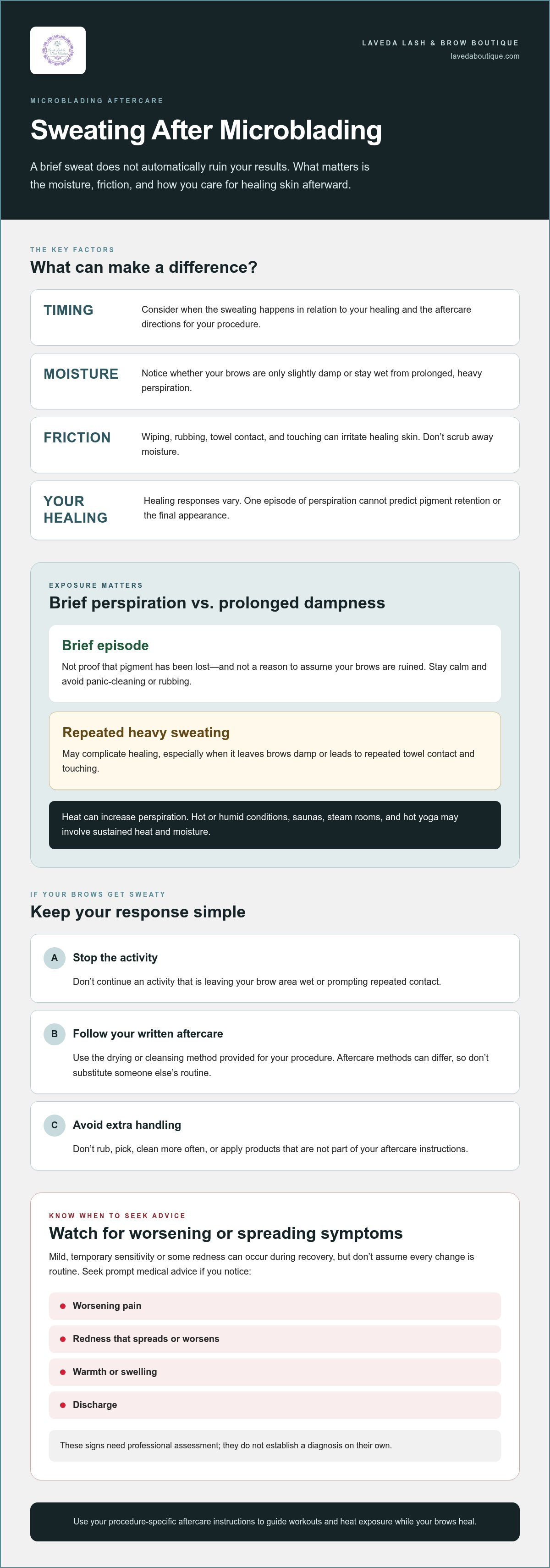
Sweating does not automatically ruin microblading results. The treated brow skin is healing, so excess moisture, rubbing, or irritation can make aftercare harder and may affect how the area settles. A short spell of perspiration is different from repeated heavy sweating, and neither one alone tells you exactly how your brows will look once healed.
In brief: A brief episode of sweating is not proof that pigment has been lost. Repeated heavy sweating, especially when it leaves the brows damp or leads to rubbing, may complicate healing. The timing, amount of sweat, how you handle the skin, and your individual healing response all matter.
Microblading creates fine strokes in the skin and deposits pigment there. For a general overview of what microblading is and its semi-permanent nature, see Wikipedia’s background page. During recovery, the treated skin needs careful handling. Sweat can leave it moist, while wiping or friction can irritate the area. Heat may also increase perspiration, so consider the activity and its conditions, not just whether you sweat.
There isn’t one universal outcome after sweating. A brief episode during an ordinary task differs from a strenuous workout that causes prolonged dampness and repeated towel contact. Healing responses also vary. Don’t use one moment of perspiration to predict pigment retention or the final appearance. Consider what happened, then return to the aftercare directions you were given.
Does one episode of sweating ruin microblading?
Usually, one episode is a reason to stay calm, not to assume the brows are ruined. The amount of sweat, its duration, friction, and individual healing all play a role, so a single incident cannot predict the healed result. Avoid panic-cleaning, rubbing, picking, or applying products that aren’t part of your aftercare instructions.
Why fresh microblading needs careful aftercare
After a cosmetic procedure, the brow skin is healing and may be more sensitive than usual. Too much moisture can make careful aftercare harder, and friction can aggravate the treated area. Irritation may also lead to touching, which adds unnecessary disturbance. Follow the written directions provided for your procedure. Aftercare methods can differ, so don’t assume another person’s routine applies to your brows.
The aim isn’t to treat every bead of sweat as an emergency. It’s to limit avoidable moisture and friction while the skin recovers, and to handle an unexpected episode gently. The next section outlines practical steps to take after sweating without adding cleansing or products that aren’t part of your care plan.
How sweat, heat, and friction can affect microblading recovery
Sweat is only one part of the picture. A short spell of perspiration may leave the brows slightly damp, while an intense workout can combine sustained moisture with heat, frequent towel use, and accidental touching. Those extra factors can make it harder to follow aftercare gently. That’s why the answer to “what happens if you sweat after microblading” depends on the conditions, not simply whether you perspired.
Friction matters because rubbing can irritate healing skin and disrupt the careful aftercare the area needs. Blotting or wiping repeatedly may create more contact than the sweat itself. Even a clean towel can be rough against freshly treated brows, so don’t use one to scrub away moisture.
Light perspiration versus intense exercise
Brief perspiration during an ordinary task is different from prolonged, heavy sweating during vigorous exercise. Consider the full situation: how long your brows stay damp, whether sweat runs across them, and whether you’re likely to wipe or touch the area. No activity is universally safe on a particular day for everyone. Use your written aftercare instructions and your current stage of healing to guide your choices.
If everyday movement leaves your brow area dry and undisturbed, it involves different exposure than a workout that leaves your face wet and prompts repeated towel contact. Don’t compensate by cleaning more often or applying extra products. Follow only the cleansing and drying method specified in your aftercare directions.
Heat, humidity, and damp skin
Hot or humid conditions can increase perspiration and make it harder to keep the brow area comfortable and dry. Saunas, steam rooms, and hot yoga may involve sustained heat and moisture. If your written aftercare instructions advise avoiding them, follow that guidance during the relevant healing stage instead of relying on a general day-by-day schedule.
Healing responses differ, and your procedure’s aftercare instructions should take priority over broad advice. Mild, temporary sensitivity or some redness can occur as skin recovers, but don’t assume every change is routine. If redness worsens or spreads, or you notice increasing pain, warmth, swelling, or discharge, seek prompt medical advice. These signs need professional assessment; they don’t establish a diagnosis on their own.
For a microblading appointment in Washington, D.C. or Arlington, Virginia, explore Laveda’s microblading service and plan around your usual exercise and heat exposure. After treatment, follow the written aftercare directions provided for your procedure, since appropriate precautions depend on the treatment and your healing response.
Sweating After Microblading: Steps and Mistakes
If your brows get sweaty, keep your response simple. Don’t scrub, rinse, or apply a product on impulse. Use the written aftercare directions for your procedure to guide any cleaning or drying, since routines can differ. This sequence can help you avoid friction and unnecessary contact.
Stop the activity. Move somewhere cooler and let the sweating ease before deciding what to do next.
Keep your hands away. Avoid touching or wiping the brows. If your aftercare instructions call for contact, wash your hands first.
Follow your written directions. Use only the cleansing or drying method they specify. Don’t improvise with extra steps or products.
Watch for concerning changes. If you develop worsening pain, spreading redness, warmth, swelling, or discharge, seek prompt medical advice. Don’t try to diagnose or treat these symptoms yourself.
Immediate care after your brows get sweaty
Choose the least disruptive response. If your directions call for blotting, use the specified method and avoid pressure. If they don’t, don’t assume wiping is appropriate. A clean tissue or towel is not automatically suitable for every aftercare routine. Avoid rubbing and follow the instructions for your own procedure, rather than a routine found online.
If sweat reached your brows during a workout, note what happened and how your skin feels, then return to your written care plan. If the instructions don’t explain whether to cleanse or leave the area alone, contact the artist who performed your microblading for procedure-specific guidance. Avoid adding extra cleaning steps while you decide what to do.
Mistakes that can add irritation
Resist the urge to “fix” the brows with repeated checks or extra products. Frequent touching and close inspection can lead to rubbing or picking at flakes, which may disturb healing skin. Don’t apply makeup over fresh brows unless your aftercare instructions specifically permit it. Avoid exfoliants, home remedies, and creams that aren’t approved for your aftercare.
More intervention doesn’t necessarily mean better care. Scrubbing can irritate the area, while unapproved products may not suit the procedure or your healing skin. If you already touched or wiped your brows, don’t panic or try to undo it with more cleaning. Pause, follow your written instructions, and get guidance from the artist who treated you if the next step isn’t clear.
These steps can help you respond calmly to what happens if you sweat after microblading: the event itself doesn’t tell you how your brows will heal, so avoid guesswork and pay attention to how the area feels. For clients considering microblading in Washington, D.C. or Arlington, Virginia, Laveda’s microblading service offers a professional starting point for discussing brow goals and aftercare expectations.
How to manage workouts and sweating while brows heal
Plan activity around the aftercare instructions you receive, not a generic calendar found online. The right time to resume exercise can vary with your procedure and how your skin is healing. Before booking, consider whether your routine includes intense workouts, heated classes, outdoor training, travel, or humid weather. If possible, schedule your appointment when you can follow the recommended precautions without disrupting essential plans.
Follow individualized aftercare over generalized online timelines. Use this comparison to identify the kind of exposure an activity may involve, then apply your artist’s directions to your own healing stage.
When can you return to workouts?
There isn’t one schedule that suits every client. Healing responses and aftercare directions vary, so don’t treat a fixed day from a general online source as clearance. If a workout conflicts with your artist’s instructions, postpone it. Once activity is permitted and your brows are healing comfortably, return gradually rather than jumping straight into your most intense session. Stop if discomfort increases, and seek advice if symptoms concern you.
What if sweating is hard to avoid?
Some schedules and environments make perspiration difficult to prevent. Choose a cooler, lower-exertion option where practical, and avoid touching your brows during activity. Keep your hands clean if contact is necessary. Afterward, don’t compensate with extra cleansing, repeated wiping, or unapproved products. Follow the care method provided for your procedure.
Think ahead about unavoidable commitments. If a trip includes hot weather or your workout routine is difficult to pause, account for that before choosing an appointment date. Planning gives you more room to follow personalized guidance without guessing. The same principle applies after any touch-up: use the directions for that appointment rather than assuming a previous routine still fits.
If you’re planning microblading in Washington, D.C. or Arlington, Virginia, book a microblading appointment and make room in your schedule to follow aftercare guidance while your brows heal.
When to seek advice and plan microblading in Washington, D.C.
Not every question after a sweaty workout needs medical attention. If you’re unsure whether to cleanse your brows, how to interpret your written aftercare, or whether an activity fits your healing stage, direct that routine procedure question to the artist who performed your microblading. They can answer in the context of your treatment and instructions.
Symptoms that are severe, worsening, or concerning call for a different response. Seek prompt medical advice if you notice increasing pain, redness that spreads, warmth, swelling, or discharge. These signs don’t prove a specific complication, but they warrant assessment by a qualified medical professional. Don’t try to diagnose the cause or treat concerning symptoms with extra products or home remedies.
Which symptoms deserve professional attention?
Pay attention to changes over time rather than judging a single moment in isolation. Mild sensitivity may feel different from worsening pain, and limited redness differs from redness that spreads. If symptoms concern you or become more pronounced, seek medical advice promptly. For routine aftercare or procedure questions, contact the treating artist. For concerning physical symptoms, prioritize medical assessment.
Brows can change in appearance as the skin heals, so don’t judge pigment retention from one episode of sweating or a single look in the mirror. A temporary change in how the area appears cannot, by itself, establish the final result. Keep following your written aftercare guidance, and raise appearance questions with your artist rather than rubbing, picking, or trying to correct the brows yourself.
Choose informed brow care in the D.C. area
Good planning starts with a clear understanding of the technique and its aftercare. Microblading and NanoBrows are distinct brow techniques, so compare their approach and discuss which option aligns with your goals before deciding. Laveda’s NanoBrows guide offers context for that comparison. After choosing a service, follow the individualized instructions from the professional performing it rather than applying general advice to every procedure.
If you’re considering microblading in Washington, D.C., explore Laveda’s microblading service as a next step. A considered appointment plan and clear aftercare guidance can help you feel prepared, whether you’re managing workouts, travel, or unexpected perspiration during recovery.
Plan your next step with confidence
An unexpected workout or warm afternoon doesn’t have to define your brow journey. If you’re still asking what happens if you sweat after microblading, focus on the next sensible step rather than trying to predict the final result from one episode. Keep care decisions grounded in the instructions for your own treatment, and seek qualified medical advice if symptoms become concerning.
If you’re considering microblading, choose a time that gives you room to follow personalized aftercare around your routine. Laveda Lash & Brow Boutique has served clients since 2018, with more than 20,000 satisfied customers across the boutique’s services. Explore the studio’s microblading service and take the next step when you feel ready.
Explore microblading at Laveda Lash & Brow Boutique. With thoughtful planning and professional guidance, you can approach your brow appointment with greater clarity and confidence.
Frequently Asked Questions
Can sweat cause microblading pigment to fade?
Sweat may affect pigment retention if it contributes to prolonged moisture, irritation, or rubbing while the skin heals. A single sweaty episode, however, can’t predict the final appearance or confirm that pigment has faded. Avoid judging the result immediately after exercise. Keep following your written aftercare plan, and raise questions about how your brows are settling with the artist who performed your treatment.
What should I do if sweat gets on my eyebrows after microblading?
Stop exercising and follow the drying or cleansing method in your aftercare instructions. Don’t scrub, use a washcloth, or add a product to compensate. If the directions don’t explain what to do, contact the artist who treated you for specific guidance instead of borrowing another person’s routine. If you already touched the area, avoid further handling and return to the instructions you were given.
How long should I avoid exercise after microblading?
There’s no single exercise timeline that fits every client. Some general aftercare guidance recommends avoiding sweating for 7 to 14 days, but your artist’s directions and your healing response should determine your plan. Ask how the advice applies to your usual activity, such as running, strength training, or heated classes. Resume strenuous exercise only when your personalized instructions permit it.
Can I shower after sweating with freshly microbladed brows?
Follow your aftercare instructions for both showering and brow moisture. Don’t assume the guidance for sweat also answers whether water can reach the treated area. If you need to shower after exercise, use the water-exposure guidance provided by your artist and avoid adding extra cleansing steps. If your written instructions don’t cover this situation, ask the professional who performed your treatment before changing your routine.
Is it normal for microbladed brows to look darker while healing?
Brows can appear more pronounced at one point in healing than they will later, but appearance varies from person to person. A darker look alone doesn’t prove that sweat has changed the pigment or predict the healed result. Avoid rubbing or picking at the area to inspect it. If the color or skin changes concern you, share your observations with your treating artist for procedure-specific guidance.
When should I seek medical advice after microblading?
Seek prompt medical advice if you notice severe or worsening pain, redness that spreads, warmth, swelling, or discharge. These symptoms don’t establish a diagnosis, but they warrant assessment by a qualified medical professional. Routine questions about aftercare are best directed to the artist who performed the procedure. If you received microblading in Washington, D.C. or Arlington, Virginia, distinguish aftercare questions from concerning symptoms and choose the appropriate professional guidance.


Comments