
How to Repair Nails After Bad Acrylics in DC: A Safe Recovery Guide

The fastest way to prolong acrylic damage is to treat a weakened nail as if nothing happened. After removal, thin, peeling, or brittle nails can make every choice feel risky, especially if product remains attached. If you’re searching for how to repair nails after bad acrylics DC, start with one priority: stop further trauma.
It’s understandable to want to peel, file, or cover the damage quickly. Resist that urge. The safest next step depends on whether acrylic is still bonded and how your natural nails look. Forceful removal can take more nail layers with it, and recovery takes patience as the damaged portion grows out.
This guide explains how to protect fragile nails at home, when to leave remaining product alone, and how to compare a polish break, gentle maintenance, and professional nail care. You’ll also learn which changes call for medical advice rather than a manicure. Laveda Lash & Brow Boutique offers manicure and pedicure care in the Washington, DC and Arlington area to help keep nails neatly groomed while they grow.
Table of Contents
How to Repair Nails After Bad Acrylics: First Steps
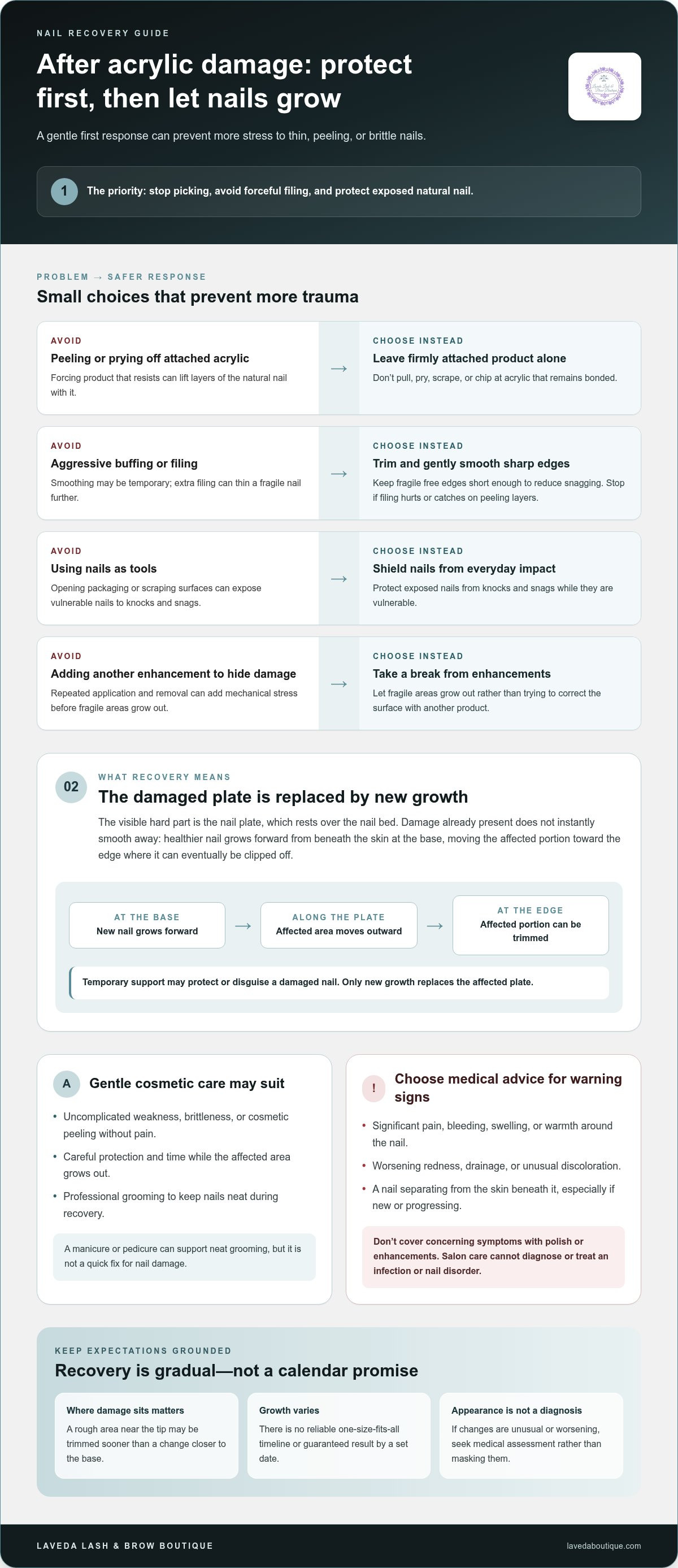
Thin, peeling, or brittle nails after acrylics can be alarming, but visible weakness doesn’t automatically mean permanent damage. A careful first response can help prevent additional stress while you assess what’s happening. A safe answer to how to repair nails after bad acrylics DC starts with three priorities: stop picking, avoid forceful filing, and protect exposed natural nail.
First steps when acrylics leave nails thin or peeling
Keep the first steps simple. Don’t pull, pry, or scrape at acrylic that remains attached. If it resists, forcing it can lift layers of the natural nail along with the product. Avoid aggressive buffing, too. It may temporarily smooth the surface, but it can further thin a fragile nail.
Leave firmly attached product alone rather than trying to peel or chip it off.
Trim fragile free edges short enough to reduce snagging, then gently smooth sharp edges with a file. Stop if filing causes pain or catches on peeling layers.
Protect exposed nails from knocks and snags. Avoid using them to open packaging or scrape surfaces.
Take a break from enhancements while your nails are vulnerable. Repeated application and removal can add mechanical stress before fragile areas have grown out.
Cosmetic peeling or brittleness without pain is different from an injury or possible infection. A nail may look rough, feel thin, or split at the edge and still need only gentle protection and time. Don’t repeatedly file it down or cover it with another enhancement to correct the surface.
The visible hard portion of the nail is the nail plate. It rests over the nail bed, so changes in appearance can have different causes. For basic structural context, see Nail anatomy. Appearance alone can’t confirm what’s causing a change, so keep care conservative rather than trying to treat a suspected problem yourself.
When damaged nails need medical attention
Seek medical advice for significant pain, bleeding, swelling, or warmth around the nail. These symptoms may indicate more than surface dryness or cosmetic peeling. Also arrange an assessment if you notice worsening redness, drainage, or unusual discoloration. A nail that begins separating from the skin beneath it also deserves medical assessment, especially if the change is new or progressing.
Don’t cover concerning symptoms with polish or another enhancement. That can make changes harder to observe and won’t address their cause. A salon manicure or pedicure can support neat grooming, but salon nail care can’t diagnose or treat an infection or nail disorder. If you’re unsure whether a symptom is concerning, choose medical advice rather than a salon diagnosis. Gentle cosmetic care may suit uncomplicated weakness; symptoms that suggest injury or illness call for medical assessment.
Why acrylic damage happens and how natural nails recover
The nail plate is the visible, hard part of the nail, made of tightly packed keratin. It’s the surface that can look thin, rough, or uneven after acrylics. The plate itself isn’t living tissue, so damage already present doesn’t instantly smooth away. A healthier section must grow forward from beneath the skin at the nail’s base before the affected area can be trimmed off.
Acrylics don’t automatically damage every nail. The condition you see can depend on application, removal, how often enhancements are reapplied, and the nail’s condition beforehand. Consider these possible contributors without assuming that appearance alone reveals the cause.
What can make nails look worse after acrylic removal?
Preparing a nail for acrylics may involve filing its surface so product can adhere. Too much filing can leave the plate thinner or more sensitive. During removal, forceful scraping, peeling, or prying may lift layers of the natural nail. Repeated application and removal can add mechanical stress, especially if the nail hasn’t had time to grow out between cycles.
Thinning, peeling, ridges, and brittleness are possible visible changes, but they don’t all point to one cause. Peeling at the free edge, for example, may look different from ridges across the plate. A nail’s appearance can also be affected by factors unrelated to acrylics. Don’t diagnose the problem from a photo or a single symptom. If changes are unusual or worsening, seek medical assessment rather than trying to mask them.
How long does natural nail recovery take?
There’s no reliable one-size-fits-all calendar for nails to look and feel normal again. Visible recovery depends partly on where the damage sits: a rough area near the tip may be trimmed away sooner than a change closer to the base. Individual growth also varies, so avoid expecting a particular result by a set date.
Think of recovery as gradual replacement, not an instant transformation. As new nail grows forward, the affected portion moves toward the edge and can eventually be clipped away. A topical product or salon service may temporarily improve the appearance or support grooming, but it can’t turn damaged nail plate into new, healthy plate.
Temporary support can protect or disguise a damaged nail; only new growth replaces the affected plate.
That distinction matters when comparing options. A coating may improve the look of a rough surface, but it doesn’t erase damage underneath. Avoid chasing a quick cosmetic fix if it requires more filing or repeated removal. Instead, watch whether the affected area moves outward with growth and whether new changes appear. For neat, low-key grooming during that process, Laveda’s manicure and pedicure care offers a professional touch while your natural nails grow.
Home, Salon, or Medical Care: Compare Your Options
The right next step depends on what you’re trying to address. Gentle home care can support nails with mild dryness or surface brittleness. A manicure can help keep nails neat while they grow. Pain, bleeding, swelling, or suspected infection calls for medical assessment, not a cosmetic service. If you’re weighing how to repair nails after bad acrylics DC, let your symptoms and goals guide the choice rather than expecting a product or treatment to restore the nail instantly.
When a simple at-home routine may be enough
If the nail is mildly dry or brittle, with no broken skin or concerning symptoms, keep care gentle and consistent. Protect nails during tasks that expose them to repeated wetting or harsh cleaners, and avoid picking, aggressive buffing, or forceful removal. Stick with a simple routine rather than switching among several products or coatings, which can make it harder to tell what irritates the nail.
Home care has limits. It can reduce avoidable stress and support comfort, but it can’t diagnose why a nail looks different or guarantee repair. Stop any step that causes pain, irritation, or more peeling. If symptoms develop or the appearance keeps changing, move from cosmetic self-care to medical advice.
When professional nail care or a clinician makes more sense
Choose professional manicure care for grooming and a neat appearance, not as treatment for injury or disease. A manicure or pedicure can be a considered option while you let natural nails grow, provided the focus remains comfortable and cosmetic. Laveda Lash & Brow Boutique offers manicure and pedicure care in the Washington, DC and Arlington area. For background on professional technique, the Russian manicure guide explains an approach to manicures; it shouldn’t be read as a treatment for damaged nails.
Seek medical assessment for significant or persistent pain, bleeding, swelling, warmth, possible infection, nail separation, or unusual discoloration. These signs need evaluation by a healthcare professional. A salon can’t diagnose or treat an infection or nail disorder, and covering a concerning change with polish doesn’t resolve its cause.
Home care: Best suited to mild dryness or brittleness without broken skin. Its role is gentle protection, not guaranteed repair. Stop if symptoms worsen or a step causes discomfort.
Salon care: Useful for neat grooming and a comfortable cosmetic appearance while nails grow. It doesn’t diagnose or treat medical concerns.
Medical care: The right route when symptoms suggest injury, infection, or another nail-health issue, or when changes persist.
Keep the decision rule simple: if the issue is appearance alone and the nail feels comfortable, gentle care or grooming may fit. If you suspect illness or injury, choose a healthcare professional. For low-key grooming as your nails grow, explore Laveda’s manicure and pedicure care.
A gentle nail-recovery routine after acrylics
Keep your routine simple enough to repeat. The goal is to reduce avoidable friction and dryness while the affected nail grows forward, not to force a quick cosmetic change. If you’re deciding how to repair nails after bad acrylics DC, focus on small protections you can maintain throughout the day.
Morning, daytime, and evening care
Morning: Check for new splitting, snagging, or irritation. Keep nails at a conservative length, and gently smooth only a sharp free edge if needed. Apply hand cream or cuticle oil if the surrounding skin feels dry. These are optional comfort steps, not a way to rebuild the nail plate.
During daily tasks: Wear gloves for chores involving prolonged water exposure or cleaning products, if practical. Dry hands well afterward. Use your fingertips rather than nail edges to press, open, or handle objects, and don’t use nails to scrape or pry.
Evening: Clean hands gently and apply moisturizer if skin feels dry. Notice whether any nail is catching on fabric or becoming more uncomfortable. Keep care low-key; avoid adding a new coating or removal step just to make the surface look smoother.
Repeated wetting, cleaning chemicals, and everyday knocks can be hard on fragile edges. You may not be able to avoid every exposure, so prioritize the tasks that put nails under the most strain. Gloves can help during dishwashing or cleaning, while a shorter free edge can be less likely to catch on clothing.
Choose products and habits with care
Moisturizer or cuticle oil may make dry surrounding skin feel more comfortable, but neither repairs a damaged nail plate. Choose a simple option you tolerate and avoid cycling through multiple products at once. Skip aggressive buffing, picking, and strong adhesives applied over a damaged area. If a product causes burning, redness, itching, or irritation, stop using it. If symptoms continue or worsen, seek appropriate medical advice rather than covering the area with another product.
Be patient with length. If the free edge keeps snagging, trim it conservatively and smooth only the rough edge. Don’t file down the nail surface to remove ridges or peeling. Avoid applying enhancements simply to conceal visible changes if removal could add more stress. A routine should leave nails feeling protected, not more tender or fragile.
Consistency protects; growth takes time. Keep the routine steady and adjust it if a step causes discomfort. For professional grooming while your natural nails grow, book a manicure or pedicure with Laveda.
Professional nail care in Washington, DC, while nails grow out
Natural nails can look uneven as damaged areas grow forward. Professional manicure or pedicure care can help keep them neatly groomed during that transition, without presenting cosmetic care as a repair or medical treatment. If you’re considering how to repair nails after bad acrylics DC, think of an appointment as support for a polished, comfortable appearance, not a shortcut to new nail growth.
What to expect from a manicure during nail recovery
A manicure during recovery should have a realistic purpose: tidy grooming while you give natural nails time to grow. Share your concerns before the service, including any pain, tenderness, peeling, or visible changes. That context helps keep the appointment focused on your comfort and appearance. Don’t expect a salon service to diagnose why a nail looks different or guarantee that it will restore the nail plate.
If a nail is painful, bleeding, swollen, warm, or showing signs that concern you, pause cosmetic plans and seek medical advice. The same applies to suspected infection or persistent, unusual changes. A nail professional can provide cosmetic care, but cannot replace a healthcare professional’s assessment of injury, infection, or a nail disorder.
Finding a convenient next step in the DC area
Laveda Lash & Brow Boutique offers manicure and pedicure care in the Washington, DC and Arlington, Virginia area. If in-studio grooming fits your preference, an appointment can help keep nails neat while they grow. Keep expectations measured: the purpose is professional nail care, not a promised recovery outcome.
Before your visit, make a short note of what you’ve noticed, such as which nails feel tender or where peeling appears. Mention any changes at the appointment and be clear about your comfort. If symptoms raise a medical concern, arrange healthcare advice first rather than relying on a manicure to assess them.
Recovery is not a race toward a particular polish or finish. A thoughtful manicure or pedicure can complement gentle care at home by helping you maintain a polished appearance as the natural nail grows. Laveda serves customers across its beauty services, with each appointment focused on professional care. For an in-studio manicure or pedicure in the DC area, consider booking with Laveda Lash & Brow Boutique when cosmetic grooming is the right next step.
Give your natural nails room to recover
Let recovery set the pace, not the next polish or enhancement. Keep your routine comfortable, avoid habits that add stress, and notice how your nails change as they grow. If a new symptom appears or an existing concern persists, seek medical advice before treating it as a cosmetic issue.
If you’re still wondering how to repair nails after bad acrylics DC, the most useful next step is one you can sustain: protect fragile nails and make grooming decisions based on their condition, not pressure to cover every imperfection. An in-studio manicure or pedicure can offer a polished touch while your natural nails grow, without replacing medical care when it’s needed.
Laveda Lash & Brow Boutique offers manicure and pedicure services in the Washington, DC and Arlington, Virginia area. If professional grooming feels right for your next step, book a manicure or pedicure at Laveda. Give your nails time, and move forward with care.
Frequently Asked Questions
Can I put nail glue or press-on nails over damaged nails?
It’s safer to avoid nail glue and press-ons while the natural nail is peeling, cracked, or tender. Adhesive may irritate vulnerable skin, and removing a press-on can pull at the nail surface. If you’re researching how to repair nails after bad acrylics DC, resist covering damage for a quick cosmetic fix. Wait until the nail is comfortable and intact, and seek medical advice first if you notice concerning symptoms.
Is white discoloration after acrylic removal normal?
White areas can appear after acrylic removal, but their appearance alone can’t identify the cause. Surface changes, leftover product, or separation from the nail bed may look pale or chalky, and other causes are possible. Don’t scrape or aggressively buff the area to test it. If the discoloration spreads, persists, or appears with pain, odor, or nail separation, arrange a medical assessment.
How long does it take for a damaged fingernail to grow out?
A damaged fingernail needs time for new growth to replace the affected portion, so the visible change won’t disappear overnight. The wait depends on where the damage is and how quickly your nail grows. A mark near the tip can move out sooner than one closer to the base. Track changes with occasional photos rather than filing the surface to make it look even.
Can cuticle oil repair nails damaged by acrylics?
No. Cuticle oil can soften dry skin around the nail and improve comfort, but it can’t rebuild or reverse damage in the nail plate. Apply a small amount to surrounding skin if you find it soothing, and stop if it causes irritation. Keep expectations modest: a comfortable cuticle is helpful, but visible nail damage changes as the affected section grows out.
Should I buff ridges out after removing acrylic nails?
Avoid buffing ridges out of a thin or peeling nail. Buffing removes surface material, which may leave a fragile nail more sensitive or prone to splitting. Instead, leave the plate alone and gently smooth only a sharp free edge if it catches. If ridges are new, pronounced, or continuing to change, don’t assume acrylic removal is the only cause; seek medical advice.
When should I see a doctor about nail damage after acrylics?
See a healthcare professional for significant pain, bleeding, swelling, warmth, or signs such as worsening redness or drainage. Get an assessment for unusual discoloration that persists or spreads, or for a nail that is separating from the skin beneath it. A salon can provide cosmetic grooming, but it can’t diagnose infection or nail disorders. Choose medical advice whenever symptoms suggest illness or injury.


Preparing pictures for online use can involve several small adjustments. I think Image Tools are useful because they can simplify tasks such as resizing and cropping, particularly when someone needs to prepare an image quickly for a website, blog, or presentation.