
Lash Extension Red Flags to Watch For in DC: A Client Checklist

A polished lash portfolio can look reassuring, but it can’t show you whether the workspace is clean or the artist is properly qualified. Knowing the lash extension red flags to watch for DC means looking beyond photos and paying attention to the standards behind the service.
It’s reasonable to have questions about irritation, hygiene, and protecting your natural lashes, especially when online reviews and service descriptions don’t tell the whole story. In Washington, DC, a private training certificate isn’t a substitute for the professional license required to perform lash services.
This checklist helps you spot warning signs before booking, ask focused questions during a consultation, and assess whether a lash professional communicates clearly about your needs and expectations. Learn what to look for in license information, sanitation practices, portfolio images, and client reviews so you can make a considered choice.
Table of Contents
Lash Extension Red Flags to Watch For in DC: What to Notice Before You Book
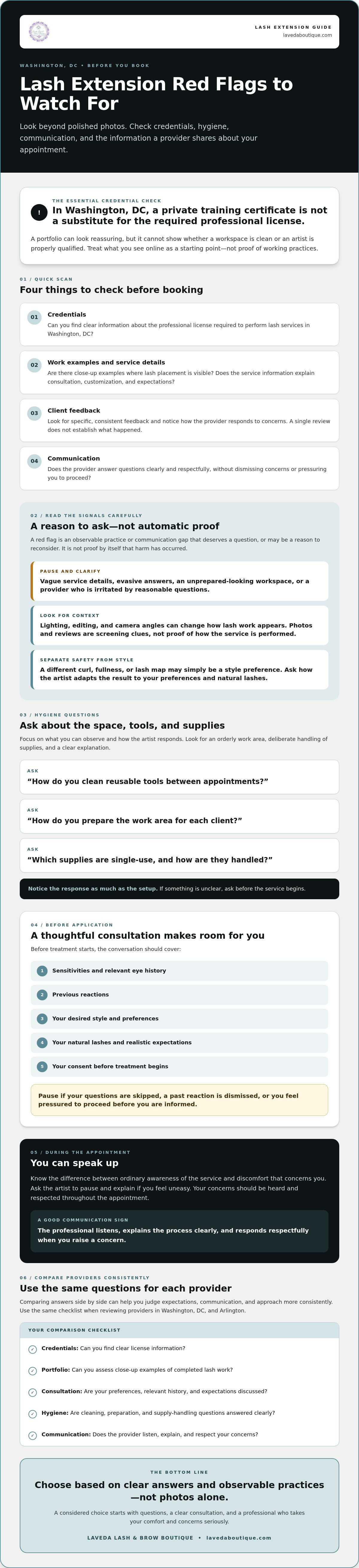
Checking a lash provider before booking is sensible, not an accusation or a demand for perfection. You’re looking for enough clear information to make a considered choice. A red flag is an observable practice or communication gap that deserves a question or may be a reason to reconsider. It isn’t proof by itself that harm has occurred.
Separate safety concerns from style preferences. You may prefer a different curl, fullness, or lash map than the artist’s usual look. That’s a matter of taste. Vague service details, evasive answers, or photos that don’t let you assess the work are reasons to ask for more information. Poor application may also contribute to natural lash problems, including loss of eyelashes. Take concerns about lash health seriously, but don’t try to diagnose them yourself.
Use this quick scan while reviewing providers in Washington, DC, and Arlington:
Can you find clear, close-up examples of completed lash work?
Does the service information explain how your preferences and expectations are discussed?
Can you find specific, consistent client feedback, including how concerns are handled?
Does the provider respond to questions clearly and respectfully?
Portfolio and service information that deserve a closer look
Look for close-up images that show lash placement, not only polished promotional photos. Editing, lighting, and camera angles can change how a set appears, so one striking image can’t tell you how the work was performed. A varied portfolio may help you see how the artist approaches different looks.
Read the service description, too. It should give you a sense of whether consultation, customization, and realistic expectations are part of the conversation. If every client’s lashes appear identical, don’t assume that proves poor artistry. Ask how the artist adapts the result to each client’s preferences and natural lashes.
Online claims and reviews: what can they actually tell you?
Look for patterns rather than a verdict in one comment. Several detailed reviews raising the same concern may be worth asking about, while one negative review doesn’t establish what happened. Notice how the provider replies. A professional response should address the concern without dismissing the client or sharing private details.
Photos and reviews are screening clues, not proof of working practices. Use them to prepare informed questions about the appointment rather than treating a beautiful feed or high rating as proof of quality. That’s the practical approach to lash extension red flags to watch for DC: check what you can observe, then ask about what you can’t.
Hygiene and Consultation Red Flags to Check at a DC Lash Appointment
You don’t need to evaluate technical procedures to ask reasonable questions about cleanliness and preparation. Focus on what you can observe and how the artist responds. An orderly work area, deliberate handling of supplies, and clear answers can help you understand the provider’s approach. If anything is unclear, ask before the service begins.
For general guidance on cosmetics used around the eyes, review the FDA’s information on eyelash extension safety. It’s a useful reference, but it doesn’t replace a direct conversation with your lash professional about their own practices.
Questions to ask about cleanliness and tools
Ask how reusable tools and the treatment area are cleaned between clients. Observe whether the provider prepares the space for your appointment and handles supplies with care. You’re looking for a clear explanation and orderly practices, not a reason to make a legal judgment based on one detail.
“How do you clean reusable tools between appointments?”
“How do you prepare the work area for each client?”
“Which supplies are single-use, and how are they handled?”
Notice the response as much as the setup. Evasive answers, irritation at reasonable questions, or a workspace that appears unprepared are reasons to pause and seek clarification.
Consultation warning signs before lash application
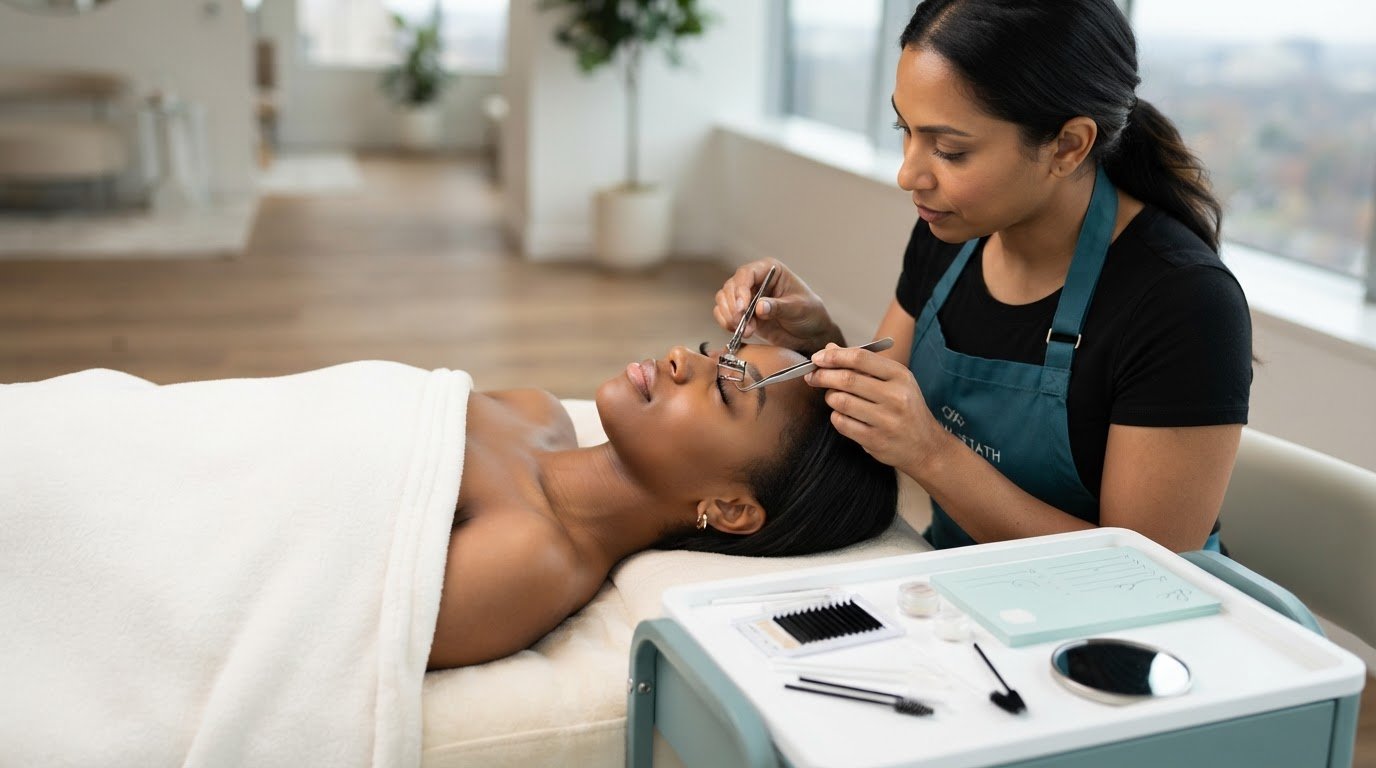
A thoughtful consultation makes room for your preferences and relevant history before application starts. The artist should ask about sensitivities, previous reactions, and the look you hope to achieve. They should also consider your natural lashes before setting expectations. A promise of a specific result without first assessing your needs may deserve a follow-up question.
A thoughtful pre-service consultation covers your sensitivities, relevant eye history, desired style, realistic expectations, and consent before treatment begins.
Pay attention to the pace and tone. If the artist skips your questions, dismisses a past reaction, or pressures you to proceed before you feel informed, ask them to pause. You don’t have to continue until your concerns are addressed. These are practical lash extension red flags to watch for DC, not proof that a provider has caused harm.
Before choosing a provider, review the lash extension service information and consider whether the details help you prepare informed questions. Clear communication should continue from the first conversation through the appointment.
Application and Communication Warning Signs: When to Pause or Speak Up
During an appointment, stay aware of your comfort and how the artist responds. You may notice the process or feel that something is happening, but persistent pain, burning, or mounting distress shouldn’t be brushed aside. The key signal is whether you can raise a concern and receive a calm, clear response.
The American Academy of Ophthalmology outlines potential eyelash extension risks. That information can help explain why it’s worth speaking up about discomfort, but it can’t determine what’s causing a symptom in your individual case.
What to notice during the service
Check in with yourself as the appointment progresses. Does the experience match what you discussed? If the application feels different from the plan, ask the artist to explain what has changed. You don’t need to inspect or touch tools while the service is underway. Keep your hands relaxed and communicate directly instead.
One awkward moment may have context. A repeated pattern is more telling: you ask a question, the artist dismisses it, and you’re left unsure what’s happening. Clear, respectful communication matters throughout the service, not only during the consultation.
How to respond to discomfort or a concern
Be direct. Say, “I’m feeling burning. Please pause and tell me what’s happening.” Or, “This feels different from what we discussed. Can we stop while we clarify the plan?” A pause gives you and the artist a chance to address the concern before deciding whether to continue.
Pay attention to the response. A professional should take your concern seriously and explain the next step in a way you understand. Pressure to continue, an unclear explanation, or dismissal of significant discomfort is a reason to stop and reconsider. You’re not required to proceed simply because the appointment is underway.
If eye symptoms are severe or persist after the appointment, seek prompt advice from a qualified medical professional. Don’t try to diagnose the cause yourself or rely on the lash artist to provide medical care. These are practical lash extension red flags to watch for DC: notice what you’re experiencing, speak up, and decide based on both the response and your comfort.
How to Compare DC Lash Providers: Pre-Booking Checklist
Compare providers using the same questions, not social media aesthetics alone. A dramatic portfolio may match your taste, but it won’t tell you whether the service details are clear or whether the artist listens to your concerns. Use this five-step checklist when considering providers in Washington, DC, or Arlington, and verify local requirements for the jurisdiction where the appointment will take place.
A five-step check before choosing a lash artist
Confirm the service. Read the service description and check which lash style and appointment you’re booking. If details are unclear, ask before making a decision.
Look for review patterns. Read several recent reviews. Focus on specific, recurring comments about communication and client experience rather than treating one review as proof.
Ask practical questions. Ask what the consultation covers, how the artist approaches cleanliness, and how they discuss sensitivities or previous reactions. Find out what you can do if you feel discomfort during the appointment.
Assess the communication. Notice whether answers are clear and respectful. If questions are dismissed or you feel pressured to book, pause and compare another provider.
Set realistic expectations. Confirm the look you’re seeking and ask how the artist will tailor expectations to your natural lashes. Be cautious of confident promises made without a conversation about your needs.
Save this check: confirm the service, review specific feedback, ask about consultation and cleanliness, assess communication, and agree on realistic expectations.
An unusually low offer isn’t proof of poor quality, but it’s a reason to compare what’s included and ask how the service is customized. The lash extension cost and value guide can help you look beyond the headline offer and consider the details behind the service.
When a different lash service may suit your goals
First, decide whether you want extensions or an enhancement focused on your natural lashes. The right comparison depends on your desired look, preferences, and the options a provider offers. Neither service is universally better or safer for every client. Review this lash lift versus lash extensions comparison to clarify how the services differ, then ask providers which option aligns with your goals.
Once you’ve applied the checklist, compare how each provider answers the same questions. To explore lash extension services in Washington, DC, and Arlington, review Laveda’s lash extension information and decide whether it addresses what you want to know.
Choosing a Lash Extension Boutique in DC: Your Next Steps
You’ve reviewed the service information, considered the provider’s communication, and identified questions to ask. Use those answers to make a deliberate choice. Helpful signals include a clear consultation, orderly working practices, informed consent, and respectful responses to your concerns. No portfolio or review can replace a direct conversation about the appointment you’re considering.
Questions to resolve before confirming an appointment
Before booking with a shortlisted provider in Washington, DC, or Arlington, confirm the service and appointment details. Ask what the consultation covers, how the artist will discuss your preferences, and what you should do if you experience discomfort. Clarify any unclear service information or policies first. If a question about your care remains unanswered or the conversation feels pressuring, you can choose another provider.
Keep jurisdiction in mind as you compare local options. Don’t assume requirements or practices are identical across Washington, DC, and Arlington. If licensing or other local rules affect your decision, verify them with the relevant official authority for that location.
The goal isn’t to find a provider who never has an imperfect moment. It’s to find someone who communicates clearly, treats your questions with respect, and gives you enough information to make an informed decision. That’s a practical way to act on the lash extension red flags to watch for DC without letting attractive photos alone make the choice.
Explore a local lash and brow boutique
After applying your checklist, you may want to consider Laveda Lash & Brow Boutique, an independent lash and brow studio serving the Washington, DC, and Arlington area. The boutique was founded in 2018 and reports serving more than 12,000 lash clients. That history offers business context, not a promise of a particular result or individual experience.
Review the information available, then ask the studio any remaining questions about its lash services, consultation, and whether the appointment is a fit for your goals. You’re in control of the decision. Explore Laveda Lash & Brow Boutique when you’re ready to take a closer look.
Make Your Next Lash Appointment an Informed Choice
Choosing a lash provider isn’t about finding a flawless portfolio. It’s about finding clear service information, thoughtful communication, and working practices you feel comfortable with. Use the lash extension red flags to watch for DC checklist to guide your questions, compare providers consistently, and pause if you feel pressured or your concerns aren’t addressed.
Laveda Lash & Brow Boutique is an independent lash and brow studio serving the Washington, DC, and Arlington, Virginia, area. Founded in 2018, the boutique reports serving more than 12,000 lash clients. That history is useful context as you explore your options, not a guarantee of a particular outcome.
Ready to learn more? Explore lash services at Laveda Lash & Brow Boutique and ask the studio whether its services align with your preferences. Take your time, trust your questions, and choose the provider whose communication and approach feel right for you.
Frequently Asked Questions
What are the biggest red flags when getting lash extensions?
The biggest warning signs are unclear answers about the service, a rushed consultation, an unprepared-looking workspace, and pressure to continue when you raise a concern. Look for recurring, specific patterns in reviews, but don’t treat one comment or an attractive photo as proof. The lash extension red flags to watch for DC are observable gaps that merit questions or reconsideration, not automatic evidence that a provider has caused harm.
Is it normal for lash extensions to hurt or burn during application?
Persistent pain, burning, or significant distress isn’t something you should ignore during application. If you feel uncomfortable, tell the artist and ask them to pause so you can clarify what’s happening. A moment of awareness may not mean something is wrong, but your concern deserves a respectful response. If discomfort is severe or symptoms continue after the appointment, seek advice from a qualified medical professional rather than trying to diagnose the cause yourself.
How can I tell if a lash extension salon is clean?
Look for an orderly treatment area, deliberate handling of supplies, and a provider who can clearly explain how reusable tools and the workspace are cleaned between clients. Ask how the artist prepares the area and which supplies are single-use. You don’t need to assess technical procedures yourself. If the workspace appears unprepared or your questions are dismissed, pause and ask for clarification before deciding whether to proceed.
What should I ask a lash artist before booking in Washington, DC?
Ask what service and lash style you’re booking, what the consultation covers, and how the artist considers your preferences and natural lashes. Mention sensitivities or previous reactions, and ask how you can raise discomfort during the appointment. Clarify any unclear service details or policies before confirming. Compare Washington, DC, and Arlington providers using the same questions so you’re judging their communication and practices rather than social media images alone.
Can lash extensions damage your natural lashes?
Yes, natural lashes can be affected by improper application or removal, though a concern doesn’t prove damage has occurred. Before booking, ask how the artist tailors the look to your natural lashes and what to expect from the service. Be cautious of a specific result being promised without assessing your needs. If you notice ongoing lash or eye concerns after an appointment, consult a qualified professional instead of attempting to diagnose the issue yourself.
What should I do if my eyes feel irritated after lash extensions?
If your eyes feel irritated after an appointment, contact a qualified medical professional for advice, especially if symptoms are severe or persistent. Don’t assume you know the cause or rely on the lash artist to provide medical care. If irritation begins during application, tell the artist and ask them to pause. Share when the symptoms started and what you’re experiencing with the medical professional so they can advise you appropriately.
How do I know whether a lash extension provider is qualified in DC or Virginia?
Check the requirements for the jurisdiction where the appointment will take place, since Washington, DC, and Virginia may have different rules. In DC, applying lash extensions requires a current esthetician or cosmetologist license; a private training certificate alone isn’t a substitute. Verify a DC license through the Department of Licensing and Consumer Protection (DLCP), using the District’s database rather than Washington State’s. For Arlington, confirm current requirements with the relevant Virginia licensing authority.

This checklist is really helpful. It's so true that checking reviews and asking questions before booking is key. I always research thoroughly, whether it's for lash extensions or other services. I even check sites like https://headcovers-unlimited.pissedconsumer.com/review.html for feedback on products. Being informed makes a huge difference. Thanks for sharing this.