
Manicure Bleeding in DC: What It Means and What to Do

Does a small spot of blood mean a manicure has caused lasting damage or an infection? If you're searching for bleeding during manicure what it means DC, pause the service and stay calm. Bleeding means the skin has been nicked or irritated, but it isn’t a diagnosis by itself.
It can be hard to tell whether the cuticle or nearby skin was affected, especially in the middle of an appointment. Stop the service and ask the nail professional to clean and cover the area before deciding whether to continue. Avoid applying nail products over an open cut.
This guide covers common reasons bleeding can happen during nail care, practical first-aid steps, and symptoms that call for medical advice. You’ll also learn how to describe sensitivity and set clear preferences at a future manicure. You should be able to speak up if a step feels uncomfortable.
Table of Contents
Bleeding During a Manicure: What It Can Mean
Seeing blood during a manicure can be unsettling, especially if you’re unsure whether it came from the cuticle, the skin beside the nail, or beneath the nail edge. Bleeding means there’s a break in the skin near the nail. It signals an injury, not a diagnosis, and doesn’t reveal by itself how serious the injury is or whether there’s an infection.
The location, amount, and whether the bleeding stops can help you decide what to do next. A tiny nick that stops quickly is different from bleeding that continues, returns, or comes with worsening discomfort. If you’re searching for bleeding during manicure what it means DC, note where the blood appears to be coming from without pressing or probing the area.
Where can manicure-related bleeding come from?
A nick may occur in the skin beside the nail or just beneath its free edge. The cuticle is living skin that forms a protective seal at the base of the nail, not simply excess nail to remove. Dry, irritated, or previously damaged skin may feel more tender during grooming. Even a small break can bleed, so the amount of blood alone doesn’t reveal the depth of the injury.
Does bleeding mean the nail itself is damaged?
Not necessarily. The visible nail plate is distinct from the surrounding skin, so blood along the side or base of the nail may come from a skin nick rather than the nail itself. Blood under the plate, a visible split, or a change in how the nail looks are details to share with a clinician, but appearance alone can’t confirm what’s injured.
Minor trauma near the nail can also be associated with paronychia, inflammation around the nail that may involve infection. That possibility doesn’t mean a manicure nick has caused an infection. Learn more about paronychia, and use symptoms and professional medical advice rather than the presence of blood alone to assess a concern.
For a small nick, notice whether the bleeding settles and whether discomfort stays mild. Don’t assume that a spot of blood means lasting nail damage, but don’t dismiss bleeding that won’t stop or symptoms that are getting worse. Pause the service and tell the nail professional what you’re noticing. You don’t need to identify the injury before asking for help.
Small, quickly controlled nick: The bleeding stops and discomfort doesn’t worsen.
Persistent bleeding: Blood continues or starts again after it seemed to stop.
Worsening symptoms: Increasing pain, swelling, or other changes deserve medical advice.
These are practical distinctions, not a way to diagnose an injury. A clinician can assess concerns that persist or worsen. Respond to what you can observe, then follow appropriate care guidance.
How a Manicure Can Cause a Small Cut or Irritation
Skin around the nail can be nicked if a file, clipper, nipper, or other tool contacts it during grooming. Filing close to the sidewall, trimming a hangnail, or working around the cuticle may also irritate the area. These are possible ways the skin can break, not proof of exactly what happened during a particular appointment.
Pressure matters, too. Pushing or pulling at tender skin may leave it sore or irritated, especially if the area was already dry or damaged. A spot of blood alone can’t identify the tool, movement, or underlying condition responsible. For people asking about bleeding during manicure what it means DC, consider the skin’s condition and when symptoms began without jumping to conclusions about the cause.
Why the cuticle and nail folds can feel sensitive
The cuticle is the thin tissue at the base of the nail. The nail folds are the skin along its sides and base. Together, they help protect the area around the growing nail. Because these tissues meet the nail closely, they can be sensitive to pressure or friction. Redness or tenderness can have several explanations, so consider the context rather than assuming a cause.
What can make skin more vulnerable during nail care?
Dryness, a hangnail, recent picking, or irritation that was already present before the appointment may make the surrounding skin feel less comfortable during grooming. These details can help explain sensitivity, but none proves why bleeding occurred. Before treatment, point out sore spots, recent nicks, or areas you’d prefer the nail professional to avoid or handle gently.
Dryness: Let the professional know if the skin feels tight, rough, or prone to catching.
Hangnails: Identify the tender spot before it’s trimmed or filed around.
Recent picking or injury: Mention it, even if the mark looks small.
Existing irritation: Describe what feels uncomfortable and where.
During the service, speak up as soon as a tool or movement feels sharp, pinching, or unusually uncomfortable. A clear request such as “That area is tender; please avoid it” gives the nail professional useful direction. You don’t need to wait for bleeding to happen before sharing a concern.
Comfortable nail care depends on communication as well as careful attention to the skin. When the area has settled and you’re ready for a future appointment, Laveda’s manicure and pedicure services are available in Washington, DC, and Arlington, Virginia. Share sensitivities at the start so the appointment can take them into account.
When Is Bleeding During a Manicure More Concerning?
A manicure-related cut can range from a small nick to an injury that needs professional assessment. This article can’t diagnose an injury or determine whether an infection is present. Use what you observe to decide how promptly to seek medical advice, and don’t rely on the amount of blood alone to judge severity.
If a small amount of bleeding stops with gentle, steady pressure, monitor the area and watch for changes. Bleeding that continues, starts again, or seems difficult to control needs more attention. For anyone searching for bleeding during manicure what it means DC, the key distinction is whether the area settles or symptoms persist or worsen.
Bleeding stops: Keep an eye on the spot for new pain, redness, or swelling.
Bleeding continues: Seek medical advice, especially if steady pressure doesn’t control it.
Symptoms progress: Arrange medical assessment for worsening pain, warmth, swelling, or redness that spreads.
Severe injury or feeling seriously unwell: Get urgent medical help.
Which symptoms should prompt medical advice?
Contact a medical professional if pain increases instead of easing, redness spreads beyond the immediate nick, or swelling and warmth develop or worsen. Pus-like drainage or fever also warrants prompt medical advice. These signs don’t prove an infection, but they should be assessed rather than managed by booking another nail appointment or applying salon products.
Pay attention to changes over time. A tender spot that becomes more painful, or redness that extends around the nail, is different from mild discomfort that stays stable. If you’re uncertain about what you’re seeing, describe the timing and symptoms to a healthcare professional. They can evaluate the area and advise you on appropriate care.
What if the nail or surrounding skin looks injured?
Seek assessment for a deep cut, substantial separation of the nail from its bed, or significant trauma to the finger. The visible surface may not show the full extent of an injury, so don’t try to diagnose it by appearance alone. A clinician can examine the nail and surrounding tissue and recommend next steps.
Get urgent medical help for uncontrolled bleeding, a severe injury, or if you feel seriously unwell. If bleeding continues despite gentle, steady pressure, don’t wait for a routine manicure appointment to address it. If the injury is severe or you’re worried about immediate safety, use local emergency services.
When symptoms are concerning, choose medical assessment over continuing the service. A nail professional can pause the manicure, but can’t determine whether an injury needs medical treatment. Follow clinical guidance and avoid further work on the affected area until it has been assessed or is no longer tender or visibly injured.
What to Do Immediately If Your Skin Bleeds During a Manicure
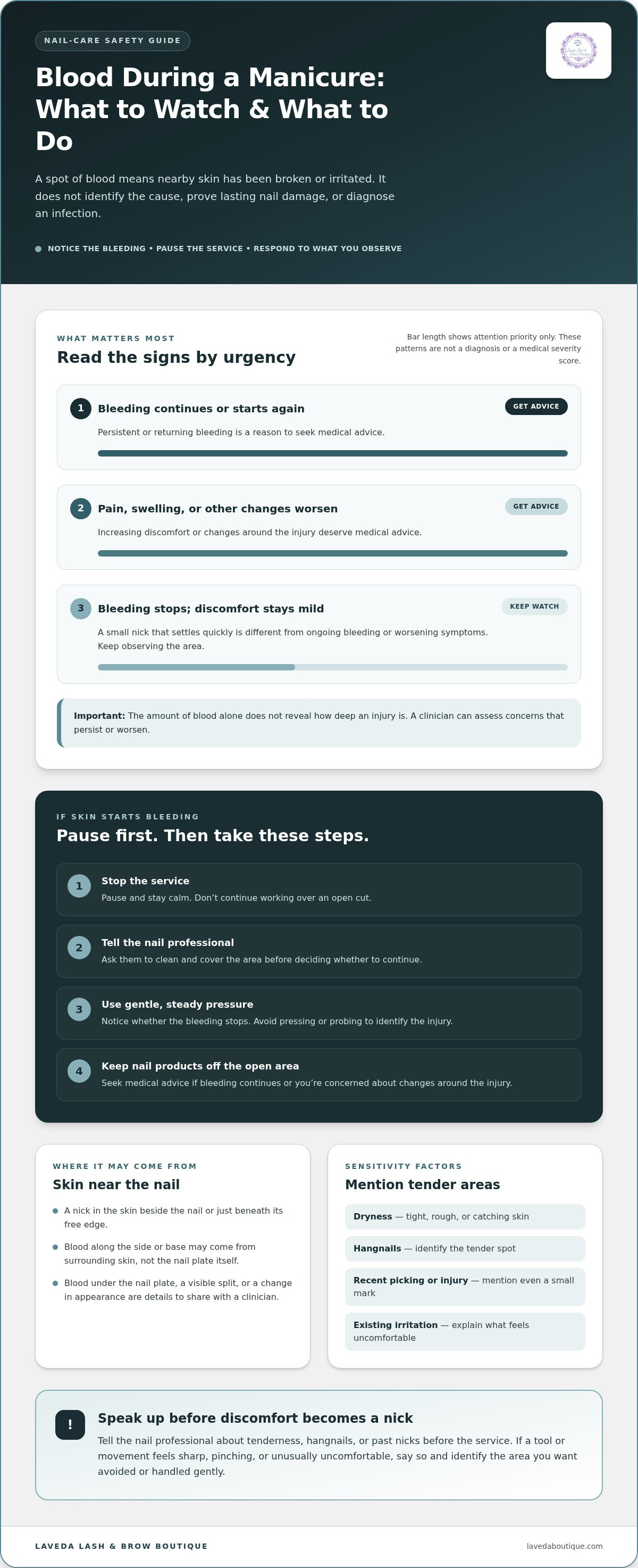
Act promptly and keep the response simple. Pause the manicure, tell the nail professional what happened, and focus on the affected area before deciding whether to continue. Basic first aid can help with a minor cut, but it doesn’t replace medical care if bleeding persists or the injury looks serious.
Simple first aid for a minor cut
Ask the nail professional to stop working on that finger or toe. If the area is bleeding, use clean gauze or a clean cloth to apply steady, gentle pressure. Don’t rub, squeeze, or repeatedly lift the material to check. Once the bleeding is controlled, gently rinse the area with clean running water. Avoid scrubbing or picking at the skin.
Pause the service. Clearly tell the nail professional that your skin has been nicked. Stop work on the affected area.
Use clean material. Apply gentle, steady pressure with clean gauze or a clean cloth until the bleeding settles.
Rinse gently. When bleeding is controlled, rinse the cut with clean running water. Avoid harsh chemicals and aggressive cleaning.
Protect the area. Keep it clean and avoid further cuticle manipulation while it settles. Don’t apply polish, remover, or other salon products over an open cut.
If you’re searching for bleeding during manicure what it means DC, these steps address immediate care, not diagnosis. Don’t touch another person’s blood with bare hands. The nail professional should pause and handle the situation carefully. If you’re unsure whether the bleeding has stopped or the cut appears more than minor, seek medical advice.
When should you stop the appointment and seek care?
Don’t continue nail work over the cut or try to cover it with polish or product. A break in the skin needs attention before the service proceeds. If steady, gentle pressure doesn’t stop the bleeding, or if pain, redness, swelling, or warmth worsens, contact a healthcare professional for guidance rather than booking another manicure to address the injury.
Basic first aid is not the same as medical treatment. Get urgent medical help for uncontrolled bleeding, a severe cut, significant trauma, or if you feel seriously unwell. If the injury is deep or the nail appears substantially separated, have it assessed instead of trying to judge its extent at the salon. A clinician can determine whether further care is needed.
For a small nick that settles, keep the area clean and avoid picking at it or having it manipulated again while it remains open or tender. Resume nail services only when the skin has settled and you’re comfortable proceeding. When you’re ready for a future appointment, book a manicure at Laveda Lash & Brow Boutique and mention any sensitivity before service begins.
Preventing Repeat Bleeding During a Manicure in DC or Arlington
Clear communication helps shape a more comfortable manicure. Before service begins, mention any past nick, tenderness, hangnail, open cut, or current irritation. This gives the nail professional useful context and a chance to adjust the approach around sensitive areas. It can’t guarantee that skin won’t be nicked, but it helps you state your needs early.
How to communicate sensitivity before your appointment
Be specific about the location and sensation. For example, say, “The skin beside my ring fingernail is still tender,” or, “I have a hangnail on this finger, so please be careful around it.” Point out any open cut or active irritation before nail work starts. If a tool or movement feels uncomfortable during the service, speak up immediately rather than waiting to see if it passes.
Share relevant history: Mention a past nick or an area that tends to feel sensitive.
Identify the spot: Point to the finger, toe, or side of the nail that needs care.
Describe the feeling: Explain whether the area feels sore, tender, or irritated.
Pause if needed: Ask the nail professional to stop if a movement feels sharp or uncomfortable.
If skin breaks during the appointment, nail work on that area should pause. Don’t continue cuticle manipulation or apply nail products over an open cut. A quick, clear request is enough: “Please stop on this nail. The skin has opened.” If you’re researching bleeding during manicure what it means DC, remember that speaking up early is useful, but it can’t guarantee an injury-free service.
Planning your next manicure after a nick
Wait to have the affected area worked on until the skin has healed and no longer feels tender. If you’re unsure whether it’s ready, or if pain, redness, swelling, or other symptoms are worsening, seek medical advice before scheduling nail work on that area. A manicure appointment isn’t a substitute for medical assessment, and a professional nail service shouldn’t involve working over an open cut.
Once you’re ready to return, share what happened and what felt uncomfortable before the service begins. Laveda Lash & Brow Boutique offers manicure services in Washington, DC, and Arlington, Virginia, and you can communicate your comfort preferences before and during the appointment. Explore manicure services at Laveda when planning your next appointment.
Make Your Next Nail Appointment Feel More Comfortable
A past nick doesn’t have to define your next manicure. Use the experience to identify what helps you feel comfortable: explain sensitive areas before service, agree that work will pause if something feels painful, and choose a time when the skin is fully settled. If you’re still unsure whether it has healed or symptoms are getting worse, speak with a medical professional before returning to nail care.
Searching for bleeding during manicure what it means DC can leave you with questions, but you can take a measured next step. Share your preferences openly and give yourself permission to pause the service if discomfort arises. A manicure should feel considered, not rushed.
Laveda Lash & Brow Boutique offers manicure and pedicure services in Washington, DC, and Arlington, Virginia, and has served more than 20,000 satisfied customers overall. That figure reflects the boutique’s customers across its services, not manicure clients alone. When you’re ready for your next nail appointment, explore manicure services at Laveda. A little preparation can help you approach it with confidence.
Frequently Asked Questions
Is bleeding during a manicure normal?
No. Bleeding indicates that skin has been broken, although a small nick doesn’t automatically mean lasting harm. If you searched “bleeding during manicure what it means DC,” remember that blood alone can’t reveal the cause or seriousness. Ask the nail professional to pause and assess the area. Don’t feel pressured to continue the service on that nail if you’re uncomfortable.
What should I do if my cuticle bleeds during a manicure?
Ask the nail professional to stop work on that finger and avoid putting product on the open area. If the bleeding is minor, use clean material to apply steady pressure. Once it’s controlled, rinse gently with clean water and protect the spot from further friction. If you’re unsure how deep the cut is, or the bleeding continues, seek medical advice rather than relying on salon care.
Can a manicure nick cause an infection?
A nick can create an opening through which germs may enter, but it doesn’t mean an infection will develop. Keep the area clean and avoid picking, biting, or applying nail products while the skin is open. Watch for changes such as increasing soreness or drainage. If you notice concerning symptoms, contact a healthcare professional for an assessment instead of trying to identify an infection yourself.
When should I see a doctor for a cut near my nail?
Seek medical advice if the cut is deep, the nail is substantially separated, or symptoms are worsening. Spreading redness, increasing swelling, warmth, pus-like drainage, or fever also call for prompt assessment. If the bleeding is uncontrolled, the injury is severe, or you feel seriously unwell, seek urgent medical help. A clinician can determine what care is appropriate; a nail appointment can’t assess an injury medically.
How do I stop a small cut from bleeding?
Press clean gauze or a clean cloth gently and steadily against the cut. Keep the pressure in place rather than repeatedly lifting the material to check, which can disturb the area. Once bleeding stops, rinse with clean running water and cover the spot with a clean bandage. Avoid scrubbing, picking, or applying nail polish or remover to broken skin. Get medical advice if bleeding won’t stop.
Can I get a manicure if my cuticle is already irritated?
It’s best to postpone work directly on skin that is open, sore, or actively irritated. Friction or cuticle grooming may make an uncomfortable area more sensitive. If you’re uncertain whether the skin is ready, or the irritation is worsening, ask a healthcare professional before booking nail work on that area. For a future manicure in Washington, DC, or Arlington, mention the concern before the service begins.
What should I tell my nail technician if I have sensitive cuticles?
Point out the exact nail and describe what you feel, such as tenderness, stinging, or soreness near the sidewall. Mention recent hangnails, picking, or a prior nick, and identify any open or irritated skin before tools are used. You can also request that the sensitive spot be left alone. Speak up promptly if pressure or a movement becomes uncomfortable, so the professional can pause and respond.


تساعد معرفة طريقة الاطلاع على نتائج الباك المغرب التلاميذ وأولياء الأمور على متابعة المسار الدراسي بسهولة. يقدم هذا الموضوع إرشادات واضحة حول تسجيل الدخول، والتحقق من المعلومات، والتعامل مع المشاكل الشائعة أثناء عرض النتائج.