
Best Facial for Stressed Skin in Arlington, VA

The best facial for stressed skin in Arlington, VA, starts with an esthetician’s assessment, not a one-size-fits-all routine. A skin analysis helps match the treatment to your skin type, concerns, and goals. The right approach may combine cleansing, suitable exfoliation, and ingredients selected for your skin’s needs.
Stress can leave skin feeling dry, reactive, or out of balance, so a temporary refresh may not be enough. Consistent care starts with choosing a facial that suits your skin now and adjusting your approach as your needs change.
Learn what to discuss during a facial consultation, how ingredients can support your skincare priorities, and what to consider when choosing a facial in Arlington. A personalized approach can help make facial care part of a thoughtful routine.
Table of Contents
Consultation with an esthetician
A focused consultation gives the esthetician a starting point for your facial. Discuss your skin type, concerns, and goals, then describe areas that feel dry, oily, or easily irritated. For example, mention tightness across your cheeks or shine around your forehead. These details help tailor the treatment to your skin rather than rely on a standard sequence.
Bring a clear picture of your routine. Name the cleanser, exfoliant, moisturizer, and sunscreen you use, and describe how your skin responds to each. Mention recent changes, such as dryness or breakouts, and where they appear. If your goal is to soften the appearance of fine lines, say so; if sensitivity is your main concern, make that the priority. Specific examples make the consultation more useful.
Expect the facial discussion to connect your goals with the treatment steps. A deep cleanse removes dirt, oils, and impurities; exfoliation removes dead skin cells and prepares skin for later steps. The esthetician can consider whether those steps suit your skin analysis and whether a gentler approach fits better. Ask what each step is intended to address, especially if you’re considering a combination of cleansing, exfoliation, and massage.
How much do facials cost at Arlington, VA spas? Price depends on the treatment steps, products, and time involved, and is provided after a quote request. These factors shape the facial rather than a single standard treatment plan.
What happens during a calming facial, and how long does it take? The sequence may include cleansing, selected exfoliation, a mask, and gentle facial massage for tension in the face, neck, or shoulders. The planned steps shape the appointment, so ask what the facial includes.
Prepare by sharing your current routine before your appointment. Arrive with a clean face if that suits the spa’s instructions. Afterward, follow the esthetician’s care guidance and avoid testing several new products at once. If you are unsure which products to use, ask for clear steps that match the treatment.
Before: List your products and identify the areas you want addressed.
During: Ask how cleansing, exfoliation, or massage supports your stated goal.
After: Follow the provided instructions and avoid adding multiple unfamiliar products to your routine.
A useful consultation ends with a tailored plan, not a vague promise. Confirm the facial’s intended focus, its steps, and the home-care guidance that follows. That clarity helps you decide whether the treatment matches your needs and gives you a practical basis for future appointments.
Personalized facials for different skin concerns
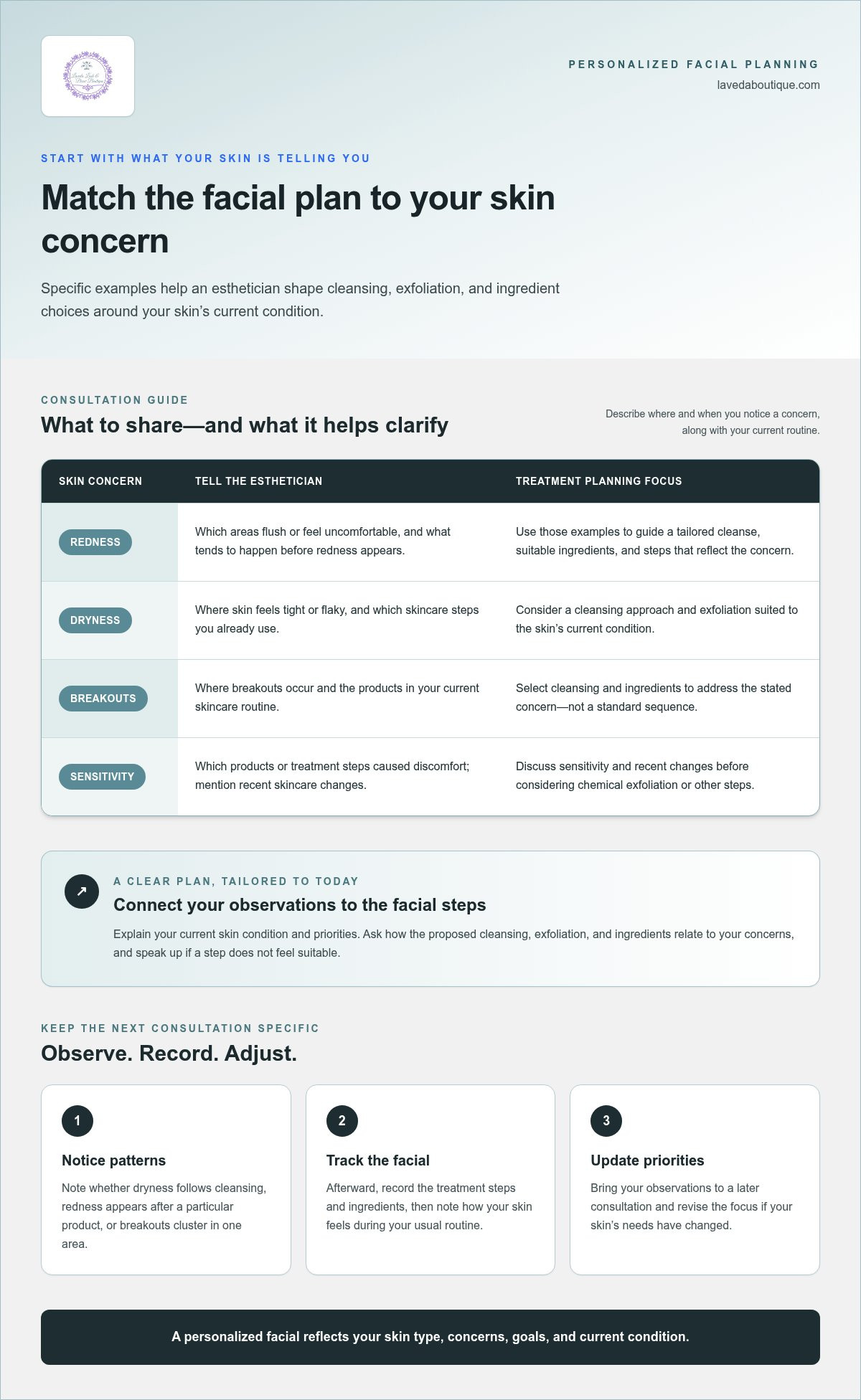
Choose a facial by matching its cleansing approach and ingredients to your main concern. Describe where and when you notice redness, dryness, breakouts, or sensitivity. Stressed or irritated skin calls for a gentle, tailored treatment.
Choosing a Facial for Skin Concerns
Start with the concern you want the facial to address. For dryness, describe tightness and where it occurs; for redness, identify areas that flush or feel uncomfortable. If breakouts are the priority, note their location and your current skincare routine. For sensitivity, mention products or steps that have caused discomfort. These examples help guide a personalized facial.
Treatments for Stressed and Sensitive Skin
A facial for stressed, sensitive, or irritated skin should reflect how it feels that day. A tailored cleanse can account for oily, dry, or sensitive skin, while exfoliation and other steps should suit the same concern. Ask which ingredients are planned and what each step is intended to do. This makes the approach clear before the facial begins.
Personalized facial care also means distinguishing a temporary concern from a recurring pattern. Note whether dryness follows cleansing, redness appears after a particular product, or breakouts cluster in one area. Bring these examples to your consultation. An esthetician can use them to shape the cleansing method, select suitable ingredients, and prioritize steps. The treatment should reflect your skin’s current condition.
Redness: Describe the areas affected and what tends to happen before they appear.
Dryness: Point out tight or flaky areas and name the skincare steps you already use.
Breakouts: Identify where they occur and share the products in your routine.
Sensitivity: Explain which ingredients or treatments have caused discomfort.
Use your skin’s response to guide future choices. After a facial, record the treatment steps and ingredients, then note how your skin feels during your usual routine. If chemical exfoliation is being considered, discuss your sensitivity and recent skincare changes first. This gives your next consultation specific details instead of a general description like “stressed skin.”
For a facial tailored to your concerns, explore personalized facial care and bring your routine and priorities into the discussion.
A skin analysis helps an esthetician tailor a facial to your skin type, concerns, and goals. Use the consultation to clarify the treatment’s focus and describe your skin’s current condition. If your priorities compete, say which matters most today. Ask how the proposed cleansing, exfoliation, and ingredients relate to your concerns, and speak up if a step does not feel suitable. This discussion helps confirm that the plan reflects both your skin and your preferences before treatment begins.
Afterward, compare how your skin responds with the concerns you discussed, rather than judging the facial only by its immediate appearance. Carry those observations into a later consultation and update your priorities if they have changed. This keeps future choices connected to your skin type, concerns, and goals, while leaving room for a different tailored approach when needed.
Antioxidants, hyaluronic acid, and botanical ingredients
Ingredient choice gives a nourishing facial its focus. Antioxidants, hyaluronic acid, and botanical ingredients are used in nourishing facials, but a label alone cannot tell you whether a formula suits your skin. During consultation, name your primary concern, such as dryness or a dull appearance, and review the planned ingredients with the esthetician. This connects the facial’s purpose with your skincare priorities.
Ask which antioxidant ingredients the treatment uses and where they fit in the sequence. “Antioxidant” describes a broad category, not one universal formula. Reviewing an ingredient list can help you identify the components selected for the facial. If your routine already includes a serum or moisturizer with similar ingredients, mention it. That gives the esthetician useful context for planning the treatment.
Hyaluronic acid is another ingredient to discuss when moisture is a goal. Ask how it fits into the facial and whether it will be applied as a serum, mask, or another step. The treatment name may not describe every product used, so review the planned sequence. Clear details help you understand what the facial is designed to support without assuming every formula works the same way.
Botanical ingredients are derived from plants. Their names and formulations vary, so ask which botanicals are included rather than treating them as interchangeable. If a specific plant ingredient has caused discomfort in your skincare routine, share its name during consultation. This detail helps shape ingredient selection and keeps your preferences visible in the treatment plan.
For a moisture-focused goal: Ask how hyaluronic acid fits into the facial’s steps.
For ingredient clarity: Request the specific antioxidant and botanical names.
For routine coordination: Describe the serums or moisturizers you already use.
For a smoother appearance: Explain which visible concern you want the treatment to address.
Hydrafacial is described as a treatment that infuses moisture into the skin and may plump its appearance or reduce fine lines. Discuss that approach alongside your current goal, such as a smoother-looking complexion. The treatment’s ingredients and sequence matter, so ask what the facial includes and how each step relates to the result you hope to achieve. This keeps expectations specific and grounded in the planned care.
After the appointment, note the ingredients used and how your skin feels during your usual routine. For example, record whether you used a new botanical product or antioxidant serum after the facial. That simple step gives you a concrete reference for future consultations. Ingredient awareness can support confidence in your skincare choices and help you describe which treatment details you want to keep or adjust.
Suitability for sensitive and acne-prone skin
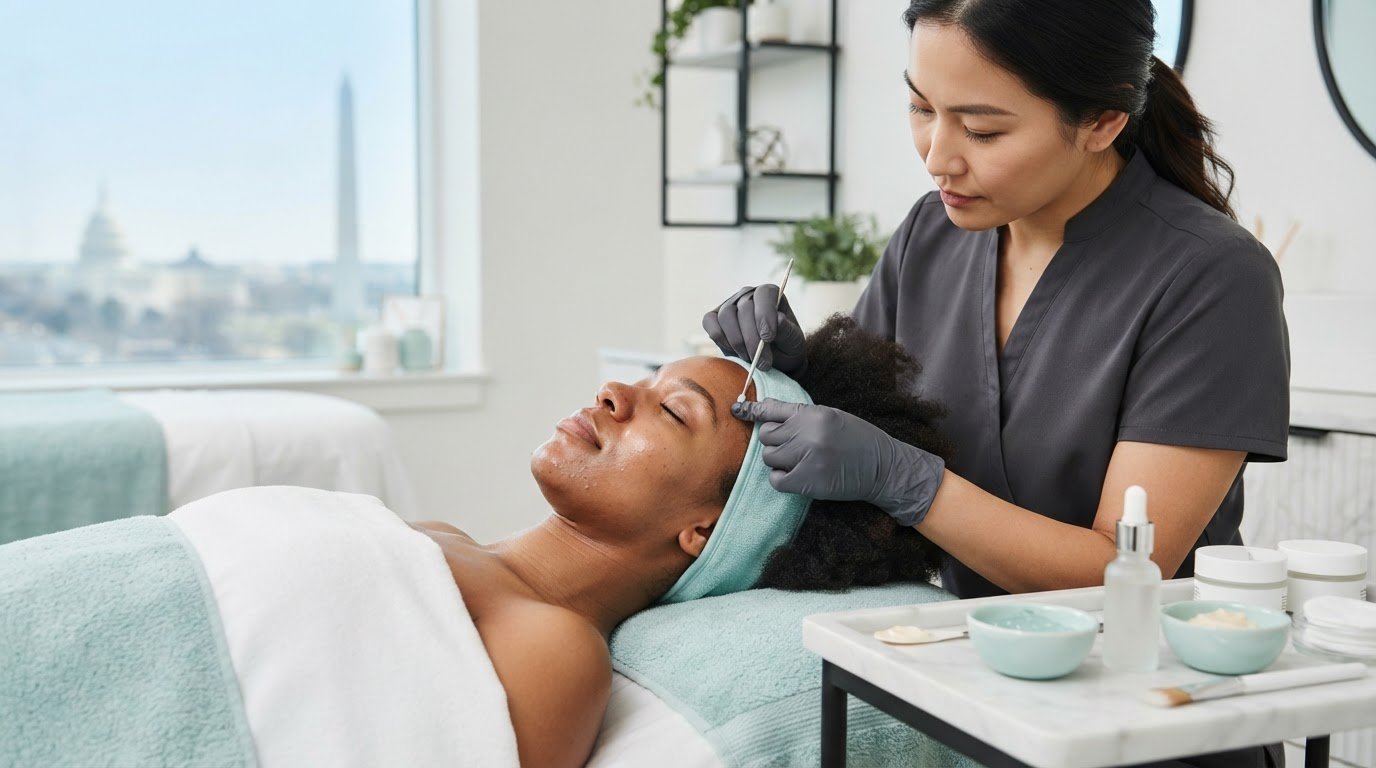
Sensitive skin and breakouts call for a facial plan built around your skin’s current condition. Cleansing should be tailored to your skin type, whether oily, dry, or sensitive. Describe whether your face feels tight, looks red, or develops blemishes after certain products. These examples help the esthetician customize the treatment’s pressure, cleansing, and product choices rather than follow a fixed routine.
For sensitive skin in Arlington, an esthetician can tailor a cosmetic facial cleanse, while a dermatologist addresses medical skin concerns. If irritation persists or acne needs medical assessment, seek care from a dermatologist rather than relying on a facial for diagnosis.
Tell the esthetician what you notice and where. For example, explain whether redness appears across your cheeks or sensitivity follows cleansing. For acne-prone skin, describe where breakouts occur and whether your skin also feels dry. These details help guide the facial’s cleansing approach and product selection. A treatment customized for oily skin may differ from one designed for dry or sensitive skin.
Before treatment: Name products that cause stinging, tightness, or visible redness.
During planning: Identify whether sensitivity, dryness, or breakouts take priority.
For massage: Discuss pressure and comfort before facial massage begins.
Afterward: Note changes in texture and how your usual products feel.
A calming facial can use a tailored cleanse and carefully selected steps for sensitive skin. Discuss each planned product and how exfoliation fits your current condition. If your skin feels irritated, explain that before treatment begins. Gentle facial massage may address tension in the face, neck, and shoulders; tell the esthetician which areas feel comfortable to touch. Clear preferences make the experience more personal.
Acne-prone skin also benefits from a cleansing approach suited to its condition. Oily areas, dry patches, and sensitivity can occur together, so describe each rather than labeling your whole face with one skin type. Ask which ingredients and steps are planned. A facial is not a substitute for medical evaluation when breakouts are persistent, painful, or accompanied by ongoing irritation.
After a facial, keep track of the treatment steps and your skin’s response. For example, note whether a new product changes how your skin feels during cleansing. Share that observation at a future appointment. A clear record helps the esthetician refine customized care and supports realistic goals, such as a calmer feel or more even-looking texture, without making an immediate glow the only measure of success.
Long-term skin health and regular facials
Long-term skin care depends on matching each facial to your skin’s changing condition. A treatment that suits dry skin may not suit skin that later feels sensitive or looks congested. Track changes in comfort, visible redness, and skin texture between appointments. These observations help guide the next treatment instead of repeating the same steps automatically.
Regular facials can provide structured cleansing and exfoliation as part of a broader skincare routine. Facials stimulate blood circulation and flush out toxins. Still, the practical value of a recurring appointment is the chance to reassess your complexion, review its response, and adjust the treatment plan. A skilled esthetician can consider whether exfoliation or extraction fits your current concerns.
Keep a simple record after each visit. Note the date, the treatment steps, and how your skin felt during the following days. For example, record whether your skin texture felt smoother or whether a particular area became uncomfortable. Bring those notes to your next appointment. They turn impressions into useful details and help distinguish a lasting preference from a short-term reaction.
Before each appointment: Identify the concern that matters most, such as dryness or congestion.
After each facial: Record the steps used and your skin’s response.
At the next consultation: Share changes in comfort, texture, or complexion.
There is no single schedule that suits every complexion. Timing depends on your skin’s condition, the treatment steps, and how your skin responds afterward. If your routine includes exfoliating products, mention them before another exfoliation treatment. If extraction is considered, ask which areas it targets and how it fits your concerns. These details help keep each appointment focused.
Set goals you can observe. “A more radiant complexion” is easier to discuss when you clarify what that means to you, such as less visible dryness or smoother-feeling skin. Avoid judging long-term care by an immediate glow. Compare your notes across appointments and discuss what changed, what stayed consistent, and which treatment steps felt appropriate.
Regular facial care works best as part of a consistent routine, not as a replacement for everyday skincare. Keep your home routine manageable, and share product changes at each appointment. If your skin becomes persistently irritated or acne needs medical attention, seek appropriate medical care rather than relying on facials alone.
Ready to make facial care part of a considered skin-health routine? Explore facial care options and choose a treatment conversation grounded in your skin’s needs.
Laveda Lash & Brow Boutique: Lash Extensions
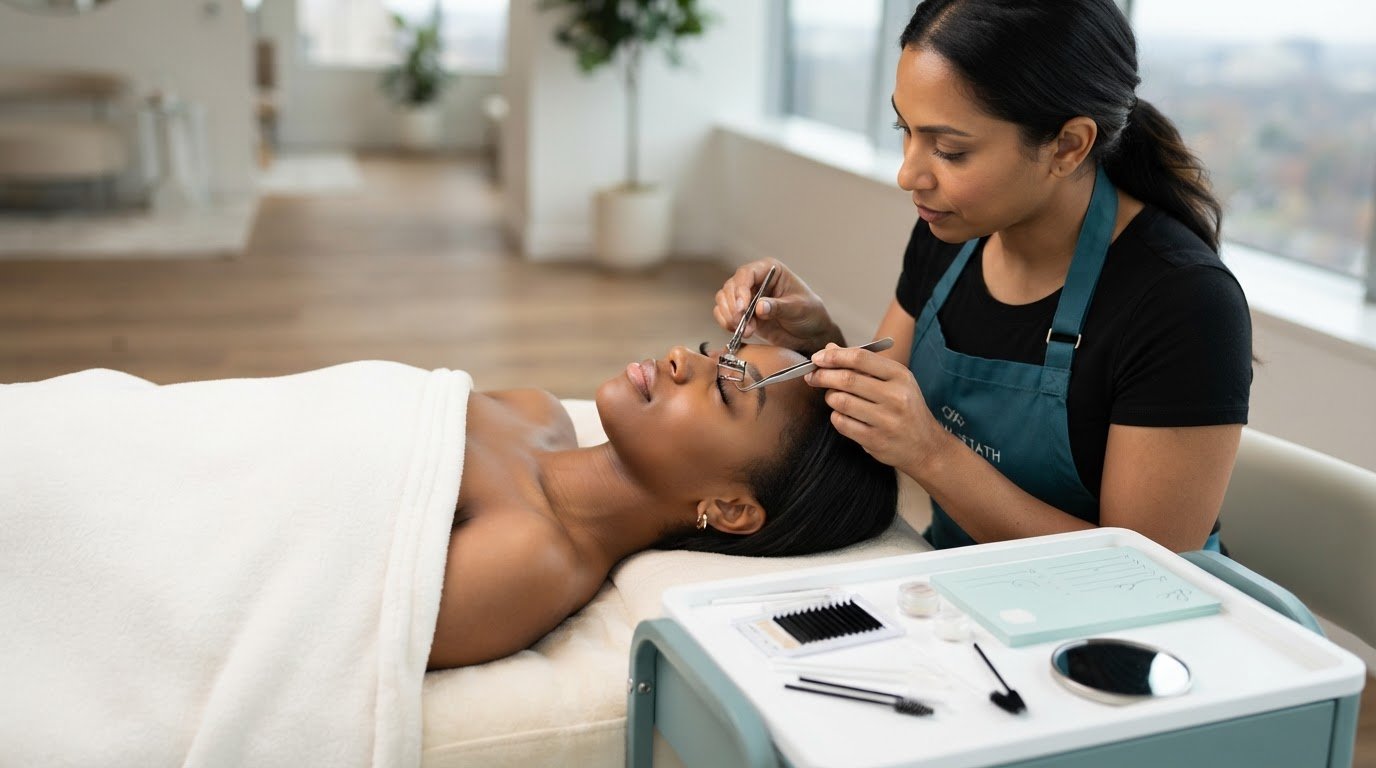
Laveda Lash & Brow Boutique offers facials alongside lash and brow services in the Washington, DC area, with Arlington, VA also part of its local focus. After choosing facial care for stressed skin, you may also be interested in Lash Extensions or Brow Lamination to refine your overall look. These services address lashes and brows, while a facial focuses on skin, so choose each according to your priorities.
Consider Lash Extensions when you want a defined lash look, or Brow Lamination when your focus is brow shaping. Choose services that suit the look you want, without treating them as substitutes for skin-focused care.
For details or to discuss your beauty service needs, visit Laveda Lash & Brow Boutique.
Make Your Next Skin-Care Step Intentional
Choosing the best facial for stressed skin in Arlington, VA is a practical first step. Keep your next move focused: choose one skin priority, then observe how your usual routine feels afterward. This gives future care a clear purpose and helps you avoid adding unrelated treatments without a reason.
At Laveda Lash & Brow Boutique, facials are available alongside Lash Extensions, Lash Lift, and Mani Pedi services. Choose the service that fits your personal beauty priorities, and keep skin concerns central when discussing facial care. If you’re ready to explore your options, contact Laveda Lash & Brow Boutique.
Thoughtful care starts with paying attention to what your skin needs now. Take that next step with clarity and confidence.
Frequently Asked Questions
Where Should I Go for the Best Facial in Arlington?
Choose a facial provider that offers skin-focused care and can discuss how its treatment fits your concern. For the best facial for stressed skin in Arlington, VA, compare the consultation approach, the planned treatment steps, and how clearly the provider explains them. Laveda Lash & Brow Boutique offers facials in the Washington, DC area. Its Arlington location is scheduled to open in Fall 2026 and is not yet operational.
Which Arlington, VA spas offer facials for stressed or sensitive skin?
Laveda Lash & Brow Boutique offers facials for people in the Arlington and Washington, DC area. Its Arlington location is scheduled to open in Fall 2026 and is not yet operational, so don’t assume it is currently serving appointments from that location. For sensitive or stressed skin, share your main concern and current routine when discussing facial care. This helps clarify which treatment approach suits your priorities.
What are the best-rated facial spas in Arlington, VA?
Look for clear service information and specific evidence behind any “top-rated” claim. Laveda Lash & Brow Boutique describes itself as a top-rated lash and brow salon and reports a 98% client satisfaction rating. That figure is the business’s stated satisfaction rating, not an independent comparison of Arlington facial spas. Also consider whether the facial offering and location status fit your needs before choosing.
Which Arlington facial providers offer calming, hydrating, or barrier-repair facials?
Laveda Lash & Brow Boutique offers facials, but its listed service information doesn’t name separate calming, hydrating, or barrier-repair facial categories. Describe the result you’re seeking, such as a less tight-feeling complexion, and ask about the treatment steps and products used. The Arlington location is scheduled to open in Fall 2026 and is not yet operational; the business serves the Washington, DC area.

Comments