
How to Keep Lash Salon Work Areas Clean in Washington, DC

A clean-looking lash station isn’t the same as a properly reset one. For lash salon hygiene standards in Washington, DC, clean and disinfect the workstation and tools between clients, wash your hands before each service, and remove disposable items after use. Allow 10 to 15 minutes between lash services for cleaning and disinfection.
A consistent reset supports the care and precision every lash appointment requires. This guide covers cleaning work surfaces, handling and storing lash tools, maintaining hand hygiene, and clearing adhesive residue and debris. Use these steps to keep your workspace orderly and ready for the next service.
Table of Contents
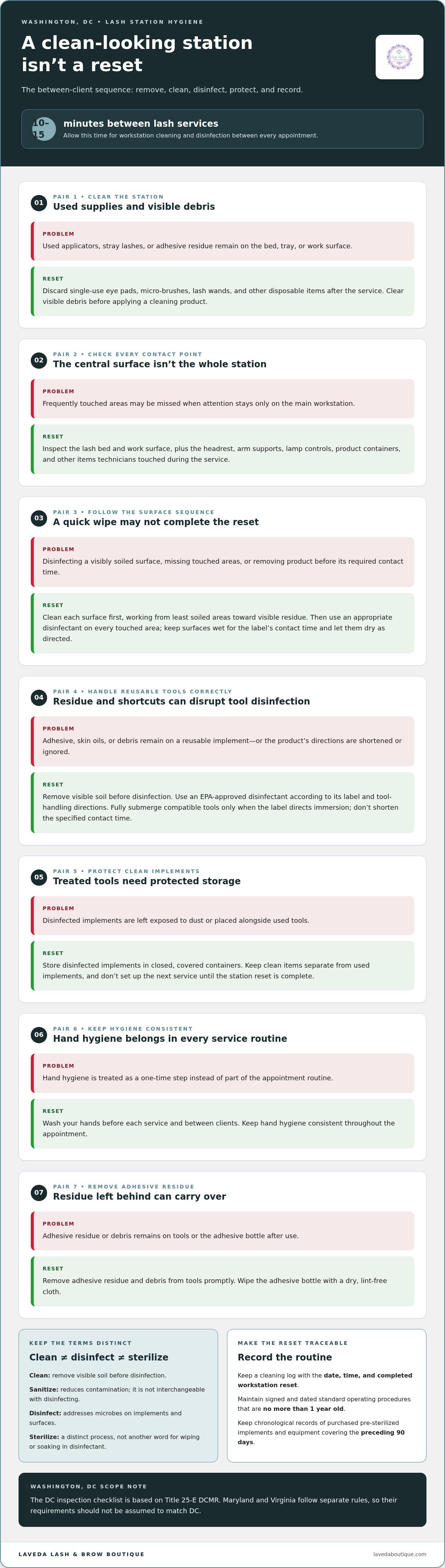
Disinfecting workstations between clients
Reset the lash bed and workstation between every appointment, and record each cleaning. DC’s inspection checklist is based on Title 25-E DCMR; Maryland and Virginia follow separate rules, so don’t assume their requirements match.
Clear the Workstation
Remove used eye pads, micro-brushes, lash wands, and other disposable items immediately after each service. Clear visible debris from the lash bed, work surface, and nearby equipment before applying a cleaning product. This routine supports lash salon hygiene standards in Washington, DC, and keeps leftover material from carrying over to the next client.
Remove used supplies. Discard single-use items after the appointment. Check the tray, bed, and surrounding work surface for stray lashes, adhesive residue, or used applicators.
Inspect contact areas. Look at the headrest, arm supports, lamp controls, and product containers. Include items technicians touched during the service, not just the central workstation.
Keep the next setup separate. Don’t place clean supplies on a surface that hasn’t completed its reset. Prepare the station only after cleaning and disinfection are finished.
Poor sanitation during a lash service can expose clients to contamination, eye irritation, infection, or allergic reactions. If you notice a sanitation or licensing concern, record the salon’s name, address, date, and the specific condition, then submit the details to the DC authority responsible for personal grooming facility inspections.
Clean and Sanitize Surfaces
Clean each work surface before disinfecting it. Follow the product label for application and contact time, covering every area touched during the appointment. A quick wipe is not a complete reset if the surface remains visibly soiled or the product requires more contact time.
Clean the lash bed and workstation. Work from the least soiled areas toward spots with visible residue. Use a fresh cloth or wipe as needed to avoid spreading debris across the station.
Disinfect between clients. Apply the appropriate disinfectant to the workstation and lash bed after cleaning. Leave surfaces wet for the contact time on the product label, then let them dry as directed.
Track the routine. Keep a cleaning log with the date, time, and completed workstation reset. Allow 10 to 15 minutes between lash services for cleaning and disinfection.
Nail salon licensing is separate from lash workstation cleaning. In DC, nail salon license applications must be submitted at least 30 days before an existing facility’s current license expires, and DCRA-issued nail salon business licenses must be renewed every two years. Under Sec. 602.3., an application must include a Department of Health report showing the facility passed a preoperational inspection.
Cleaning, sanitizing, disinfecting, and sterilizing
Keep the steps distinct: cleaning removes soil, while disinfection addresses microbes on implements and surfaces. In Washington, DC, build the workstation routine around the correct sequence, product directions, and a clean storage method.
Clean visible soil first. Remove lash adhesive, skin oils, and debris from reusable tools before disinfection. Use a suitable cleaning method and inspect the implement afterward. A disinfectant cannot work as intended when residue remains on the surface. Keep disposable eye pads, micro-brushes, and lash wands out of the reusable-tool process; discard them after use.
Sanitize only where appropriate. Sanitizing reduces contamination on an item or surface, but it isn’t interchangeable with disinfecting. Identify the item’s material and intended use before choosing a process. For example, a workstation surface and a metal tweezer need separate handling instructions. Keep clean items apart from used implements throughout each appointment reset.
Disinfect reusable implements. Use an EPA-approved disinfectant according to its manufacturer’s directions. Fully submerge compatible tools for the specified contact time when the label directs immersion. Don’t shorten that time or assume a quick wipe provides equivalent treatment. Washington, DC facilities must maintain an adequate supply of EPA-approved disinfectants in properly sized containers.
Store treated items correctly. Once implements complete the required process, protect them from dust and contact with used tools. Washington, DC facilities must store disinfected barbering, cosmetology, and personal grooming articles and implements in closed, covered containers. Keep disposable applicators separate, and prepare the clean container before starting the next service.
Separate sterilization from disinfection. Sterilization is a distinct process, not another word for wiping or soaking in disinfectant. Don’t assume boiling water sterilizes every lash tool; tool materials and manufacturer directions determine suitable handling. Use only a method intended for that implement, and don’t return a tool to service if its condition or cleaning status is uncertain.
Maintain traceable procedures. Keep signed and dated standard operating procedures that are no more than 1 year old. Maintain chronological records of purchased pre-sterilized implements and equipment covering the preceding 90 days. These records help technicians follow the same sequence, track supplies, and show how clean implements move from treatment to protected storage.
For a polished appointment experience, explore lash extension services alongside the hygiene steps that support a carefully maintained workstation.
Lash artists should disinfect tools after every client to maintain lash-extension safety. Barbicide and Cavicide are examples of hospital-grade disinfectants for lash-tool sanitation. Store cleaned lash tools in a closed container or cover them with a clean cloth, keeping them protected between services.
For heat-resistant lash tools, soaking in boiling water for 20 minutes is recommended for sterilization. Do not use water or other liquids to clean a lash adhesive bottle; wipe its surface with a dry lint-free cloth. Washington, DC nail salons must keep on-premises records of manicure and pedicure bowl cleaning and disinfection.
Disinfecting tools with appropriate products
Choose a disinfectant suited to the tool, then follow its label from preparation through contact time. For lash tweezers and other reusable implements, check that the product is compatible with the material as well as following the disinfection sequence.
Remove residue first. Clear adhesive, lashes, and visible debris from each tool before applying disinfectant. Residue can block contact with the implement’s surface. Clean each tweezer or metal tool using a method suitable for its material, then inspect it under good lighting. Start disinfection only when the tool looks clean.
Select an appropriate product. Use an EPA-approved disinfectant and follow the manufacturer’s instructions. Choose a non-corrosive product intended to work against bacteria, fungi, and viruses when it is suitable for the tool. Check the label for compatible materials, dilution directions, and contact time. Don’t assume every disinfectant is appropriate for every implement.
Apply the full contact time. Fully submerge compatible tools when the product directions require immersion. Keep each implement immersed for the specified time, rather than removing it when the surface appears wet. If the label directs another application method, follow that method instead. A shortcut can leave the tool short of the product’s stated process.
Avoid damaging coatings. Don’t soak tweezers in acetone; it can damage their coating. Check the tool manufacturer’s care directions before choosing a cleaning agent. If a tool has a coating or finish, use a disinfectant compatible with that surface. Retire a damaged implement from service until it can be properly assessed and maintained.
Remove chemical residue carefully. After disinfection, rinse tools with sterile or distilled water to remove residue. Dry each implement fully before placing it in clean storage. Keep treated tools away from used implements, damp cloths, and unclean surfaces. This sequence prevents post-disinfection handling from undoing the clean storage process.
Maintain product and supply controls. Washington, DC facilities must have an adequate supply of EPA-approved disinfectants in properly sized containers. Keep products in their original, labeled containers and follow storage instructions. At the end of a workday, wipe down everything touched during lash services with a disinfectant wipe, following its directions.
Match each tool’s cleaning method to its material and the disinfectant label. A clear sequence helps technicians avoid shortcuts, incompatible products, and rushed contact times that can undermine tool care.
Hand hygiene and personal protective equipment
Make hand hygiene part of every service, not just the workstation reset. Clean hands and protection appropriate to the task help control contact with clients and tools.
Wash before each service. Use warm water and soap before beginning a client’s appointment. Wash between clients for at least 30 seconds, including palms, backs of hands, fingertips, and areas around the nails. Rinse thoroughly and dry with a clean towel. Repeat the wash if hands touch used tools, waste, or another surface during the reset.
Use sanitizer as directed. At a lash station, rub both palms together for 30 seconds when using hand sanitizer. Cover the palms and continue across the hands until the product has been worked over the skin. Sanitizer supports a consistent routine, but it doesn’t replace washing with soap and water when hands are visibly soiled.
Keep clean hands clean. After washing, avoid touching used applicators, discarded eye pads, or soiled surfaces before handling clean supplies. If that happens, wash again before returning to the service. Set out tools and products only after hand hygiene, so the clean setup doesn’t immediately come into contact with items from the previous appointment.
Match protective equipment to the task. In DC, nail salons must provide and use appropriate personal protective equipment when handling chemicals and buffering. Nail technicians must wear properly fitted N-95, N-99, or N-100 respirator masks while buffing, filing, or using acrylic powder. These nail-specific requirements should not be presented as lash-service rules.
Separate lash and nail procedures. A salon that provides both lash and nail services should follow the applicable precautions for each activity. For a lash appointment, focus on handwashing, clean handling, and avoiding contact between used materials and clean implements. During nail work, apply the relevant chemical-handling and respiratory protections to tasks such as filing or acrylic powder use.
Reset after interruptions. If a technician handles a phone, door, waste container, or used implement during service, pause before touching the client or clean tools. Wash hands again when needed, then resume with fresh, clean handling. This simple sequence makes the 30-second handwashing routine part of the workflow rather than an isolated step.
Apply these steps consistently across appointments. Distinguish lash hygiene practices from DC nail-service protective-equipment requirements so technicians use precautions suited to each task.
Removing adhesive residue and debris
Keep lash adhesive containers dry and clean tools promptly after use. Wipe the outside of adhesive bottles with a dry, lint-free cloth; do not use water or other liquids on them.
Separate used items. After each service, remove lash strips, disposable applicators, and visible debris from the workstation. Place used items apart from clean tools and fresh supplies. This prevents loose material from being carried onto the next setup.
Clean reusable tools promptly. Wash tweezers and other reusable implements immediately after use. Remove adhesive residue, lash strips, and debris with a gentle cleanser. Don’t leave residue to harden on a tool, since it can make thorough cleaning more difficult.
Inspect before disinfection. Check each implement for residue around the tips, joints, and edges. If adhesive remains, clean the affected area again before disinfecting. A visible inspection helps technicians catch material that a quick rinse or wipe may miss.
Keep the adhesive bottle dry. Wipe the outside with a dry, lint-free cloth when residue or dust appears. Keep liquid cleaners away from the bottle, and don’t submerge it. A dry cloth removes surface debris without introducing water or another liquid to the container.
Protect product openings. Handle adhesive bottles and other products with clean hands. Keep bottle openings and applicator tips from contacting used surfaces, lash strips, or soiled cloths. Close each container after dispensing, following its product directions, and return it to a clean storage area.
Use disposable applicators once. Discard micro-brushes, lash wands, and other single-use applicators after they touch a client or product. Don’t place a used applicator back into a container or reuse it for another client. Fresh applicators help keep product handling separate between appointments.
Finish the reset in sequence. Once debris and residue are removed, clean and disinfect reusable tools using the appropriate process. Keep treated tools separate from used items, then prepare clean supplies for the next service. This order prevents fresh materials from contacting residue or discarded lash products.
Review the station before restarting. Check the work surface, tool tray, and product bottles for leftover adhesive or debris. Replace any disposable item that was used during cleanup. A final visual check helps technicians spot missed residue before beginning another lash service.
Use these cleanup practices to support careful lash extension services and a clean, organized appointment routine.
Laveda Lash & Brow Boutique: Lash Extensions
Laveda Lash & Brow Boutique offers Lash Extensions in Washington, DC and Arlington, VA. Use the workstation checklist in this guide to understand the cleaning and tool-handling steps that support a well-managed appointment.
Choose Lash Extensions for a lash-focused service, or Brow Lamination when your appointment is centered on brows. The right option depends on the look you want. Before your appointment, consider your preferred result and the care routine that follows.
For your next step, contact Laveda Lash & Brow Boutique to discuss Lash Extensions.
Make Your Next Appointment a Confident Choice
Use lash salon hygiene standards in Washington, DC, as a practical lens when planning your next beauty appointment. Start with clear expectations: know the look you want, share relevant preferences, and choose a service that fits your beauty goals. Consistent care matters from the first conversation through the appointment.
Laveda Lash & Brow Boutique offers Lash Extensions and Lash Lift services for lash-focused appointments, alongside Mani Pedi services. Select the option that suits your plans, then take the next step at a pace that feels right. A thoughtful appointment starts with knowing which service you want and communicating that clearly.
Contact Laveda Lash & Brow Boutique to plan your next appointment. Choose your service with confidence and move forward feeling prepared.
Frequently Asked Questions
What hygiene and sanitation standards apply to lash salons in Washington DC?
Washington, DC’s inspection checklist for barbering, cosmetology, and personal grooming facilities is based on Title 25-E DCMR. For lash salon hygiene standards in Washington, DC, look for written procedures, orderly records, and a clear separation between used and clean implements. A practical example is a covered container for disinfected tools and a dated cleaning log. These visible systems help show how the salon organizes hygiene throughout its workday.
Does Washington DC require lash artists to hold a cosmetology or esthetician license?
A cosmetologist license is required to work as a lash stylist in the District of Columbia. The available rule does not establish an esthetician license as an alternative for lash styling, so do not treat the credentials as interchangeable. For a specific service, distinguish the practitioner’s role from the salon’s facility requirements. Because lash application involves work near the eyes, the relevant professional qualification matters alongside sanitation practices.
What DC rules govern disinfecting lash tweezers and reusable tools?
DC facilities must have an adequate supply of EPA-approved disinfectants in properly sized containers. Disinfected barbering, cosmetology, and personal grooming implements must be stored in closed, covered containers. In practice, this means clean tweezers should not be left exposed beside used tools. The facility must also keep chronological records of purchased pre-sterilized implements and equipment covering the preceding 90 days, a separate recordkeeping requirement from routine tool disinfection.
How should lash salons in DC clean treatment beds, linens, and workstations between clients?
Between clients, clean and disinfect the bed and workstation, and replace used linens with clean ones before the next appointment. Include the headrest, bed controls, and surfaces around the client’s face in the reset. Keep used fabric separate from clean supplies. These are practical hygiene steps; the DC facts provided here do not set a specific linen-change procedure or laundry method.
What health or infection-control rules apply to lash salons in Washington DC?
DC personal grooming facilities must keep records of infection or allergic reactions on the premises. A person in charge or manager must also be present during all operating hours. Facilities must maintain signed and dated standard operating procedures that are no more than 1 year old. Together, these requirements support oversight and documentation. For example, a reaction record allows the facility to document an incident rather than relying only on informal staff recollection.
How can I tell whether a DC lash salon follows proper hygiene standards?
Observe the transition between appointments. Look for a reset workstation, clean supplies kept apart from used items, and reusable tools stored in a covered container rather than left exposed. Notice whether the technician cleans their hands before starting and whether the treatment bed looks freshly prepared. Orderly cleaning records and written procedures can also be useful clues, but a neat appearance alone cannot establish regulatory compliance.
How do lash salon hygiene standards in DC compare with Maryland and Virginia?
Washington, DC’s inspection checklist is based on Title 25-E DCMR. Maryland and Virginia follow separate rules, so their requirements may differ.
Comments